
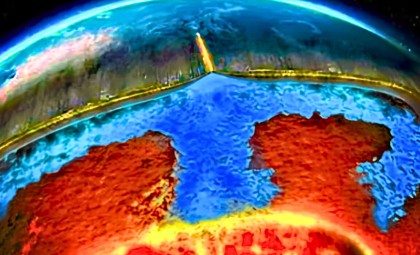
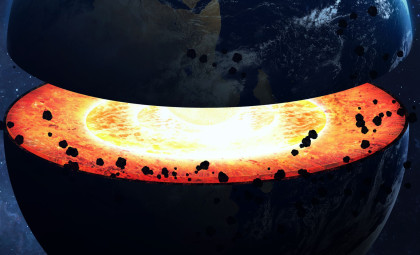
Researchers have identified a colossal underground water reserve trapped within ringwoodite, a mineral found approximately 700 kilometers beneath Earth’s crust, in the mantle. This subterranean water volume is estimated to be triple that of all Earth's surface oceans combined.
This landmark finding challenges the longstanding belief that Earth's water was primarily delivered by comets. Published in Science, the study suggests that water may have seeped gradually from Earth's interior over millions of years, offering a new perspective on our planet’s hydrological history.
Origins of Earth’s Water
For many years, the dominant theory proposed that water was brought to Earth via comets. However, Northwestern University geophysicist Steven Jacobsen argues that the presence of such a vast water reservoir inside ringwoodite strongly supports the idea that the planet’s water originated internally.

“These mineral transformations greatly hinder the movements of rock in the mantle,” stated by Professor Frank Brenker, a geoscientist at Goethe University in Frankfurt.
This deep “ocean” reservoir may explain why Earth's surface ocean volumes have remained relatively constant over vast geological timescales. According to Jacobsen, this concealed body of water could serve as a natural stabilizer, regulating surface ocean sizes and minimizing extreme fluctuations in sea levels.
Speaking to New Scientist, he emphasized, “It’s strong evidence that the Earth’s water came from within.” This discovery raises further questions about the quantity of water still trapped deep inside the planet.
Detecting the Hidden Reservoir
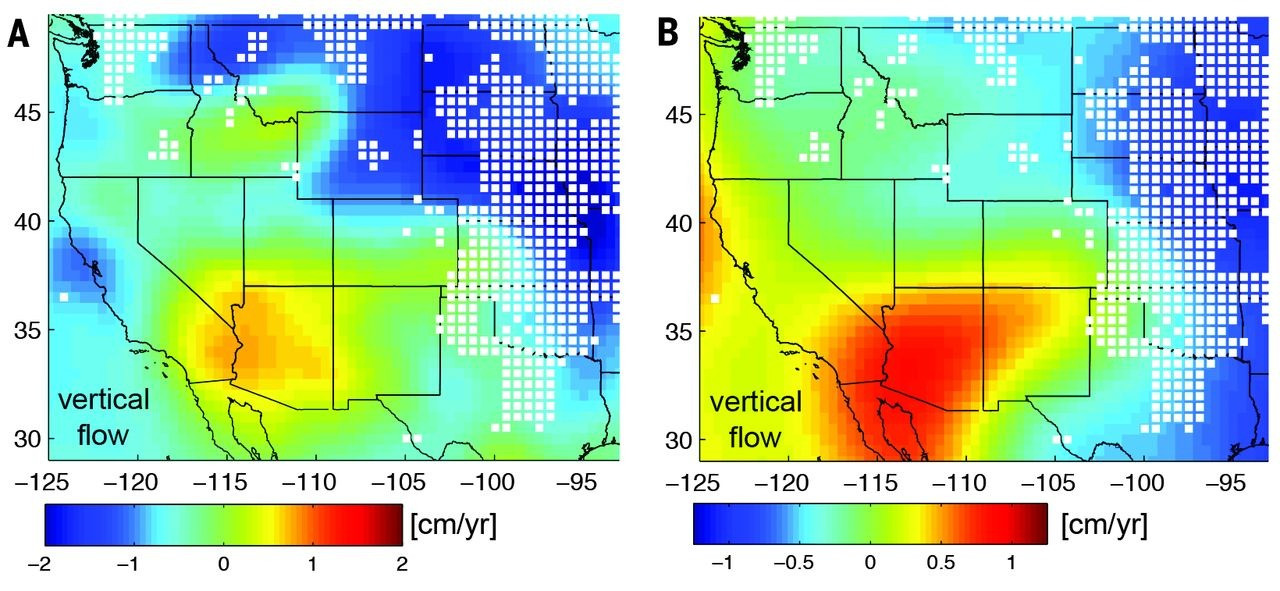
In the published study, Jacobsen and his team analyzed seismic waves recorded by a network of over 2,000 seismometers, observing over 500 earthquakes. These waves traverse Earth’s interior and their velocities shift depending on material composition. Rock containing water, like ringwoodite, causes wave deceleration, providing evidence for the deep water cache beneath the mantle.
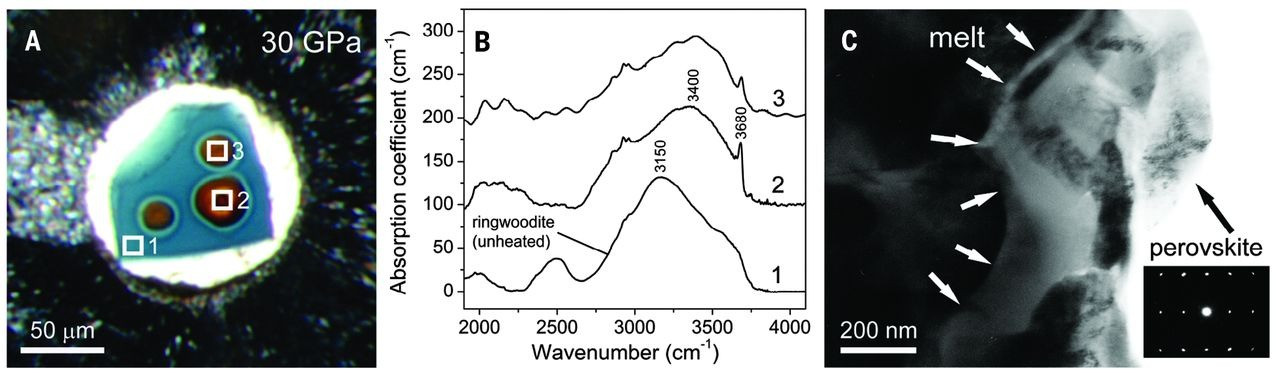
Beyond seismic data, laboratory experiments mimicked the intense pressure and temperature conditions found at 700 km depth, confirming ringwoodite's capacity to hold substantial water volumes. This aligns with earlier work from Graham Pearson, who detected water remnants inside ringwoodite crystals within diamonds brought to the surface via volcanic activity.
“Since our initial report of hydrous ringwoodite, we’ve found another ringwoodite crystal, also containing water, so the evidence is now very strong,” he said.
Impact of Water Beneath the Crust
The water retained in ringwoodite may play a vital role in controlling heat transfer and material flow between the mantle and Earth's surface. This mechanism likely influences tectonic processes and contributes to the long-term stability of the crust. Although initially found beneath the United States, researchers are now investigating whether this immense water reserve spans the entire globe.
“We should be grateful for this deep reservoir,” noted Jacobsen. “If it wasn’t there, it would be on the surface of the Earth, and mountain tops would be the only land poking out.”
This discovery provides a fresh perspective on Earth's inner dynamics, offering new insights into planetary formation, water distribution, and future geological activity.
- Categories:
- Science






0 comments
Sign in to Comment