
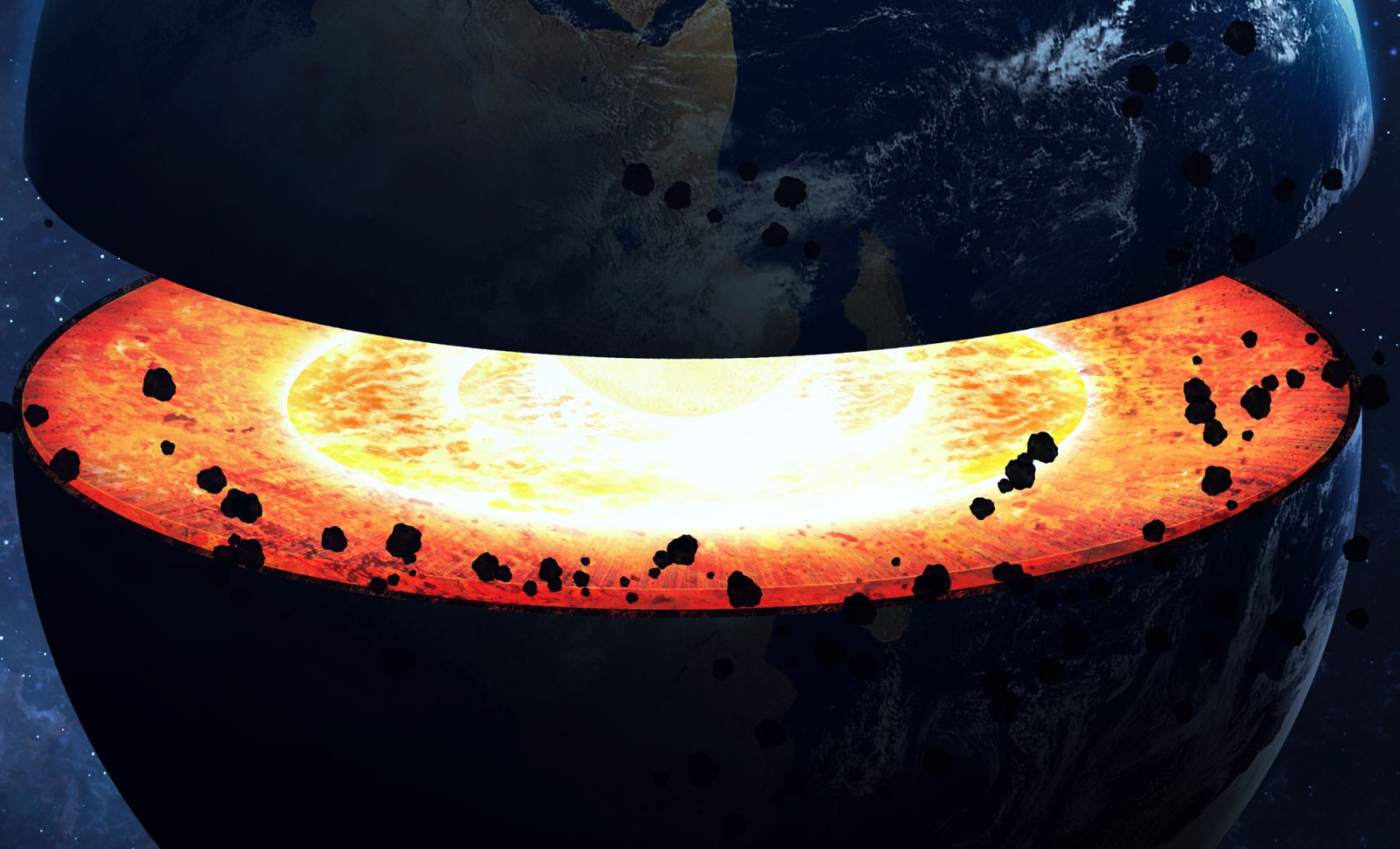
Contrary to the widespread belief that water arrived on Earth primarily through impacts from comets and asteroids, recent research introduces an intriguing hypothesis: the Earth's core could hold a staggering volume of water, stored as hydrogen, equal to about 45 oceans.
The investigation, spearheaded by Motohiko Murakami from ETH Zurich, explores the elusive environment of Earth's core, a region notoriously difficult to examine directly. Utilizing cutting-edge laboratory methods that replicate the intense pressures and temperatures found deep beneath Earth's surface, the team proposes that hydrogen was captured during the planet’s early formation, prior to the differentiation of the core from other layers.
Recreating Core Conditions in the Lab
Published in Nature Communications, the research suggests hydrogen likely entered the core alongside silicon and oxygen during Earth's formative phase. The scientists employed a laser-heated diamond anvil cell to compress and heat metal samples under conditions akin to those prevailing billions of years ago when Earth's core solidified, as detailed in a related study on iron migration.

“Using state-of-the-art tomography, we were finally able to visualise how these atoms behave within metallic iron,” Dongyang Huang, a former postdoctoral researcher and principal author of the study, explained.
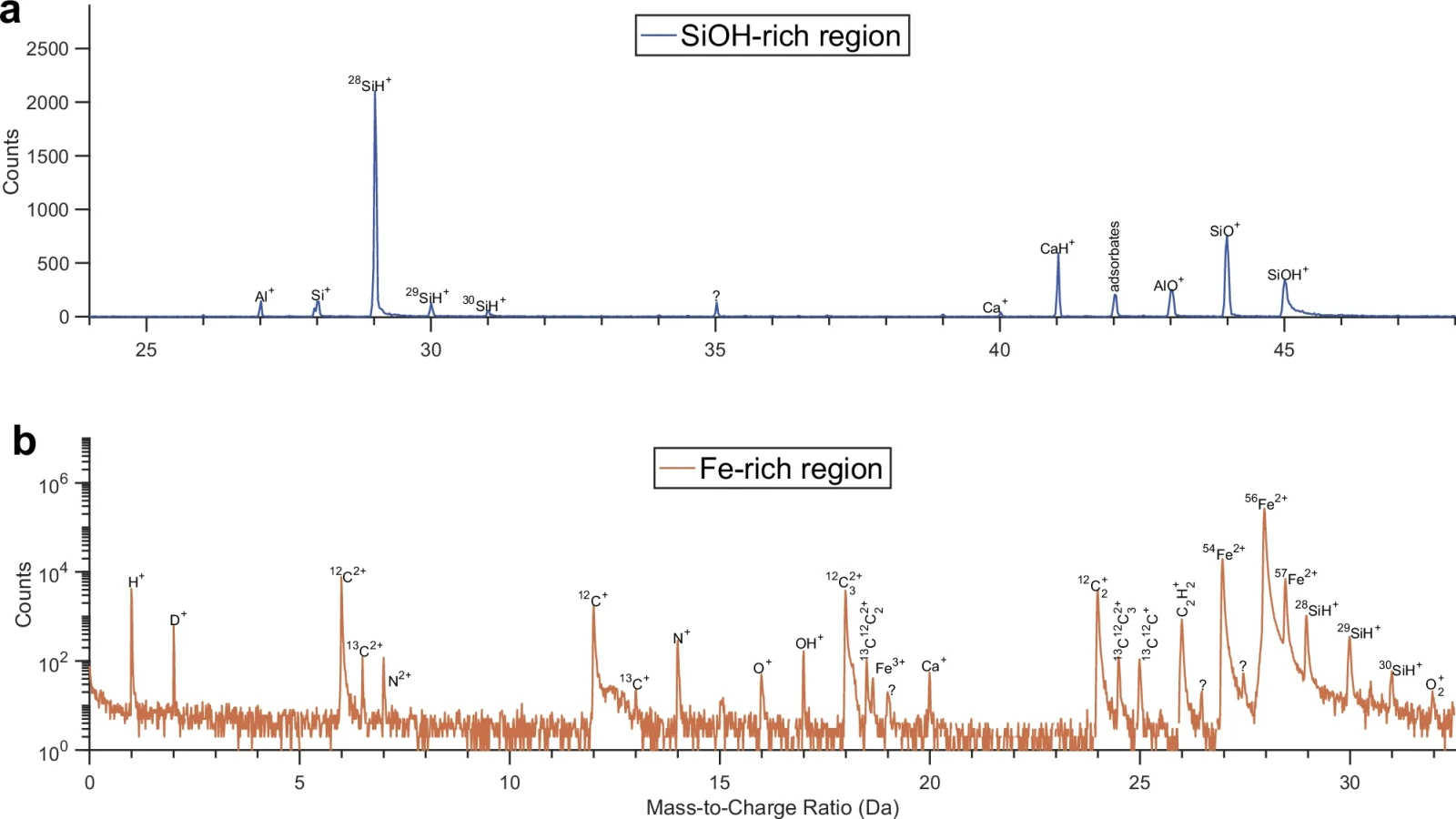
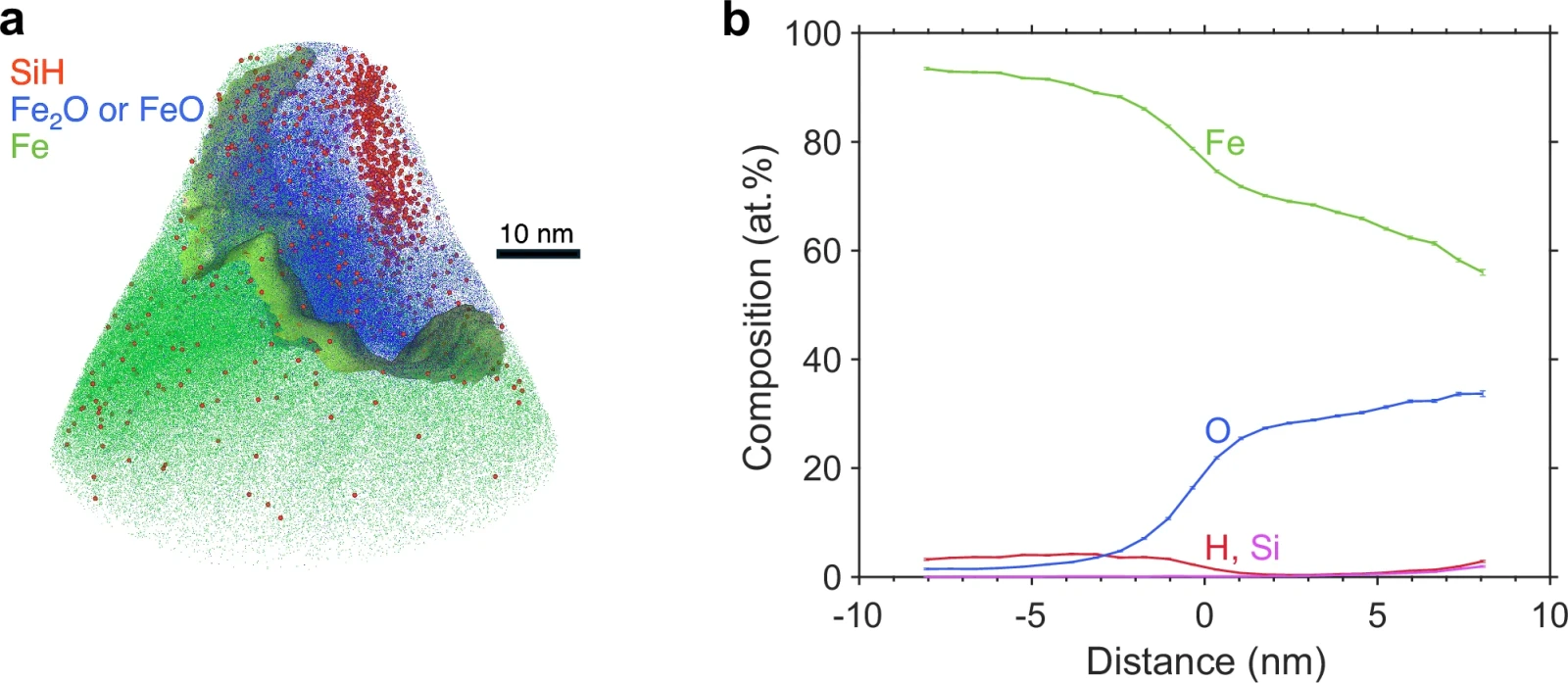
The team heated a tiny amount of metallic iron inside a crystal capsule that contained water. As the sample melted, hydrogen, oxygen, and silicon atoms from the water diffused into the molten iron. Rapid cooling then preserved the atomic arrangement for analysis.
Researchers found that hydrogen is not present in the Earth's core as molecular water or gas; instead, it chemically bonds inside the metal forming iron hydrides that are integrated with silicon- and oxygen-enriched structures.
A New Perspective on Earth's Water Origins
The outcomes challenge the traditional idea that extraterrestrial impacts alone supplied Earth’s water. Instead, the research indicates that hydrogen trapped within the core from early planetary formation could have contributed significantly to Earth’s water. Estimates suggest hydrogen may make up up to 0.36% of the core's total mass, which could translate to the equivalent volume of 45 oceans if converted into water.
“The findings enhance our understanding of the deep Earth,” stated Motohiko Murikami. “They provide clues as to how water and other volatile substances were distributed in the early solar system and how the Earth acquired its hydrogen…The water we see on the Earth’s surface today may be just the visible tip of a gigantic iceberg deep inside the planet.”
This evidence supports the idea that a significant share of Earth's water inventory was integrated during its initial assembly, locked away deep inside the core, rather than arriving solely from spaceborne sources.
Revolutionizing Planetary Science
These discoveries hold profound implications beyond our planet, especially for the study of rocky exoplanets. Understanding hydrogen's behavior under high pressure could reshape models of planetary interiors, influencing assumptions about metallic core formation and even assessments of habitability.
Moreover, the research offers insights into how Earth’s primordial atmosphere and magnetic field were shaped by its inner composition, suggesting that Earth may have been more water-rich early on than previously believed.
- Categories:
- Science








0 comments
Sign in to Comment