
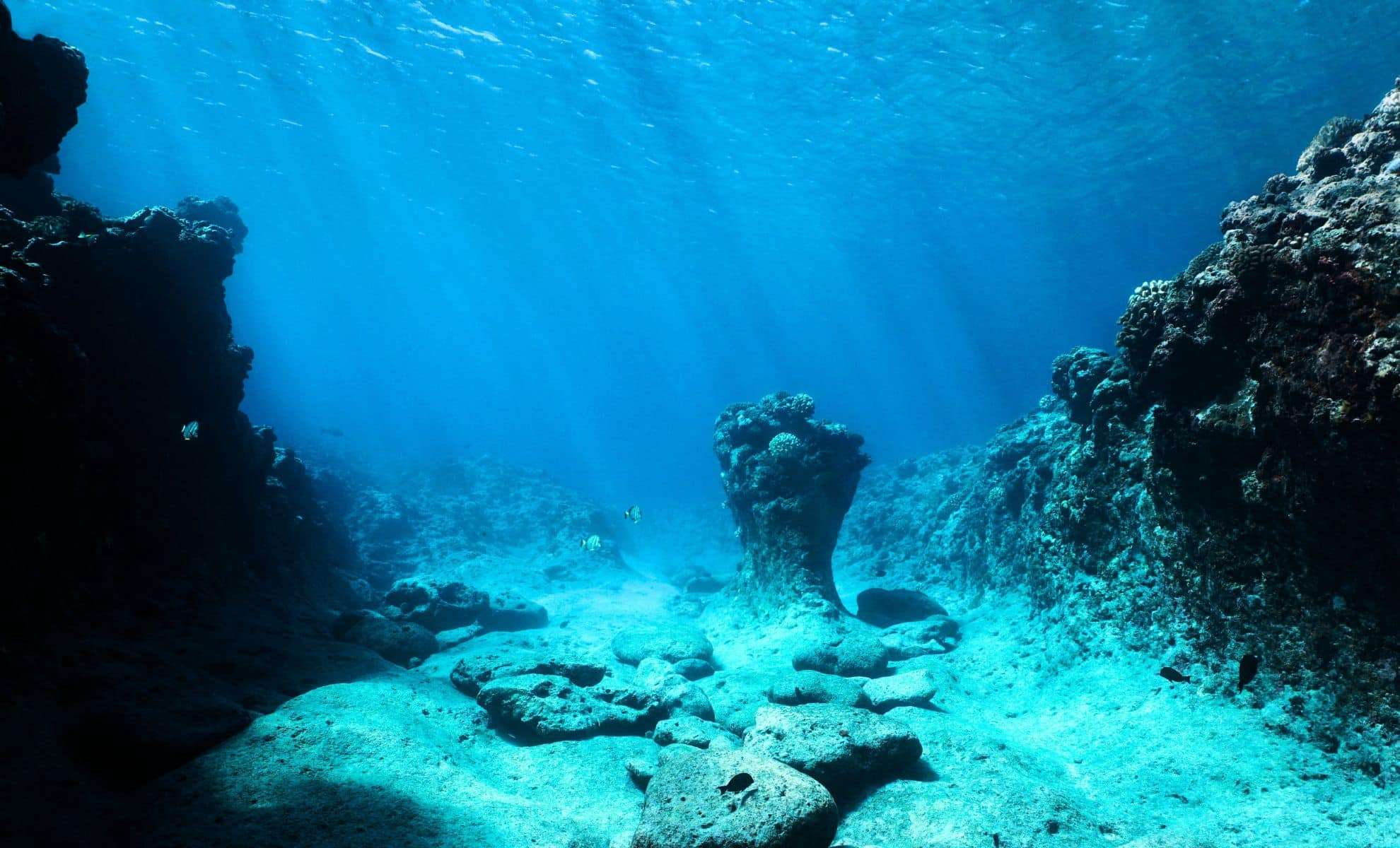
A groundbreaking investigation has transformed our perspective on Earth’s oceans. Roughly 15 million years ago, a remarkable subsurface event caused the planet to "absorb" billions of tons of water, driving sea levels down by about 30 meters.
This finding, published in February 2025 on the AGU portal, emerged from scientists studying the geological mechanisms influencing oceanic changes. It challenges the idea that sea level fluctuations are driven solely by climate variations, shedding light instead on the significant influence of tectonic movements and oceanic crust dynamics. Here’s an overview of this extraordinary geological process and its implications for understanding Earth’s natural systems.
The Ocean-Altering Geological Shift
Sea levels are commonly linked with factors like melting ice caps and global warming. Nevertheless, this recent research indicates that tectonic processes also play a crucial part in shaping the oceans. Between around 15 and 6 million years ago, the oceanic crust underwent a significant subsidence. Driven by plate tectonics that continuously build and dismantle the ocean floor, the crust began descending further into the Earth’s mantle.

This phenomenon reduced the formation of new oceanic crust by approximately 35%, which deepened ocean basins. Consequently, these basins could hold less water, causing sea levels to decline by nearly 26 to 32 meters. This event had a profound and enduring effect on the planet’s water distribution. Notably, this occurred well before modern-day human-driven climate impacts, highlighting Earth’s oceans as ever-changing entities.
The Influence of Plate Tectonics on Ocean Levels
This reduction in sea levels cannot be simply explained by the ocean "sinking." The Earth's oceanic crust is generated at mid-ocean ridges where tectonic plates diverge and magma surfaces to create new crust. Over geological timescales, older crust is subducted beneath continental plates and assimilated into the mantle. Typically, this equilibrium maintains relatively stable ocean basin elevations. However, when crust production slowed drastically, it altered ocean basin depths.
The research emphasizes that the slowdown in seafloor spreading reshaped the ocean’s contours and volume. The diminished creation of oceanic crust reduced seafloor elevation, resulting in less oceanic capacity to contain water. This geological transformation lowered the total volume of global seawater, significantly contributing to a worldwide sea level fall. It exemplifies how tectonic forces, functioning over millions of years, can dramatically influence Earth’s marine environments.
The Climatic Consequences of Tectonic Shifts
The slump in oceanic crust formation also triggered notable climate effects. As seafloor expansion decreased, so did the amount of heat released from the Earth’s mantle into the oceans, leading to a reduction in volcanic activity. Volcanic eruptions, particularly those underwater, inject substantial carbon dioxide (CO2) into the atmosphere, amplifying the planet's greenhouse effect.
With less frequent volcanic events, atmospheric CO2 levels dropped, contributing to global cooling. This cooling promoted the growth of glaciers and ice sheets, trapping more water as ice on land and further lowering sea levels. In this way, the deceleration of tectonic processes acted as a natural cooling mechanism, countering volcanic greenhouse warming and resulting in a brief climatic cooldown. This illustrates how deeply connected Earth’s geological activities and climate are, with changes in one system echoing widely across the planet.
- Categories:
- Science









0 comments
Sign in to Comment