
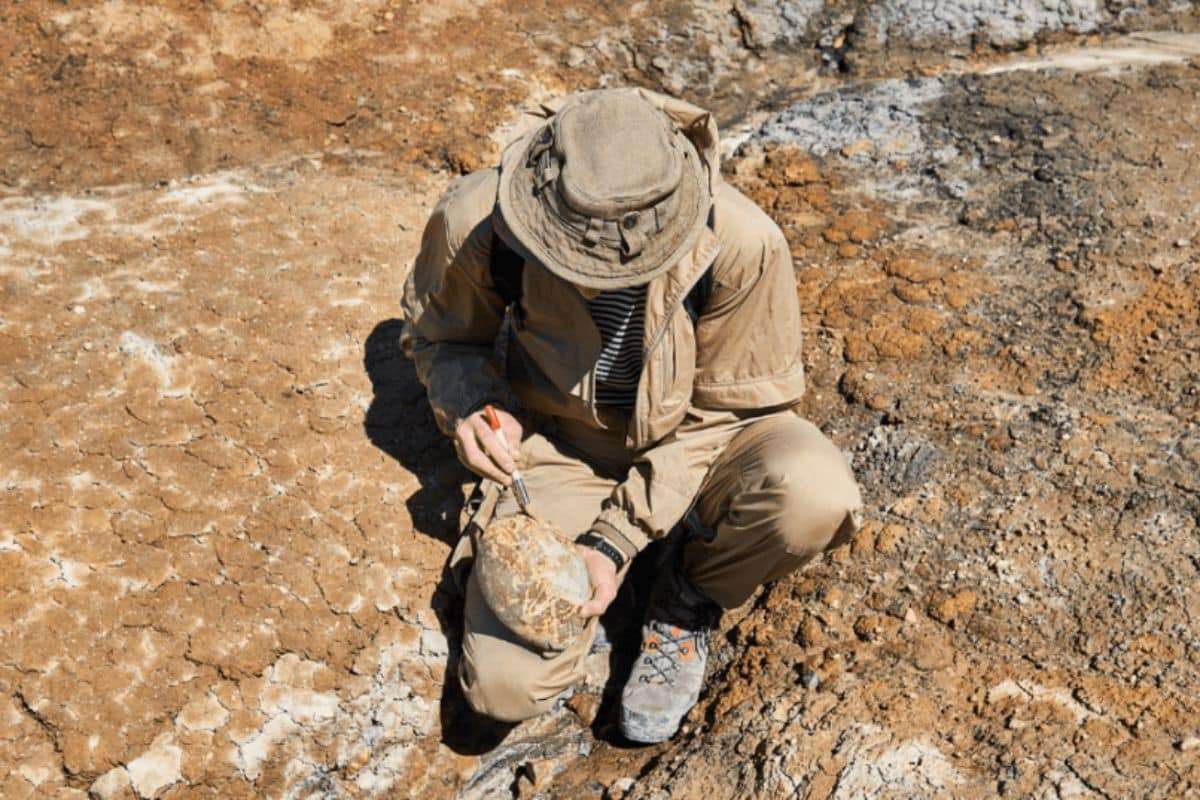
Researchers in Utah have uncovered a diverse array of dinosaur eggshells that could dramatically revise our understanding of Cretaceous fauna in North America.
Located within the Mussentuchit Member of the Cedar Mountain Formation, the investigation revealed six unique types of fossilized eggshells, challenging the previous notion that only one kind existed in this region.
Significant Expansion of Fossil Egg Knowledge
Up until now, the fossil record in this area was dominated by a single eggshell type—Macroelongatoolithus carlylei—attributed mainly to large oviraptorosaurs, theropod dinosaurs with bird-like features.

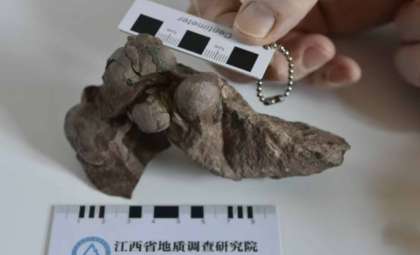
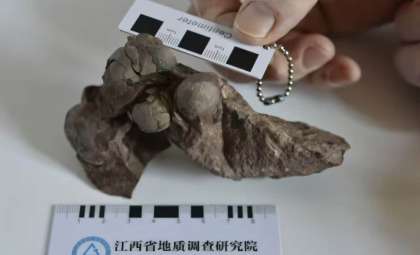
A new study spearheaded by scientists from the North Carolina Museum of Natural Sciences has revised this perspective by gathering more than 4,000 eggshell fragments from 20 different sites within the Mussentuchit Member.
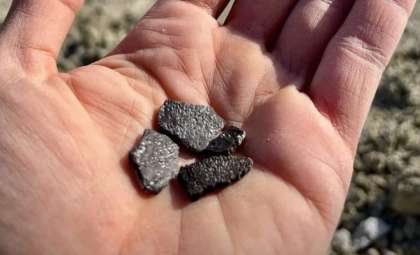
Initially mistaken for mere rocks, these fragments revealed a far more intricate paleoecological story.
Detailed Insights Extracted from Tiny Eggshell Pieces
Among the six categories identified, three eggshell types belong to oviraptorosaurs, hinting at a range of sizes among these creatures living contemporaneously. Two additional ootaxa likely come from Spheroolithus, associated with herbivorous ornithopod dinosaurs. The sixth classified eggshell is Mycomorphoolithus kohringi, linked to crocodylomorph reptiles.
The publication marks the first North American record of Mycomorphoolithus, previously known only from European sites. “Diagnosing eggshells alone is challenging,” explained Dr. Josh Hedge, Visiting Assistant Professor of Biology at Lake Forest College.
“Our best determinations depend on discovering associated bones, complete eggs, shells, nests, and embryos together,” Hedge added. While scientists have a reasonable grasp on which larger dinosaur groups produced particular eggshell types, pinpointing specific species remains difficult.”
A More Complex View of Cretaceous Ecosystems
The variety of eggshells found in one location suggests a diverse dinosaur community. This finding paints a far more complex and vibrant ecological scene in North America during the Cretaceous period than the fossil record had previously indicated.
Earlier research portrayed a more homogeneous environment, but these new data reveal a rich assortment of species coexisting in this ancient landscape (source).
Piecing Together Ancient Lives From Fragmented Evidence
Although small and seemingly unremarkable, eggshell fragments provide vital insights where complete fossils are scarce. They help reconstruct dinosaur behavior, nesting habits, and species interactions.
“Fragments of eggshell serve as key indicators of biodiversity, especially in regions with limited body fossil records,” the study highlights. “These remnants are crucial for unraveling the ancient ecological history of the area.”
The comprehensive analysis, now available in PLOS ONE, provides new perspectives on a long-ago ecosystem, demonstrating that even the smallest discoveries can revolutionize our understanding of prehistoric life.
- Categories:
- Science



0 comments
Sign in to Comment