
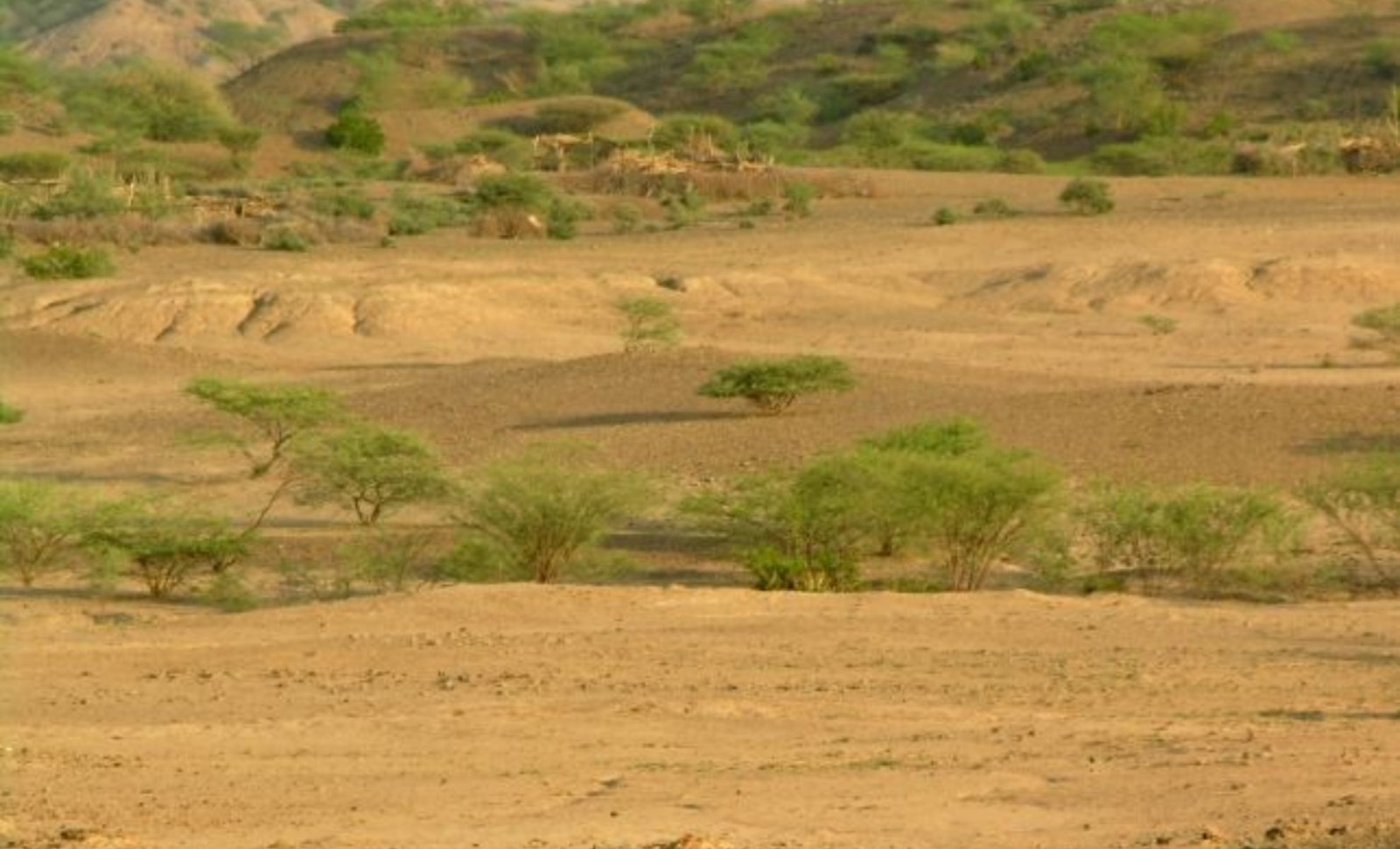
Researchers have identified human remains dating back approximately 100,000 years. The discovery of numerous stone implements and animal fossils in Ethiopia’s Afar Rift indicates that Homo sapiens frequented a forested, resource-abundant savannah region multiple times, well before their expansion into Eurasia.
Under the leadership of Yonas Beyene from the French Center for Ethiopian Studies, exploration at the Halibee site revealed stratified prehistoric sediments offering rich insights into the conditions faced by early modern humans. Unlike many archaeological stations, Halibee provides one of the most comprehensive open-air Middle Stone Age records found across the African continent.
What Sets This Location Apart
Once a floodplain flanked by dense woodlands, Halibee presented an attractive habitat for early humans with abundant natural resources such as vegetation and fauna. According to Yonas Beyene and his team, these groups likely did not establish permanent settlements there but revisited the area intermittently to exploit its offerings.

“Procurement of locally exposed raw material,” as the team’s study, published in the Proceedings of the National Academy of Sciences, stated, “enabled fine and heavy-duty tool manufacture during occupations of unknown frequency and duration.”
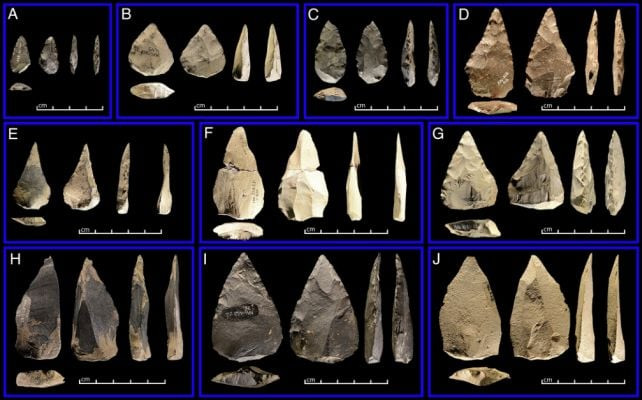
Thousands of stone implements crafted from locally abundant basalt were documented. These artifacts served various functions, including cutting. Notably, only a small fraction (about 2%) of tools was fashioned from obsidian—a non-native material—hinting at movement or exchange beyond the immediate area.
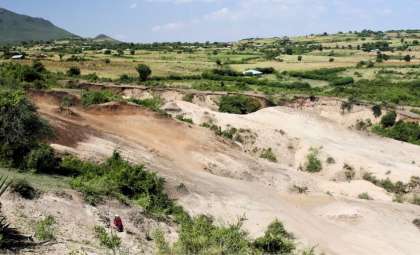
Faunal remains from species such as monkeys, antelopes, and predators like lions illustrate the diverse fauna coexisting with humans. Layers of sediment buried these tools and bones, which are now being gradually exposed due to natural erosion.
“During recurrent ephemeral occupations of this rich landscape, humans shared this catchment with an array of animals. The results of this manufacture — and sometimes the remains of the human visitors — were embedded in overbank silts on an aggrading floodplaindistal to the main river channel. They are now being revealed by slow wind and water erosion at Faro Daba.”
Three Distinct Human Remains Reveal Varied Histories
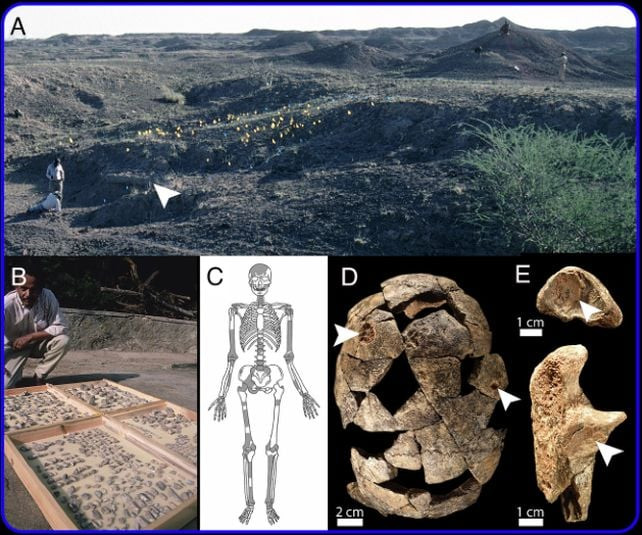
Among the unexpected discoveries were three sets of human remains. The first comprised an almost complete and well-preserved skeleton, apparently buried rapidly—possibly due to flooding—with no clear indication of ceremonial burial.
The second consists of a single tooth and some bone fragments exhibiting signs of burning, although it remains uncertain whether fire resulted from natural causes or human action.
The third remains display evidence of animal-inflicted damage, such as bite marks and missing joints, suggesting scavenging, though the specific circumstances remain uncertain.

Coexistence with Wildlife
The faunal assemblage at Halibee comprises a broad spectrum of creatures—from small rodents and reptiles to formidable predators like lions—indicating a diverse ecosystem alongside early humans.
According to the scientists, there is no definitive proof that humans were actively hunting these animals. This points to a scenario of coexistence where humans might have scavenged remains or simply shared the environment without intensive predation.
Such findings contribute valuable perspective on early Homo sapiens lifestyles—thriving in resource-rich yet potentially hazardous settings. The researchers emphasize that:
“The surface and subsurface resources embedded in Ethiopia’s Halibee member will last for generations.”
With significant portions of the site still unexplored, Halibee promises further revelations about our ancestral past.
- Categories:
- Science









0 comments
Sign in to Comment