

Europe’s top aerospace firms—Airbus, Thales, and Leonardo—have decided to merge their satellite operations into a single entity, internally dubbed Project Bromo. This initiative represents the continent’s most ambitious bid to compete with the rapidly growing Starlink network from SpaceX, which has launched more than 10,000 satellites into low Earth orbit.
This announcement comes shortly after Starlink surpassed a major milestone with over 8,700 satellites actively in orbit and 7,400 providing service, as reported by satellite tracker Jonathan McDowell. Once considered a risky venture, Starlink has evolved into a vital global communications network, delivering connectivity in conflict zones, isolated communities, and disaster-stricken areas. Its impact is especially apparent in Ukraine, where it has been essential to schools, hospitals, and military efforts since early 2022.
Europe’s need to catch up is urgent. Previous attempts at satellite projects like Govsatcom, IRIS², and the Eutelsat-OneWeb merger have lacked the scale and independence now deemed critical by European policymakers. In contrast, Project Bromo aims to combine the strengths and knowledge of these aerospace giants under one umbrella to create a competitive constellation.

According to Reuters, the venture will mirror the Airbus Group model—shared ownership and joint funding with centralized design and manufacturing. The goal is to deploy a fleet of broadband satellites that can match Starlink not only in quantity but also in reliability, security, and robustness. The global demand for satellite internet is expected to surge to $17 billion by 2030, and governments increasingly rely on space assets for both civil and defense communications, emphasizing the geopolitical dimension behind this move.
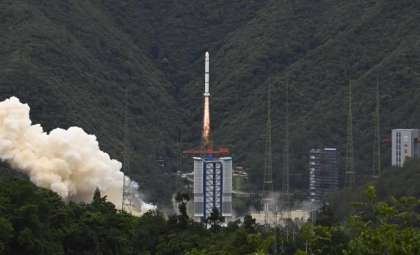
While specific plans for Project Bromo remain confidential, initial deployment is anticipated to utilize European launch vehicles, such as the Ariane 6 and Vega C. This effort complements the European Space Agency’s HydRON project, which envisions a laser-linked satellite network delivering speeds up to 1 terabit per second through optical inter-satellite connections to reduce latency. However, HydRON is still in the research phase, whereas Bromo aims to launch operational satellites within the next three years.
Consequences of Falling Behind
Europe’s slow pace in developing its own sovereign satellite network has drawn criticism. Ukraine’s Minister of Digital Transformation, Mykhailo Fedorov, notably expressed gratitude to Elon Musk for swiftly providing Starlink terminals when conflict erupted in early 2022. Since that time, over 50,000 ground terminals have been deployed to support not just communication but also critical real-time targeting and drone operations.
This dependence on a private U.S. company for essential wartime communications highlighted a strategic gap acknowledged by European defense leaders. While the U.S. boasts satellite networks like SpaceX and Amazon Kuiper, and China advances programs like Xingwang and Yinhe, Europe has lacked a consolidated infrastructure—until now.
The economic stakes are high too. With SpaceX conducting multiple satellite launches weekly, Europe risks being permanently sidelined. A recent report indicates that Starlink maintains a steady launch schedule, keeps failure rates low, and continually upgrades its satellites. Their latest Generation 2 Mini and Optical satellites feature inter-satellite laser links, autonomous collision avoidance, and advanced routing—capabilities that Project Bromo aims to equal or surpass.
A Dual-Purpose Battle for Orbit
While the public discourse around the new space race often highlights achievements like moon landings or Mars exploration, the competition for satellite network infrastructure in low Earth orbit is intensifying. As space becomes increasingly congested, risks of collisions and interference escalate. Satellite broadband networks have hence transformed from simple utilities into critical strategic resources.
The European Commission emphasizes robust cybersecurity and operational resilience in the forthcoming constellation. Nations like France and Germany advocate for military-grade encryption, redundancy plans, and sovereign ground control stations. Discussions on financing are ongoing, likely involving EU and national funds alongside private investment, balancing rapid deployment against autonomous control.
Fortunately, Europe's aerospace sector possesses the necessary expertise. Thales Alenia Space, Leonardo’s Telespazio, and Airbus Defence and Space have extensive experience creating satellites for diverse applications including Earth monitoring and secure military links. What they have lacked until now is a unified, urgent approach backed by a consolidated business structure.
Further details on Project Bromo are expected soon, including leadership appointments, infrastructure plans, and early design contracts before the year's end. Meanwhile, Starlink is advancing its Generation 3 satellites and extending its experimental satellite-to-cellphone connectivity across parts of North America and Europe.
- Categories:
- News












0 comments
Sign in to Comment