
The immense network of ocean currents responsible for temperate winters in western Europe and influencing rainfall across multiple continents is now anticipated to weaken far more drastically this century than earlier climate predictions suggested. A new study published in the journal Science Advances utilizes extensive oceanic data alongside sophisticated statistical analysis. The findings indicate that the Atlantic Meridional Overturning Circulation (AMOC) is much closer to a potential collapse, an event that would dramatically alter weather systems worldwide for generations.
Researchers estimate the current could slow by 43% to 59% by 2100 relative to its pre-industrial strength. This represents roughly a 60% greater reduction than standard climate models have forecasted so far. Such a decline edges the system near a climate tipping point where a total shutdown becomes increasingly probable.
Valentin Portmann, lead author from the Inria Centre de recherche Bordeaux Sud-Ouest, emphasized the AMOC is nearing a “tipping point” sooner than previously believed. Likewise, Stefan Rahmstorf, ocean physics professor at the Potsdam Institute for Climate Impact Research, called the findings “an important and very worrying development,” adding that the most severe model outcomes are, regrettably, the most plausible.

The Mechanics Behind the Ocean Conveyor
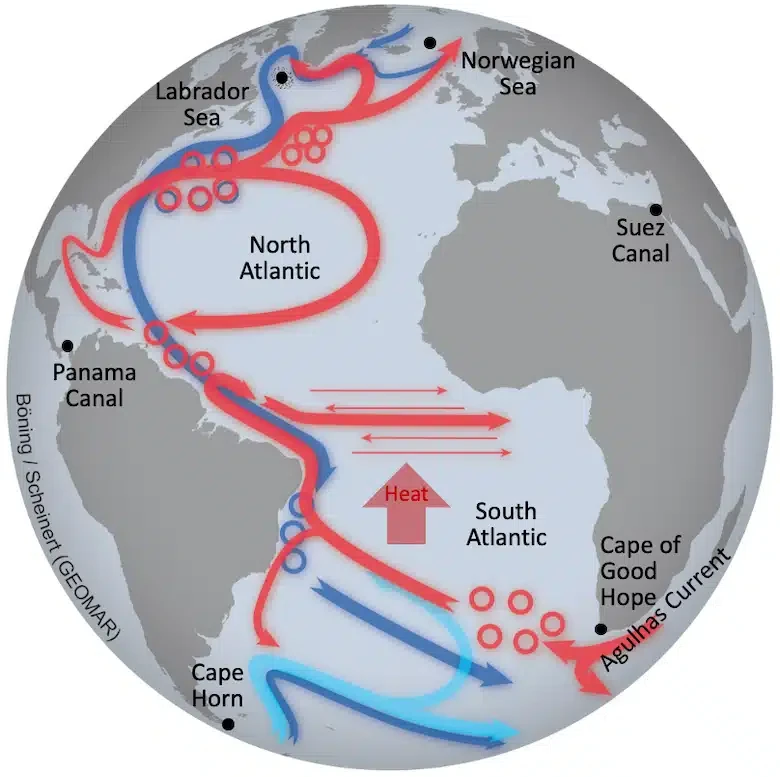
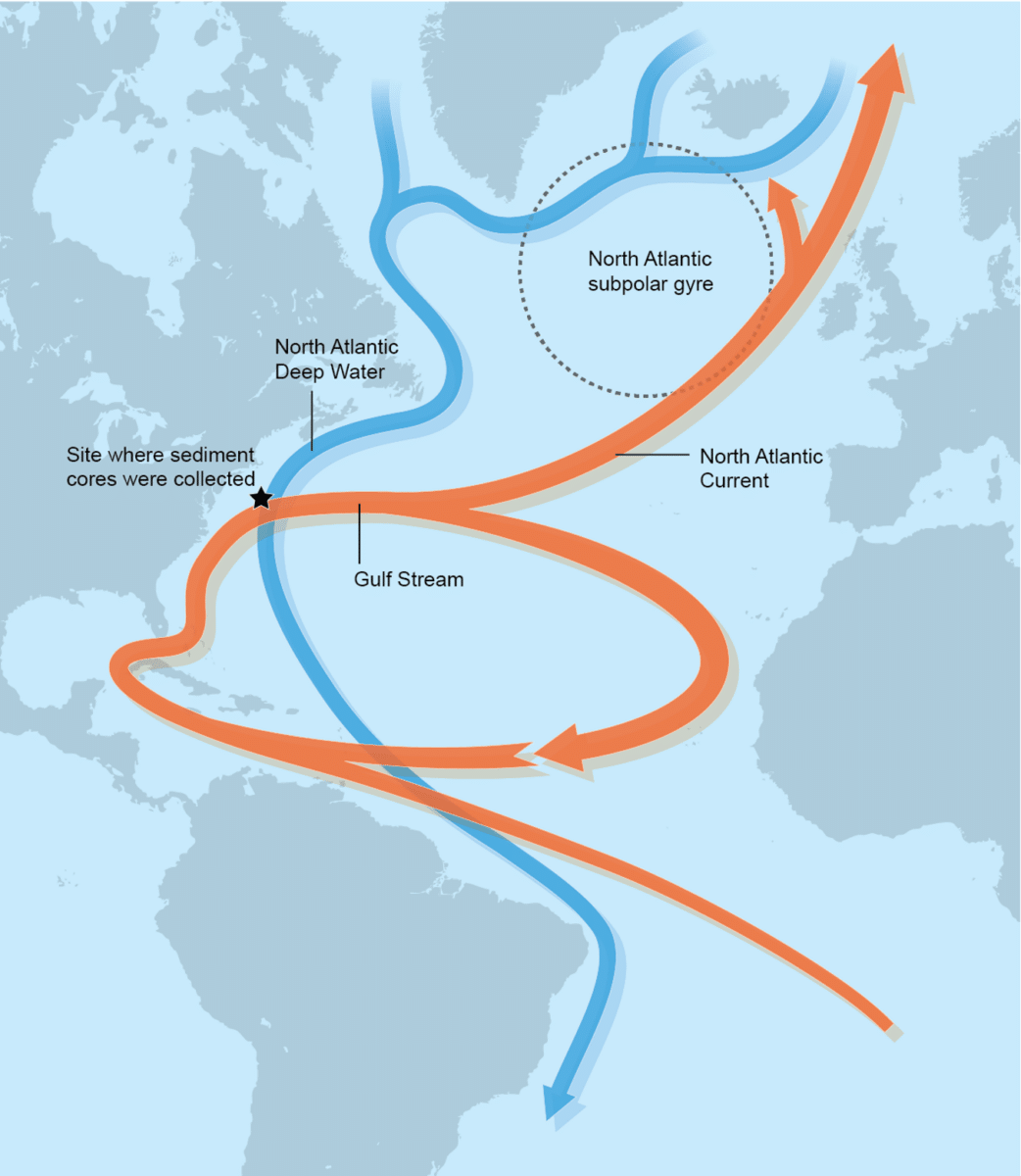
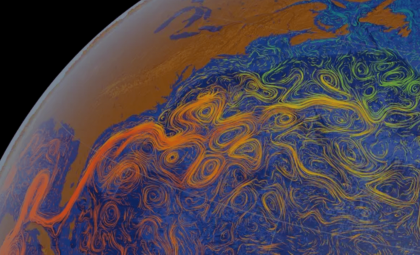
The AMOC functions as a vast heat transport system for the planet. Warm, salty waters flow northward near the surface from tropical regions, releasing heat and moderating climates over Europe and North America. As the water cools, it becomes denser, sinks, and returns southward at deeper levels, completing the circulation loop.
A collapse of the AMOC would trigger widespread consequences globally. Northern Europe could experience harsh winters and severe drought conditions in summer. Sea levels along the northeastern U.S. coast may rise between 50 and 100 centimeters higher than predicted. The tropical rainfall belt, vital for millions of farmers growing key crops like wheat and maize—accounting for 40% of global calories—would shift considerably. Additionally, Atlantic marine ecosystems would face major disruption.
Rahmstorf, with 35 years studying the AMOC, insists that preventing the current’s shutdown is critical. Previously, collapse chances were estimated around 5%, which he described as already too risky given the severe impacts. Now, he warns that likelihood exceeds 50%, as told to The Guardian.
Refining Future Predictions
Forecasts for the AMOC’s future have varied greatly, with some models showing minimal change by 2100 and others predicting a steep 65% decline, even with net-zero emissions. This variability arises from complex interactions influencing water density, including sea surface temperature and salinity across the Atlantic basin.
To narrow these uncertainties, Portmann’s team evaluated multiple climate models against real-world data, focusing on temperature and salinity measurements from the Southern Atlantic—a key region for AMOC activity. Employing a statistical approach called ridge-regularized linear regression, rarely used in climate science, they identified the models best aligned with observed patterns. This method reduced forecasting errors by 79% relative to traditional techniques. Those most consistent with observations also suggested the sharpest slowdown in the AMOC.
Earlier research typically relied on a single observable metric, such as historical AMOC intensity or seasonal temperature shifts. By integrating multiple observational constraints, the authors produced results that Rahmstorf described as “highly credible.”
Ongoing Discussions in the Scientific Community
Despite the alarming figures, some researchers urge caution in interpreting these findings as definitive. David Thornalley, professor of ocean and climate science at University College London and unaffiliated with the paper, noted to Live Science that “uncertainties remain regarding models’ capacity to simulate and forecast AMOC changes accurately.” He acknowledged the concerning nature of the results but pointed out that model outputs heavily depend on the particular variables selected by scientists.
Laura Jackson from the UK Met Office concurs, stating, “Determining which model projections of AMOC decline are most reliable remains an open debate. Uncertainty about the extent and timing of AMOC weakening persists due to diverse model outcomes.”
Ocean circulation specialist María Paz Chidichimo of Argentina’s National Scientific and Technical Research Council emphasizes that pinpointing an exact collapse timeline is less urgent than addressing ongoing transitions. “There is sufficient evidence of AMOC variability and slowdown, with environmental changes already affecting global socioeconomic conditions,” she noted. “Immediate preparations by nations are essential.”
Factors Causing the AMOC’s Decline
The AMOC is weakening primarily due to accelerated warming in the Arctic, one of Earth’s fastest-heating regions. This reduces the cooling of water moving north, making it less dense and hindering its ability to sink, a crucial phase in the circulation. The slowdown causes increased surface rainfall, which dilutes water salinity and further lowers density.
This creates a reinforcing cycle: sinking slows, weakening the overall circulation. Reduced influx of salty tropical water and accumulating freshwater at the surface exacerbate the decline. Notably, the new models do not yet incorporate the effect of meltwater discharge from the Greenland ice sheet, which further freshens the North Atlantic. Rahmstorf warned this omission likely underestimates the severity of the situation.
The AMOC has experienced collapses in the past. The most recent was at the close of the last Ice Age, when massive freshwater floods from melting ice disrupted the circulation and caused rapid climate shifts within decades. Although continuous direct monitoring of the AMOC started only in 2004, proxy evidence reveals it is currently at its weakest level in 1,600 years.
- Categories:
- News





0 comments
Sign in to Comment