
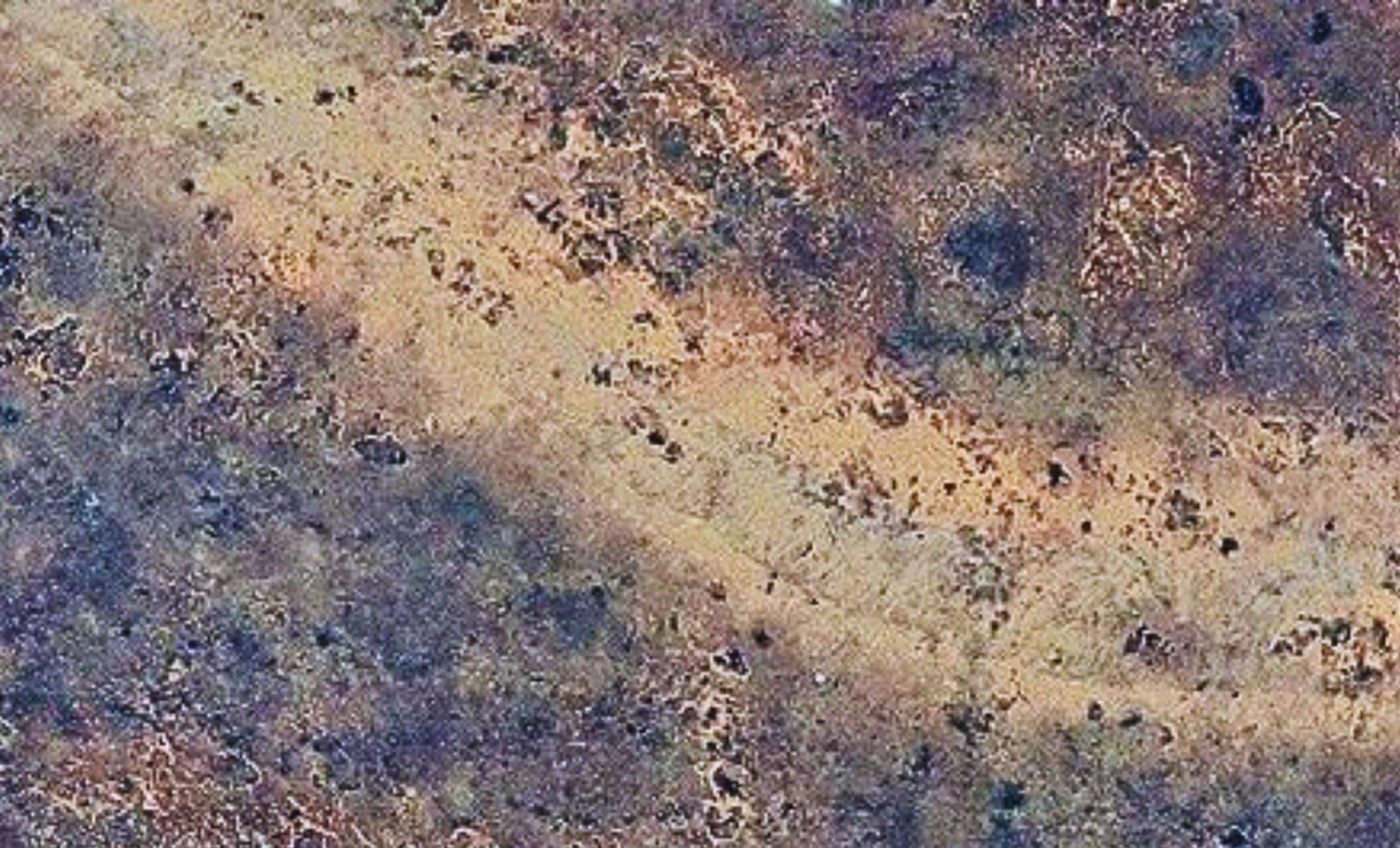
While searching Google Maps for cave systems in the isolated Australian outback, an enthusiast stumbled upon an astonishing meteorological phenomenon. What started as a casual investigation revealed an immense tornado damage track spanning a vast area of the Nullarbor Plain in Southern Australia.
The Unusual Mark That Could Redefine Tornado Studies
During a routine scan for natural caves and karst formations, a man discovered an extraordinarily distinct formation etched into the landscape—too precise to dismiss. This discovery took place in the remote Nullarbor Plain, known for its wide-open, barren terrain.
Initially perceived as a quirky geographical feature on the map, this extensive mark actually measures around 11 kilometers in length and varies between 160 to 250 meters in width. Rather than a random land distortion, researchers identified it as the result of a severe tornado event.

The mark appeared between November 16 and 18, 2022, but its importance was recognized only recently. Led by Matej Lipar from Curtin University, scientists pieced together its significance. Lipar remarks, “The scar was overlooked by local weather monitoring stations. The rediscovery followed the caver’s report, which prompted us to examine the evidence more closely.”
A Tornado That Went Unnoticed
This tornado’s existence was unknown until now, though tornadoes, while uncommon, do occur in Australia. The Nullarbor Plain is sparsely inhabited, making it a region where such intense weather phenomena can go undetected without causing obvious destruction near population centers or equipment.
Analysis suggests this was an extremely powerful tornado, with winds exceeding 200 kilometers per hour. Lipar explains, “Reviewing satellite images from the event, the cycloidal patterns found in the scar align with characteristics of an F2 to F3 tornado, according to the Fujita scale.”
Tornadoes categorized as F2 or F3 possess destructive force capable of damaging infrastructure, yet the remoteness of the affected area meant no direct observations were reported.
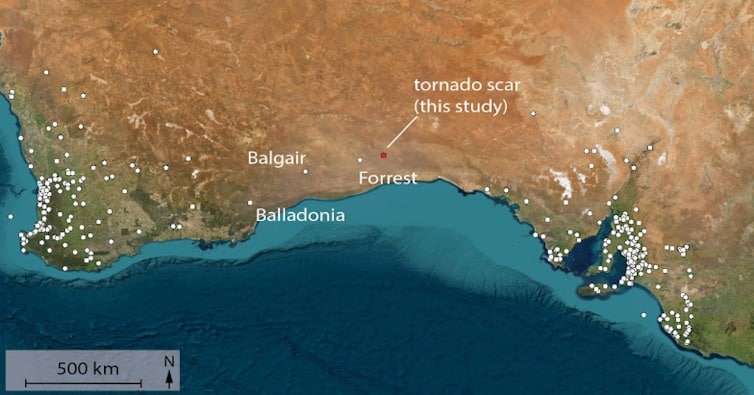
The Role of Satellite Technology in Revealing a Hidden Storm
You might wonder how experts verified that the marking was caused by a tornado. Modern technology played a key role. With Google Earth satellite imagery combined with atmospheric data, scientists traced the scar back to the narrow timeframe of November 16–18, 2022, coinciding with a cold front accompanied by tropical moisture conducive to tornado formation.
Further investigation uncovered rings of blue, circular indentations in the vicinity of the scar, indicating temporary water ponds from intense rain. These signs, supported by regional weather station readings, confirmed a tornado had swept through the area.
The Broader Impact of This Meteorological Revelation
While this might seem like an isolated weather curiosity, the discovery holds significant implications for meteorology. The Nullarbor Plain’s vast emptiness means many tornadoes likely remain undocumented since no eyewitnesses or infrastructure are present to report damage.
Historically, only three tornadoes have been officially recorded in this region. This new finding hints that additional undetected tornadoes might have occurred. “It suggests a previously unrecognized frequency of tornado events in the Nullarbor area,” says Lipar.
The research highlights the critical value of utilizing satellite surveillance and other modern detection methods to uncover tornado activity in hard-to-monitor locations where traditional systems fall short.
- Categories:
- News ,
- Climate change








0 comments
Sign in to Comment