
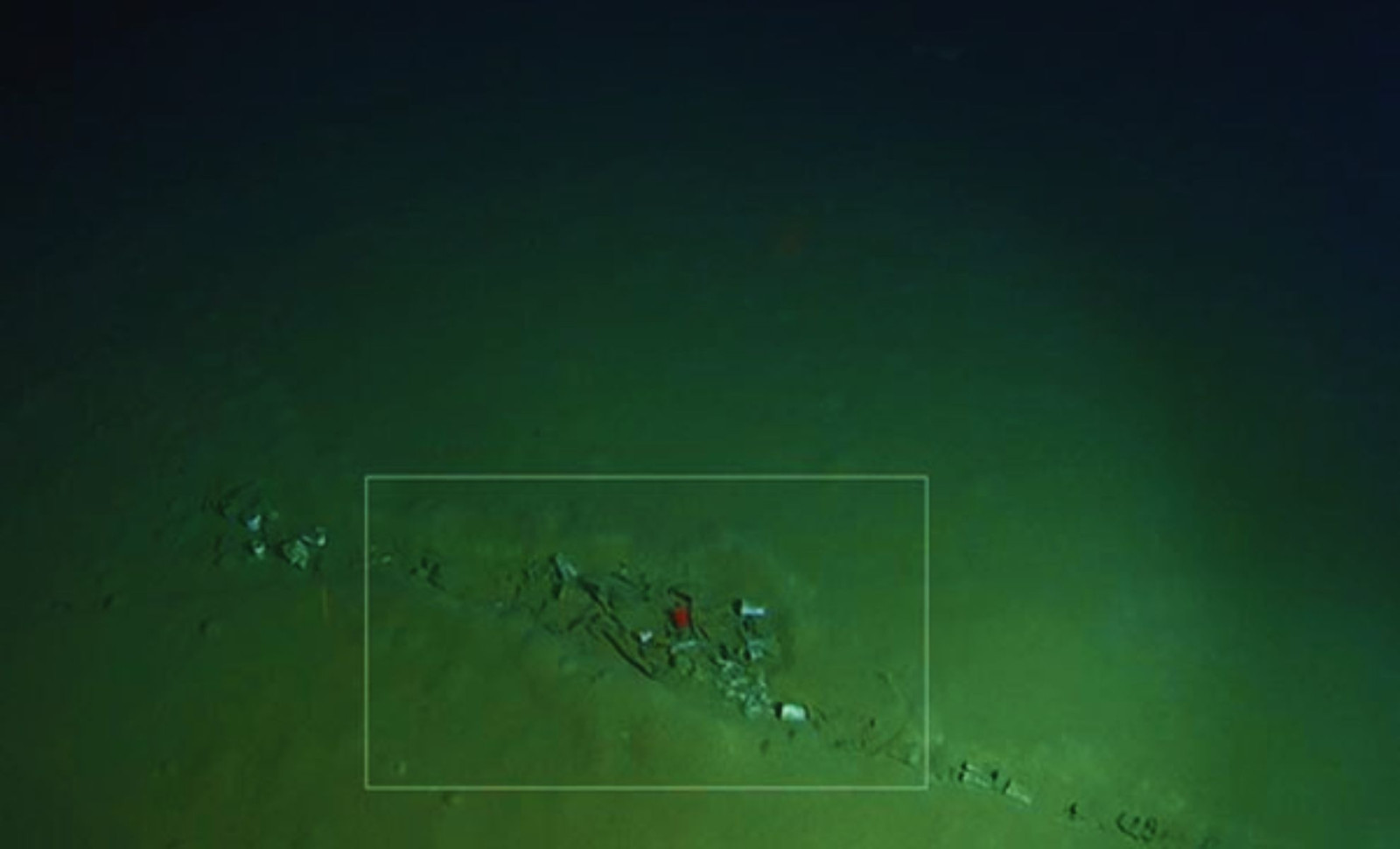
At a staggering depth of over five kilometers, the Calypso Deep can no longer be considered a pristine environment. Scientists have uncovered a significant accumulation of man-made waste on the Mediterranean Sea’s ocean floor, challenging previous assumptions that this remote location was free from pollution.
The results are detailed in a recent article in Marine Pollution Bulletin, authored by Miquel Canals and colleagues from the University of Barcelona along with an international research team.
Unexpected Volume of Debris at Extreme Depths
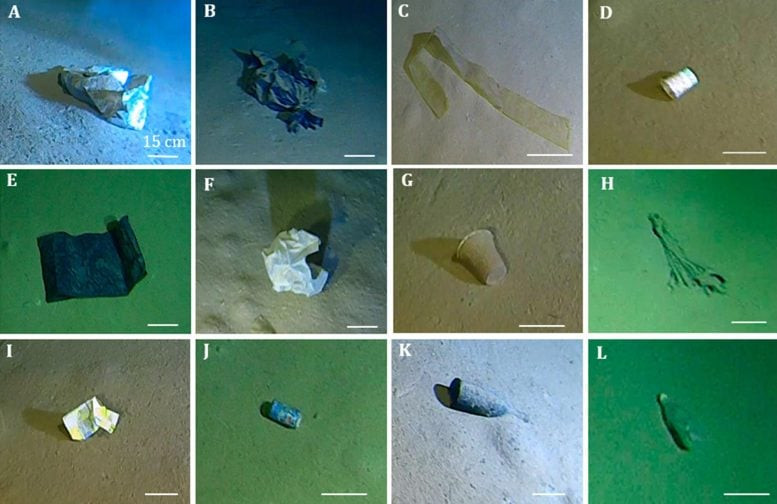
During their investigation, researchers documented 167 items resting at a depth of 5,112 meters. Of these, 148 were identified as marine litter including fragments of plastic, glass, metal, and paper materials.

The study published in Marine Pollution Bulletin highlights this location, situated roughly 60 kilometers west of the Peloponnese within the Hellenic Trench, as experiencing one of the densest concentrations of underwater trash recorded at these depths.
Exploring this zone required the use of the submersible named Limiting Factor, which spent 43 minutes near the seabed covering about 650 meters. Images captured during this dive exposed the extensive spread of debris in the abyssal environment.
Tracing the Origin of the Deep-Sea Trash
The presence of such waste at this depth is attributed to well-understood processes. As Miquel Canals explains:
“Some light waste, such as plastics, comes from the coast, from where it escapes to the Calypso Deep, just 60 kilometers away. Some plastics, such as bags, drift just above the bottom until they are partially or completely buried, or disintegrate into smaller fragments.”
Oceanic currents facilitate the transport of debris originating from the southern Ionian Sea, the Adriatic Sea, and neighboring Greek waters. Rotating surface currents, or eddies, also play a role in congregating floating refuse and funneling it toward the deep trench, where the litter eventually sinks to the seafloor.
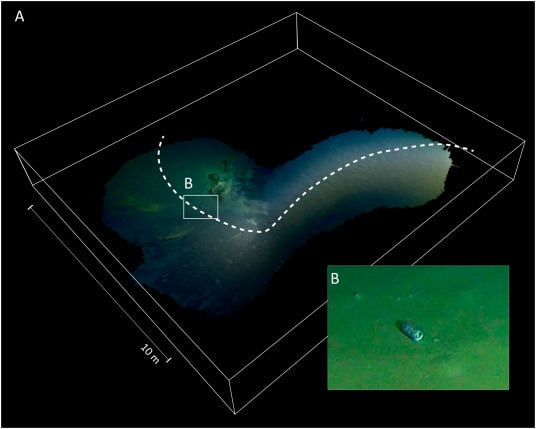
The researchers observed waste arranged in lines and noted distinct disturbances on the sediment surface.
“We have also found evidence of the boats’ dumping of bags full of rubbish, as revealed by the pile-up of different types of waste followed by an almost rectilinear furrow. Unfortunately, as far as the Mediterranean is concerned, it would not be wrong to say that “not a single inch of it is clean,” he declared.
A Basin-Like Abyss Where Debris Settles Permanently
The geometry of the Calypso Deep acts like a natural trap, causing any material sinking into it to remain confined.
Caladan Oceanic notes that the slow-moving currents within this trench, typically around 2 centimeters per second, allow debris to accumulate, as the weak flow prevents it from being swept away.
Organisms are scarce at these depths, with the submersible’s cameras spotting only a few species, including the fish Coryphaenoides mediterraneus and the shrimp Acanthephyra eximia. In ecosystems richer in life, such pollution poses significant risks to marine organisms.
- Categories:
- Science










0 comments
Sign in to Comment