
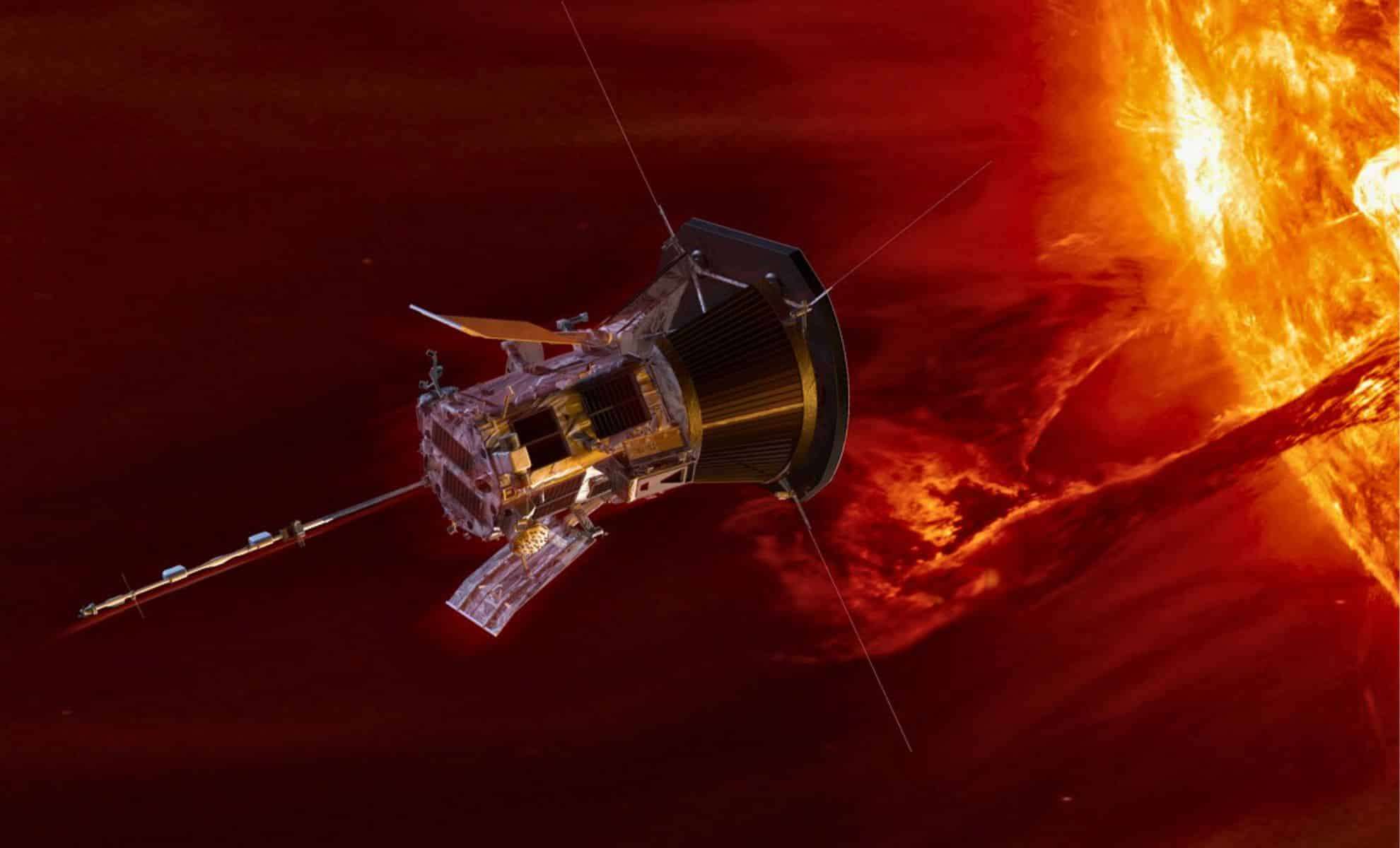
Launching in 2018 after decades of anticipation, NASA’s Parker Solar Probe embarked on an unprecedented journey to venture into the Sun’s blazing atmosphere and unveil its hidden dynamics. This extraordinary spacecraft braves temperatures exceeding molten rock and races at mesmerizing speeds, bringing humanity closer to decoding the star that powers our solar system.
A Tribute to a Pioneer in Space Science
In an unprecedented move, NASA named this spacecraft after Eugene Parker, the visionary physicist who first proposed the existence of solar wind in 1958. His once-controversial concept has since laid the groundwork for heliophysics, enhancing our grasp of solar activity’s influence on planets, spacecraft, and human spaceflight. The mission bearing his name is now demonstrating both his foresight and the vast mysteries that remain.
Ambitious Goals Driving the Mission
About the size and weight of a compact vehicle, the Parker Solar Probe carries state-of-the-art instruments to tackle some of the Sun’s most enigmatic phenomena. NASA has outlined three core objectives:

- Deciphering the extreme temperatures of the Sun’s corona – Investigating why the outer solar atmosphere is vastly hotter than the surface beneath.
- Uncovering how solar wind gains momentum – Understanding the forces accelerating this powerful stream of charged particles through the solar system.
- Monitoring high-energy solar particles – Studying how these energetic bursts propagate and impact Earth’s satellites and power grids.
Addressing these questions not only advances solar physics but also enhances our ability to forecast space weather hazards, safeguarding astronauts and critical infrastructure on Earth.
Engineering to Withstand Extreme Solar Heat
One of the mission’s greatest technical hurdles was designing a spacecraft capable of withstanding the Sun’s intense heat. Flying closer to the Sun than ever, the probe encounters temperatures hotter than molten metals.
Its innovative heat shield, made from a carbon-composite just 11.43 cm thick, can tolerate temperatures exceeding 1,377°C. Despite the blistering environment outside, the probe’s sensitive instruments remain cool at around 29°C, a remarkable achievement in thermal management.
The Swiftest Man-Made Traveler
To reach its target, the Parker Solar Probe achieved record-breaking speeds. Utilizing precise gravitational assists from Venus, it steadily reduced its orbit to skim closer to the Sun’s surface. By late 2024, it had completed 22 flybys, approaching as close as 6.17 million kilometers, well inside Mercury’s orbit.
At top speed, the spacecraft zips along at more than 700,000 km/h (430,000 mph)—fast enough to fly from New York to Tokyo in under 60 seconds. This extreme velocity enables it to capture real-time data on solar corona and magnetic field fluctuations.
Groundbreaking Discoveries Transforming Solar Science
The probe’s observations have challenged long-standing ideas and revealed unexpected solar phenomena:
- Solar wind “switchbacks” – Twisting, S-shaped waves detected in the solar wind point to turbulent energy flows previously unknown.
- Dust evaporation near the Sun – Cosmic dust vanishes under intense heat, defining a new, dynamic space environment close to our star.
- Fluctuating magnetic fields – Rapid reversals in magnetic polarity shed light on solar storm formation, prompting revisions to existing solar models.
Technological Advances Beyond Space Exploration
The Parker Solar Probe’s innovations extend further than astrophysics. Its breakthroughs in heat shields, autonomous flight systems, and ultra-fast data links are inspiring developments across numerous industries.
Experts at Johns Hopkins Applied Physics Laboratory anticipate these technologies will pave the way for future space missions, improve industrial thermal protection, and enhance cooling solutions for advanced electronics.
- Categories:
- Science












0 comments
Sign in to Comment