
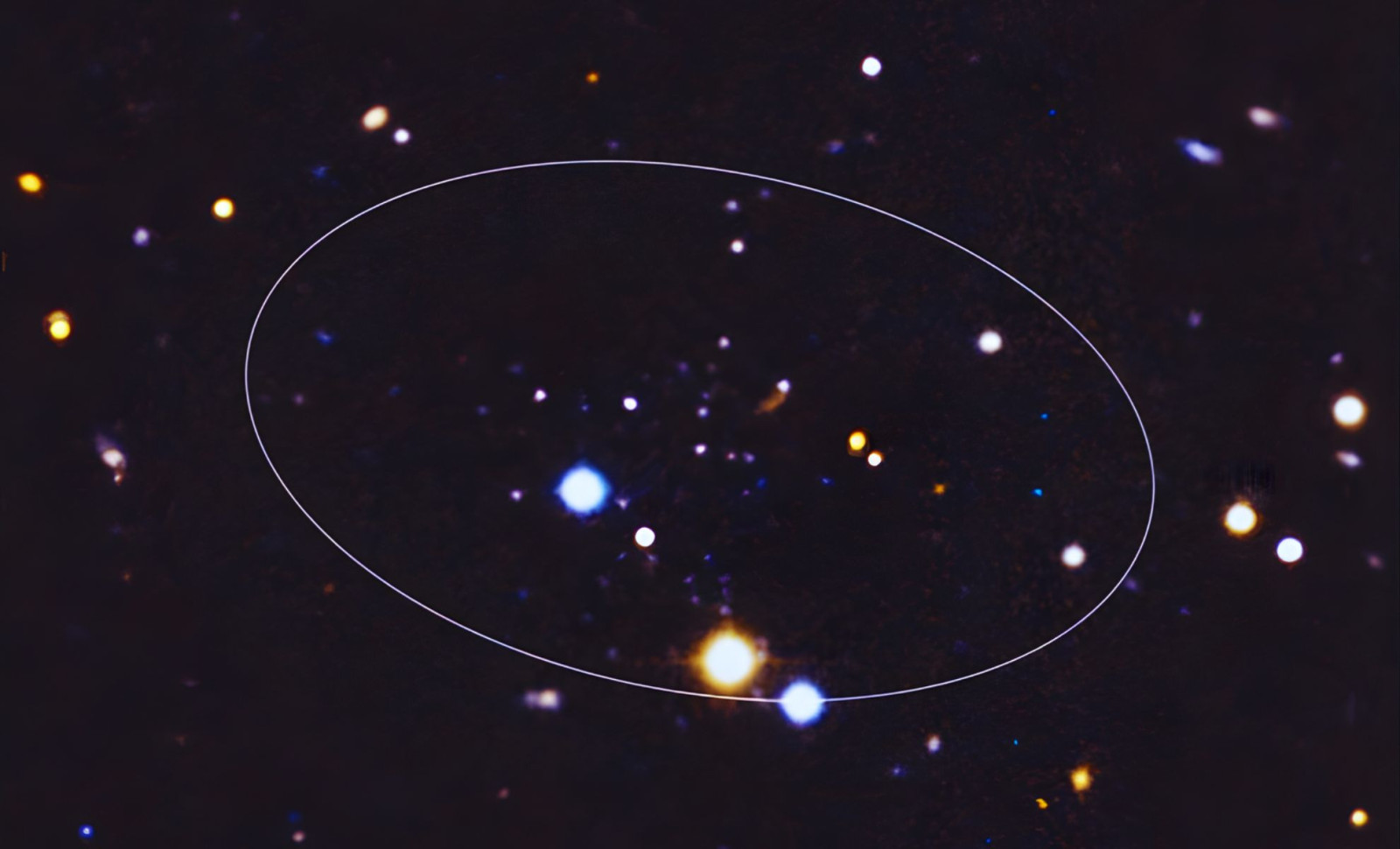
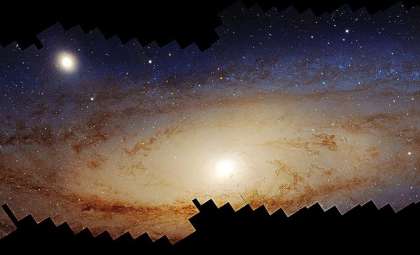
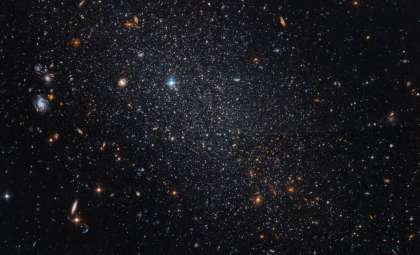
A recently confirmed ultra-faint galaxy located near Andromeda is offering new insights into the universe’s primordial history. Dubbed Andromeda XXXVI, this diminutive dwarf galaxy is one of the dimmest and most ancient celestial bodies documented to date. Announced in March via the arXiv preprint platform, this finding emphasizes the many cosmic secrets still hidden close to home.
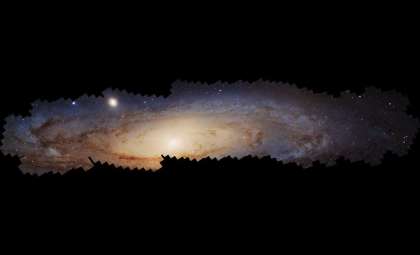
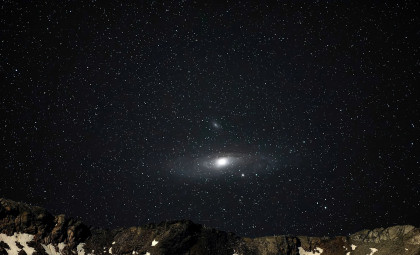
Despite extensive explorations around Messier 31 (M31), astronomers continue to uncover new satellite galaxies. These ultra-faint dwarfs, often referred to as UFDs, attract interest due to their high dark matter content and minimal chemical enrichment over time.
Careful Human Examination Reveals New Galaxy
Andromeda XXXVI was initially spotted by citizen astronomer Giuseppe Donatiello while scrutinizing public imagery from the Pan-Andromeda Archaeological Survey (PandAS). This discovery underscores that manual inspection still plays a vital role alongside automated detection methods.

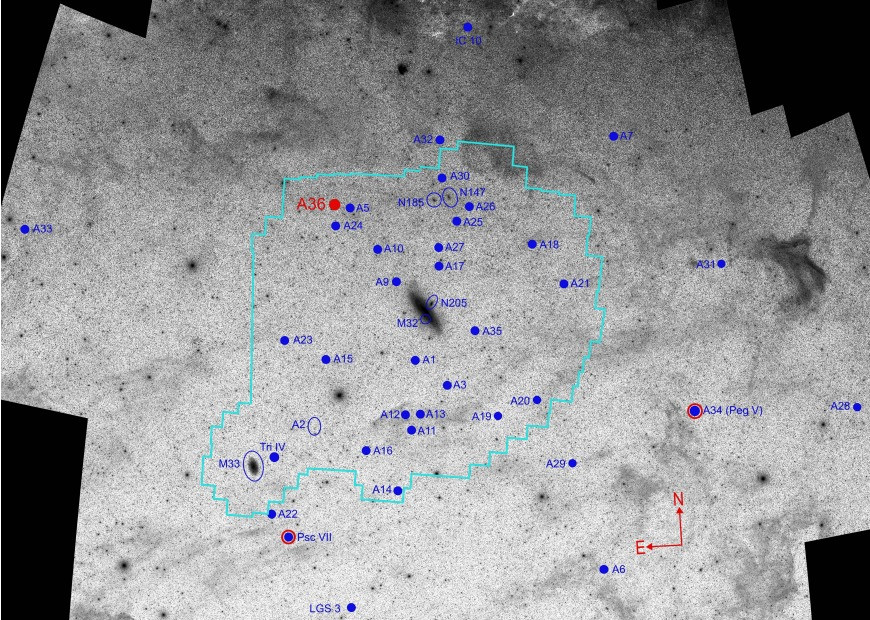
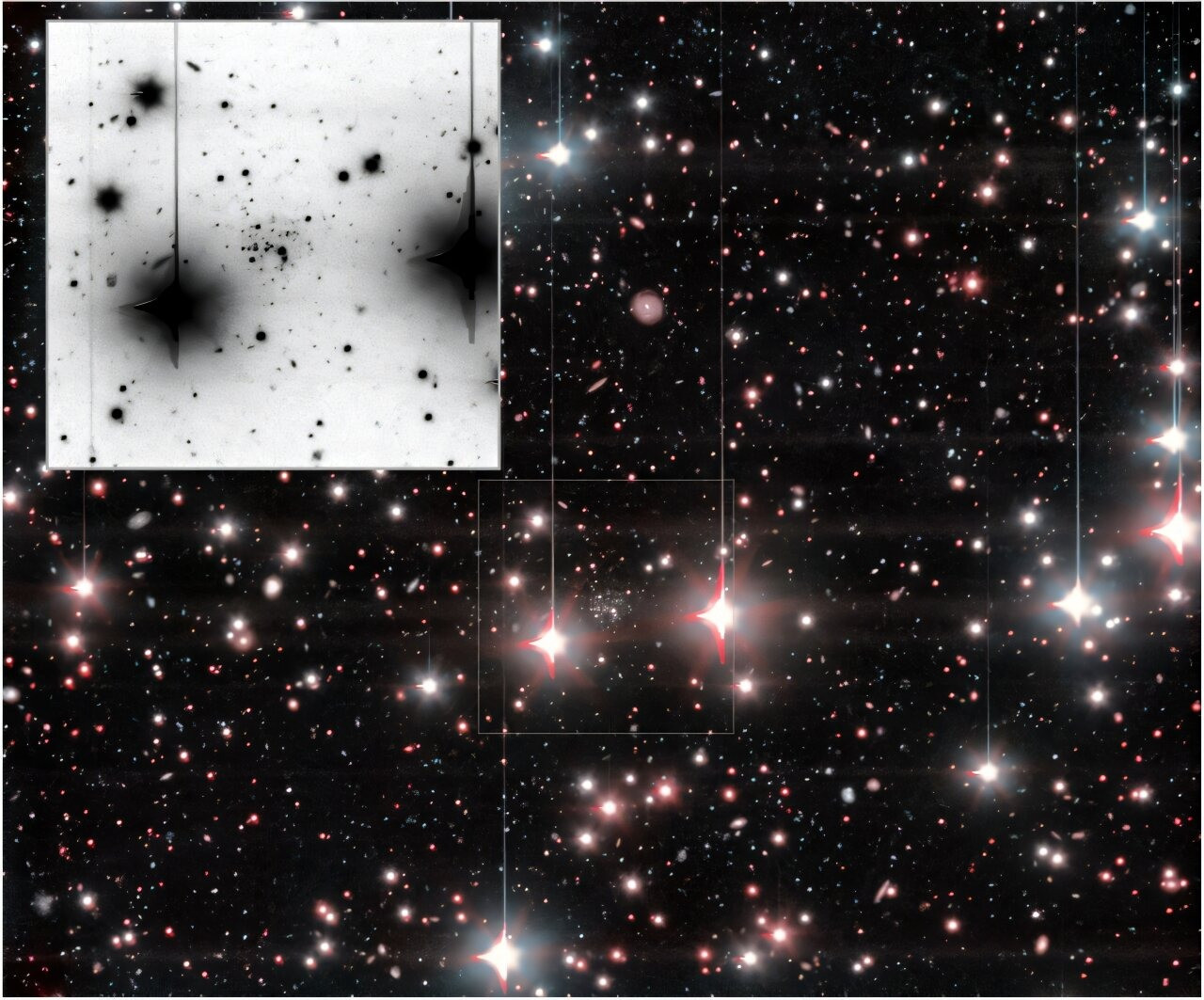
The team, led by Joanna D. Sakowska at the Institute of Astrophysics of Andalusia, subsequently validated the galaxy’s presence using deep observations from the Roque de los Muchachos Observatory. These imaging data enabled researchers to resolve individual stars within Andromeda XXXVI. According to their published work, stellar populations were examined through a color-magnitude diagram to characterize the galaxy’s properties and confirm its classification as an ultra-faint dwarf.
A Tiny, Dim Companion Hidden Near Andromeda
The attributes of Andromeda XXXVI rank it among the faintest known galaxies. Findings show an absolute magnitude of about −6.0 and a half-light radius near 208 light-years, indicating a compact scale. Its ellipticity, approximately 0.015, reveals a nearly spherical form. These traits establish it as one of the most tightly bound ultra-faint dwarfs orbiting Andromeda.
Distance evaluations further support this categorization. The galaxy lies roughly 2.53 million light-years from Earth and approximately 388,000 light-years from M31, well within the host’s estimated virial radius of around 850,000 light-years.
A Pristine Galaxy Preserved from the Dawn of Time
The galaxy’s age and elemental content make it a critical object for study. Researchers estimate Andromeda XXXVI to be about 12.5 billion years old, indicating it originated during the universe’s formative stage. Its metallicity value of roughly −2.5 suggests a very low concentration of heavy elements, underscoring minimal chemical evolution and marking it as a relic galaxy.
The study also suggests that our closest galactic neighbor could harbor nearly 100 dwarf satellite galaxies, though only about half of them have been detected to date. In the words of the researchers:
“The discovery of Andromeda XXXVI highlights that visual inspection remains very complementary to automatic and machine learning approaches, using resolved and/or semi-resolved data. Both methods in combination thus remain crucial towards constructing a complete picture of Andromeda.”
- Categories:
- Space




0 comments
Sign in to Comment