
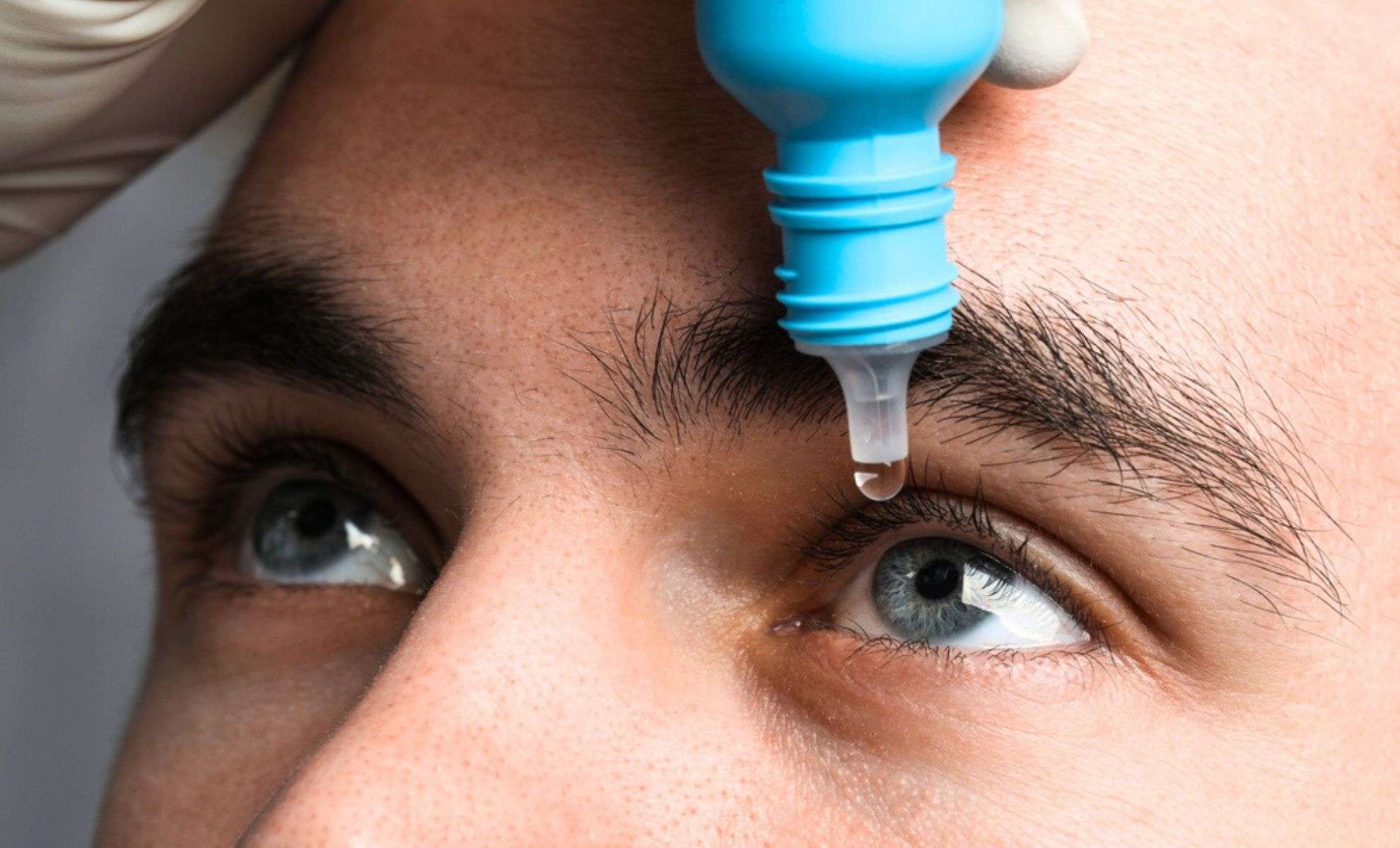
The U.S. Food and Drug Administration (FDA) has recently approved a novel daily eye drop therapy aimed at restoring near vision for adults with presbyopia, eliminating the need for reading glasses, contact lenses, or invasive procedures. Known commercially as Vizz, these drops target the common age-related difficulty in focusing on close objects that typically begins after age 40.
Rather than introducing a new molecule, Vizz reintroduces an established drug from the 1970s originally developed to treat glaucoma. Its repurposing hinges on its ability to induce mild pupil constriction when administered in low concentrations. This physiological effect enhances depth of field, improving near vision similarly to how a smaller camera aperture sharpens images.
With presbyopia affecting over 128 million Americans as reported by the National Eye Institute, most currently depend on readers or multifocal lenses, which some find inconvenient or aesthetically undesirable. By contrast, Vizz offers a straightforward daily routine: applying a single drop in each eye each morning delivers clear near vision for about ten hours.

Several clinics in the U.S., including pioneering centers in Houston, Texas, have started offering Vizz with promising patient responses. Early users like Chaun Tatum-Williams expressed satisfaction, noting they no longer needed reading glasses within days of use. FOX 26 interviewed Dr. Joseph Varon, who personally experienced clear near vision moments after application and vouched for its efficacy.
Mechanism Behind the Eye Drops
Vizz functions by triggering constriction of the pupils, which effectively reduces peripheral light intrusion and enhances close-up clarity. Though this principle is familiar to eye care professionals, Vizz is among the first widely available products to harness it in a user-friendly format.
The medication belongs to the class of miotic agents that induce contraction of the iris muscles. While generally safe, users sometimes experience minor side effects such as temporary eye irritation, redness, and diminished night vision under low-light situations. As explained by Dr. Allan Panzer from the Houston Dry Eye Clinic, these effects are not harmful but should be considered, particularly for those who drive after dark.
Unlike surgical options like refractive surgery or wearing multifocal lenses, Vizz does not modify the eye’s anatomy. This means users avoid recovery periods and permanent alterations, although the effect lasts only for a day, requiring daily administration. The company Novartis estimates the price point to be approximately $2 per day.
The Expansion of Non-Invasive Vision Solutions
Vizz joins a rising wave of interest in non-invasive alternatives for vision correction, driven by aging demographics and increasing screen use. Other similar drop-based therapies, such as the FDA-approved pilocarpine formula Vuity (2021), are emerging. Developers of Vizz suggest their formulation leads to fewer adverse effects and steadier focus for both near and distance vision.
Projections by the World Health Organization suggest around 2 billion people globally will experience presbyopia by 2030. This demand encourages innovation in vision care products that offer a middle ground between glasses and invasive surgeries. Beyond convenience, these solutions address aesthetic and psychological factors associated with wearing corrective lenses.
Clinical Evidence and Future Directions
The FDA’s authorization of Vizz draws upon data from multiple clinical trials conducted under the oversight of the Center for Drug Evaluation and Research. Though comprehensive peer-reviewed results are pending release, company statements indicate substantial gains in near vision within 15 minutes of application, with minimal near-distance vision trade-offs.
Research on comparable compounds, highlighted in studies published in JAMA Ophthalmology, demonstrates encouraging findings regarding safety and patient usability, serving as a benchmark for the promising prospects of Vizz in a competitive vision care market.
- Categories:
- News













0 comments
Sign in to Comment