
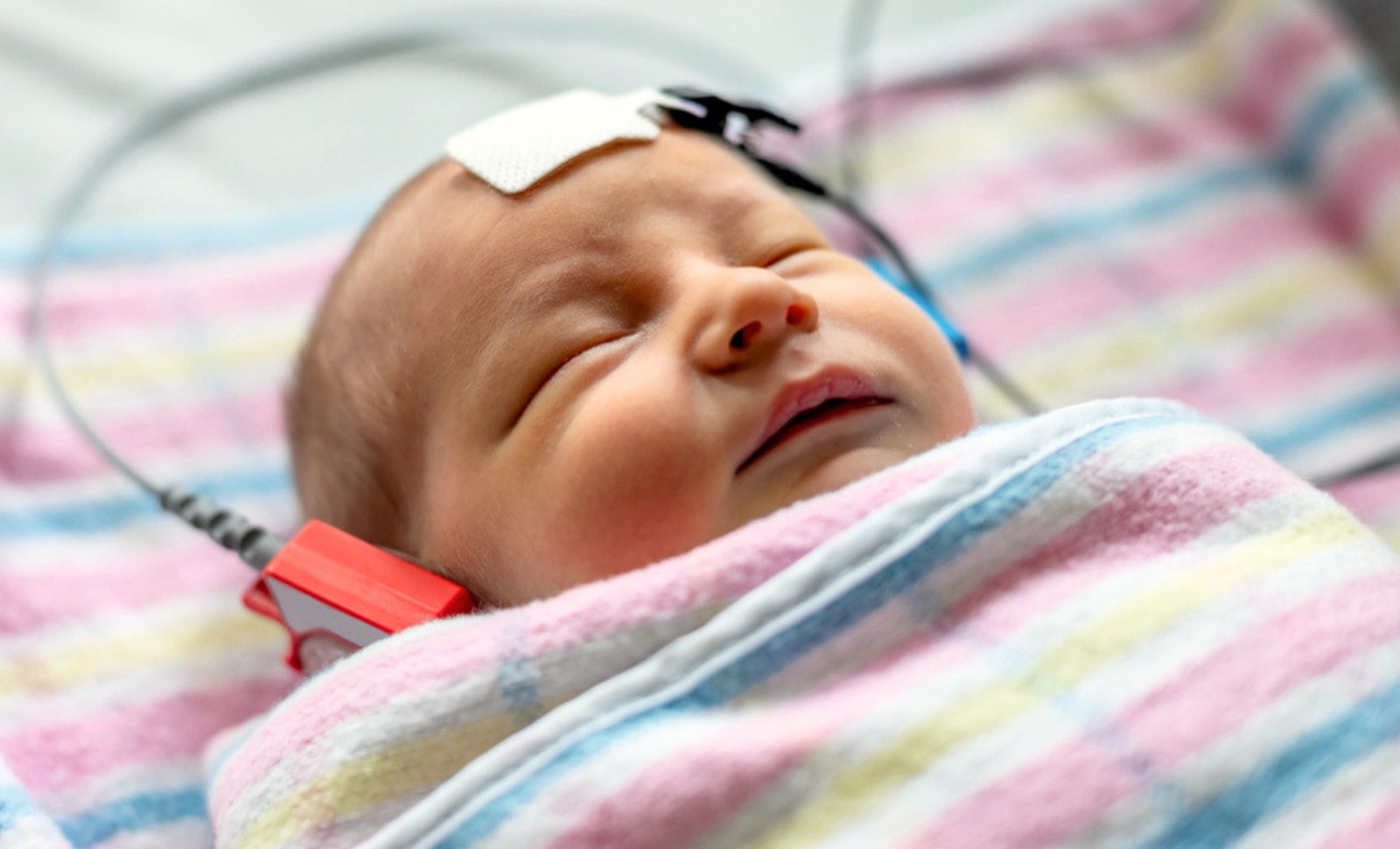
Travis once remained unresponsive to sound, even falling asleep through noise. That changed when his mother’s laughter suddenly roused him—the very first time he heard her voice. This breakthrough came about three months after he underwent an innovative gene therapy targeting hereditary deafness within a clinical study.
On April 23, 2026, the FDA authorized this treatment, marking the inaugural gene therapy for hearing impairment approved in the U.S. Named Otarmeni, the therapy was created by Regeneron Pharmaceuticals, which has pledged to offer it at no cost to eligible American patients.
In clinical trials leading to approval, 80 percent of the 20 children assessed demonstrated measurable improvements in hearing within a year, with 42 percent capable of perceiving whispered speech. The disorder Otarmeni addresses affects roughly 50 newborns annually in the U.S., and before this innovation, no therapies existed to tackle the genetic root cause.

How a Missing Protein Disrupts Hearing Signals
Otoferlin-related deafness results from defects in the OTOF gene, responsible for producing a protein called otoferlin. This protein functions as a crucial messenger within the cochlea—the inner ear’s spiral-shaped organ—initiating the electrical impulses transmitted from auditory hair cells to the brain. For individuals with two faulty copies of this gene, no functional otoferlin is manufactured. While sound is detected by the ear, the signal cannot be sent onward.
This genetic issue represents 2 to 8 percent of all hereditary hearing loss cases. Late diagnosis worsens outcomes, as children without timely intervention miss key developmental stages for speech and language acquisition. Previously, the only option was a cochlear implant, an electronic device that transforms sound into electrical signals directed to the auditory nerve.
Users often describe cochlear implant hearing as mechanical or metallic, with difficulty perceiving high-pitched sounds. Otarmeni offers a novel strategy by repairing the defective biology rather than circumventing it.
Delivering the Gene Therapy Inside the Ear
Gene therapy introduces a healthy version of a faulty gene into the affected cells. Otarmeni uses a modified adeno-associated virus, termed AAV1, to transport a functional OTOF gene directly into the cochlea’s inner hair cells. Upon delivery, these cells start producing otoferlin anew. The treatment is administered via a small surgical incision similar to that used for cochlear implant placement, requiring one dose per ear.
Because the OTOF gene is too large for a single viral vector, Regeneron devised a dual-vector system delivering the gene in two halves. Inside cells, these segments recombine to form a complete, functional gene. This complex dual-vector approach was one of the most intricate genetic therapies reviewed by the FDA.
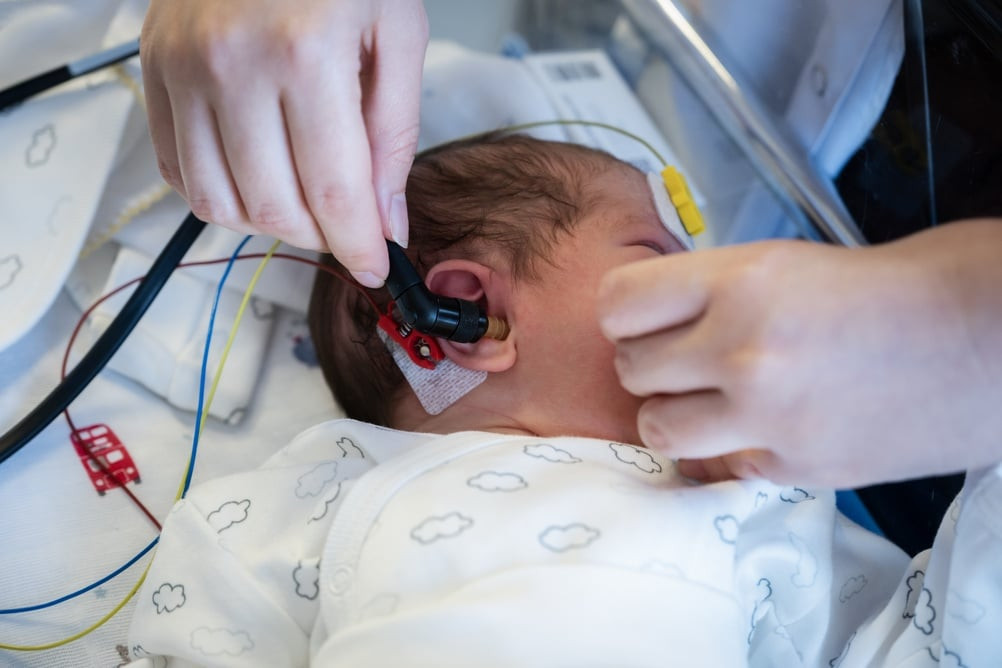
FDA approval came just 61 days after Regeneron’s application—a pace tied for the fastest review of a biologic under the agency’s National Priority Voucher program, which expedites therapies for rare, untreated conditions.
Trial Outcomes That Secured Approval
The agency’s decision was based on one ongoing multi-center study involving 24 children aged 10 months to 16 years. Among 20 evaluable participants, 80 percent experienced hearing gains that the FDA identified as unprecedented without treatment. Eliot Shearer, a pediatric ENT specialist at Boston Children’s Hospital and trial co-leader, told NBC News the therapy’s impact is “life-altering for families with children suffering hearing loss.”
Side effects noted were middle ear infections, nausea, dizziness, and pain related to the procedure. Otarmeni is unsuitable for patients whose ear anatomy prevents safe surgical access or those already having cochlear implants in the treated ear. The FDA granted accelerated approval, requiring further data confirming sustained hearing improvement and positive effects on speech and quality of life.
Corroborating Global Research
Just one day prior to the FDA announcement, a related trial in China published findings in Nature. Including 42 subjects, among them adults, the study demonstrated hearing restoration in 90 percent of participants. Although the methodology varied from Otarmeni’s, it confirmed that repairing OTOF gene function can successfully restore hearing in affected individuals.
Daniel Lee, head of pediatric otology at Massachusetts Eye and Ear, told the New York Times: “We’ve entered an era of biological treatments for sensorineural hearing loss.” John Germiller, pediatric ear surgeon at Children’s Hospital of Philadelphia, told the same outlet future efforts should address progressive hearing loss by preserving cochlear cells before irreversible damage occurs.
Ethical Considerations and Diverse Perspectives
The FDA’s approval is not without controversy. Members of the Deaf community caution against viewing deafness solely as a disorder needing correction, emphasizing its status as a distinct cultural and linguistic identity.
Teresa Blankmeyer Burke, a bioethicist at Gallaudet University, has expressed concern that widespread gene therapy uptake could diminish the Deaf population, threatening the preservation of Deaf culture and sign language. Historian Jaipreet Virdi from the University of Victoria pointed out to NPR that this medical perspective assumes deafness is inherently a problem, often without properly including dissenting voices.
For families with profoundly deaf children, the decision weighs differently. Sierra Smith, Travis’s mother, described hearing her son’s laughter for the first time as “the most surreal moment any mother can experience.” The FDA has scheduled a public meeting for June 4, 2026, to evaluate the National Priority Voucher program’s framework, with a comment period open through June 29.
- Categories:
- News













0 comments
Sign in to Comment