
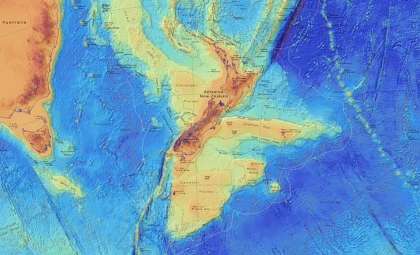
Earth’s array of continents includes a remarkable hidden giant: Zealandia. This largely submerged landmass beneath the southwestern Pacific has now been fully charted by geologists, providing fresh insight into our planet’s deep geological narrative.
A Hidden Land Beneath the Waves
Back in 2017, Zealandia—known to the Māori as Te Riu-a-Māui—was brought to global attention. Covering over 5 million square kilometers, it is nearly twice the size of India, making it a continent of substantial proportions. Yet, its near-complete submersion, with 95% of its area underwater, kept it out of sight.
Zealandia remained concealed because only a few parts, such as New Zealand and some smaller islands, rise above the ocean. The floodwaters began encroaching around 40 million years ago, progressively engulfing the land before humans appeared on Earth.

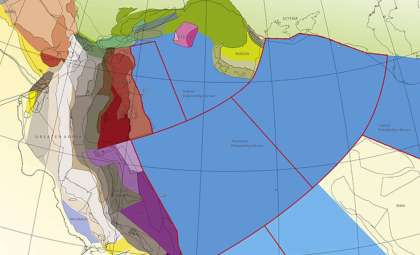
Its geographical remoteness (Zealandia) meant exploration lagged until cutting-edge geophysical surveys and ocean drilling recovered rock cores. This approach allowed a multinational team of geologists to assemble the first detailed geological map of Zealandia.
Uncovering an Ancient Volcanic Legacy
The new map uncovers Zealandia’s primordial story through extensive sandstone beds and basalt pebbles along its margins (continent). These formations date back more than 95 million years.
The sandstone units, about 95 million years old, hold fragments of older granite and volcanic rocks. These remnants imply Zealandia once hosted volcanic highlands, from which rivers carved valleys leading into tectonic basins. Erosion over time shaped the sandstone deposits studied in depth by researchers.
Supporting Zealandia’s volcanic nature, the basalt pebbles are linked to underwater volcanic activity, hinting that volcanic processes beneath the ocean may have driven its gradual sinking.
Peering into Zealandia’s Geological Mysteries
The latest research, "Reconnaissance basement geology and tectonics of North Zealandia," published in the journal Tectonics in 2023, delves into the complicated geological evolution of this submerged continent. Despite its extensive size, Zealandia remains largely enigmatic because of limited accessibility. Yet, recent advances in geological mapping have begun to unravel its secrets.
This new geological map not only casts light on Zealandia’s past volcanic events but also helps chart its gradual immersion beneath the ocean’s surface. By analyzing rock samples and structural formations, scientists are reconstructing the chronology of this once-exposed landmass’s transformation.
- Categories:
- News


0 comments
Sign in to Comment