
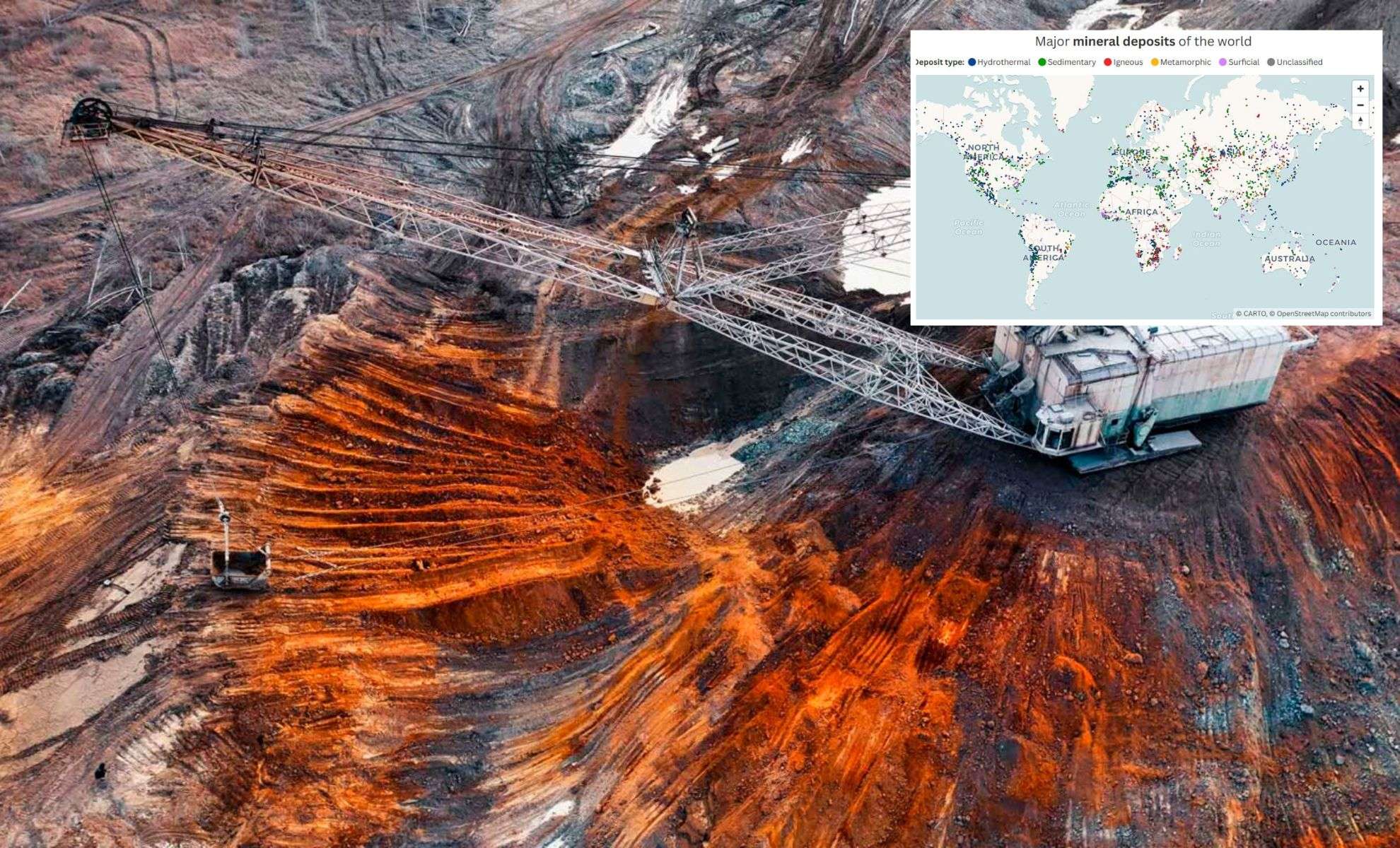
Rare earth minerals serve as the foundation for today’s cutting-edge technology, powering devices from smartphones and electric cars to sophisticated military equipment. As countries compete to acquire these essential materials, a new geological chart has emerged, highlighting the planet’s richest deposits and altering international power landscapes. While China remains the top holder of these reserves, the U.S., Europe, and other influential regions are rapidly seeking new sources and forging complex agreements to secure supply.
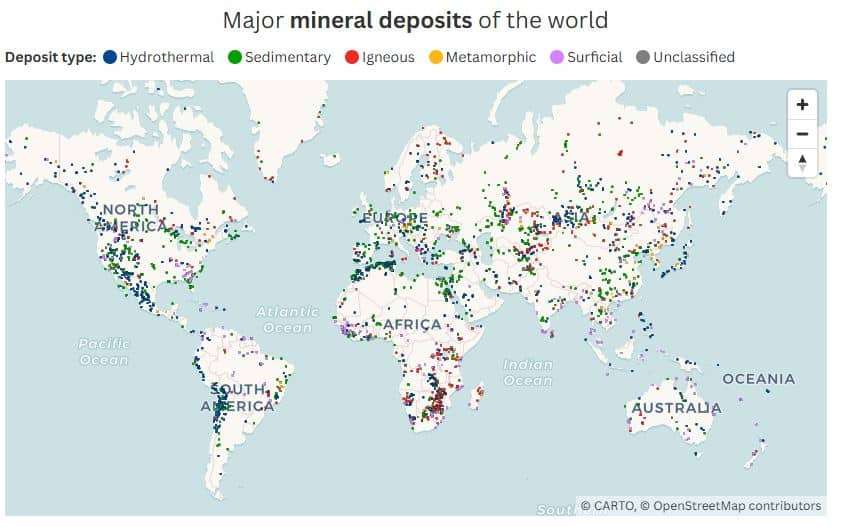
Locations of the World's Key Rare Earth Mineral Deposits
Leveraging the latest information from the U.S. Geological Survey (USGS), this comprehensive map identifies the prime rare earth mineral concentrations worldwide. Although termed 'rare,' these elements are relatively abundant, yet the challenge lies in locating economically viable deposits, making extraction a costly endeavor.
This map showcases important regions such as:

- China, which leads global production with reserves totaling 44 million metric tons.
- Africa, with countries like Morocco and South Africa rich in zinc, lithium, and cobalt, emerging as key players in battery and renewable energy supply chains.
- South America, where vast lithium reserves in Chile and Brazil support electric vehicle demand.
- Ukraine, becoming a strategic hotspot due to significant titanium and lithium resources.
- Greenland, attracting international interest for its untapped rare earth elements and natural gas reserves.
Despite these widespread reserves, the mining and processing of rare earth elements remain predominantly concentrated in China, causing supply chain vulnerabilities that other nations are eager to address.
The Crucial Role of Rare Earth Elements
A set of 17 metallic elements known as rare earths possess unique characteristics that are vital for modern technologies. Their applications include:
- Powering high-performance batteries and improving energy efficiency in smartphones, computers, and electric vehicles.
- Enhancing defense systems like missile guidance, radar, and cutting-edge weaponry.
- Driving renewable energy innovations, such as improving the efficiency of wind turbines and solar panels.
Sophia Kalantzakos, an Environmental Studies and Public Policy expert at NYU Abu Dhabi, highlighted their strategic significance:
“[Rare earths] are very valuable because of their various tech applications, military applications, renewable energy applications—you name it, they contain rare earths.”
The increasing demand has turned rare earths into a crucial resource battleground, with nations striving to secure reliable access.
Intensifying Resource Competition: Nations Jockey for Control
China’s dominance with the largest rare earth reserves provides it considerable influence over global supply. Periodic export restrictions by Beijing have disrupted markets worldwide, prompting countries in the West to lessen their dependence.
This has triggered vigorous efforts to cultivate alternative mineral sources, with the U.S., Canada, and Australia investing heavily in their mining ventures. Meanwhile, the European Union is boosting its internal mining and recycling initiatives to reduce reliance on imports from China.
Robert Muggah of Princeton University and Rafal Rohozinski of Canada’s Center for Governance Innovation recently observed:
“Ukraine’s mineral resources are not only pivotal to Ukraine’s sovereignty but also to Europe’s energy independence and the competition between the United States and China for technological dominance.”
This reveals the intense geopolitical competition shaping the future of these indispensable materials.
- Categories:
- News








0 comments
Sign in to Comment