
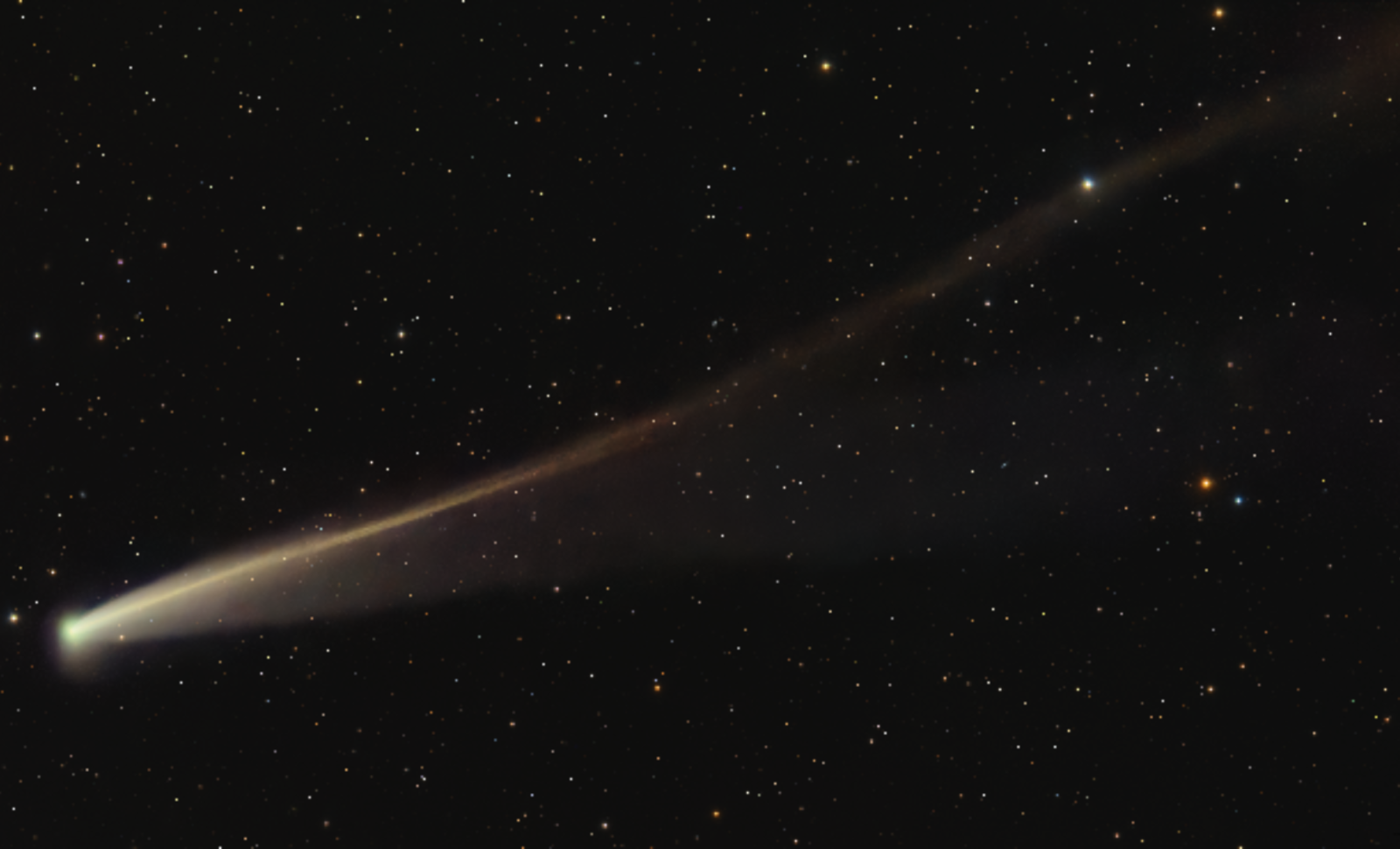
The boundaries of our solar system continue to surprise researchers with astonishing findings. One remarkable case is a comet that radiates a stunning gold color after surviving an extremely close approach to the Sun. Known as C/2025 K1 (ATLAS), this comet has garnered significant interest because of its extraordinary hue and unexpected endurance. What triggered this rare coloration, and why did the comet avoid destruction where many anticipated it would not?
Tracking C/2025 K1 (ATLAS) on Its Sun-Skirting Path
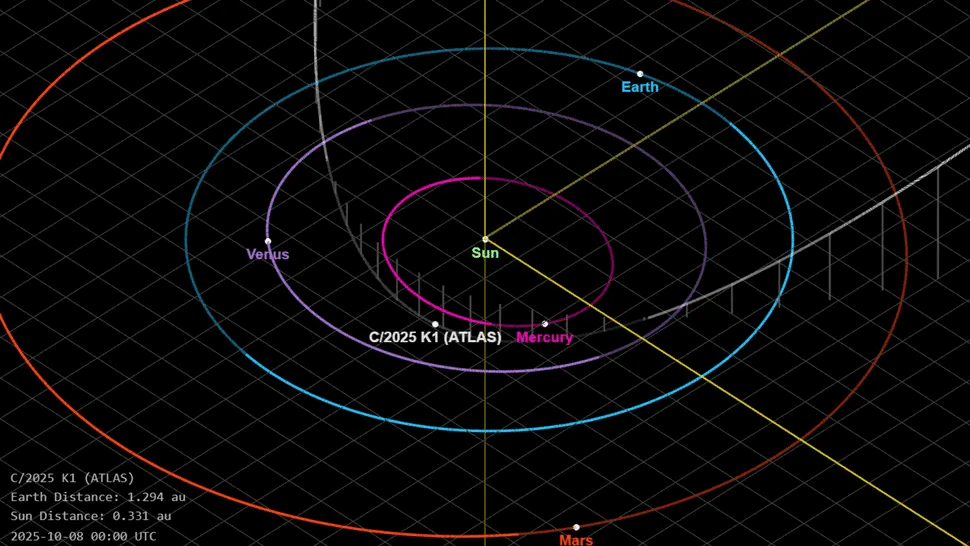
Discovered in May through the efforts of the Asteroid Terrestrial-impact Last Alert System (ATLAS), Comet C/2025 K1 (ATLAS) embarked on a daring course toward the Sun. It reached its perihelion on October 8, coming within a mere 31 million miles of our star—much nearer than usual for many comets. Such proximity often results in their disintegration due to the Sun’s immense heat and gravitational pull. Many specialists predicted that C/2025 K1 would break apart under these harsh conditions.
Defying these expectations, the comet survived. Astrophotographer Dan Bartlett captured its remarkable transformation in an image, showing its formerly faint presence now shining with a rare golden tint. In an interview with Spaceweather.com, Bartlett commented,

“This comet was not supposed to survive its Oct. 8th perihelion. But it did survive, and now it is displaying a red/brown/golden color rarely seen in comets.”
What sets this golden shine apart is its unusual character. Comets usually appear white or blue, their color coming from sunlight striking their icy surfaces. But C/2025 K1 features vivid tones of red, brown, and gold—an uncommon palette in the cometary world.
Decoding the Comet’s Unique Golden Tint
The alluring amber glow carries significance beyond aesthetics. Astronomers understand that a comet’s color depends heavily on the types of molecules present in its coma—the surrounding cloud of gas and debris. Green shades often signal molecules such as dicarbon or cyanide, while occasional blue hues come from carbon monoxide or ammonia.
However, C/2025 K1’s golden coloration is distinctive due to a notable deficiency of carbon-based compounds. David Schleicher of Lowell Observatory in Arizona highlights that this comet has some of the lowest amounts of dicarbon and carbon monoxide ever recorded, shared only by two other known comets. Spaceweather.com posits that this scarcity might be central to the comet’s striking color, though the precise processes remain a subject of research.
As the comet continues traveling through space, astronomers are keenly tracking it to better understand how variations in chemical composition influence cometary appearance, potentially broadening knowledge of icy objects beyond our planet.
How Did C/2025 K1 Withstand Intense Solar Forces?
The comet’s survival despite its perilous proximity to the Sun challenges conventional expectations. Near passes are usually fatal for these fragile objects, as intense thermal radiation causes rapid loss of volatile materials, compromising their structure. The fact that C/2025 K1 endured passing within 31 million miles of the Sun is remarkable.
Scientists suggest that a lower gas-to-dust ratio might have contributed to its durability, making it less susceptible to destruction than comets rich in gas. Others hypothesize that a resilient solid nucleus remained unharmed through the ordeal, preserving the comet’s integrity against the extreme solar environment.
This steadfastness has captivated the scientific community, emphasizing the complexity and unpredictability of cometary physics.
“This comet’s survival is a testament to the sheer unpredictability of these icy travelers,” says Dr. Amelia Harris, an astronomer studying cometary behavior.
Ongoing observations aim to unravel how comets interact with the Sun and what factors govern their endurance within our solar neighborhood.
Spotting C/2025 K1 (ATLAS) in the Night Sky
Though invisible to the unaided eye, C/2025 K1 remains accessible to enthusiasts equipped with good telescopes or binoculars. As of October 2025, it shines at magnitude 9 and appears in the morning sky shortly before dawn, near the constellations Virgo and Leo, making it convenient for observers to find.
The comet will reach its closest approach to Earth on November 25, 2025, offering the best opportunity to view its captivating golden hue. It should stay observable until early December, providing ample time to appreciate this rare celestial spectacle.
From amateur stargazers to professional astronomers, C/2025 K1 (ATLAS) represents an extraordinary chance to witness an unusual cosmic visitor. Continued study and imagery promise to deepen our understanding of cometary phenomena in the months ahead.
- Categories:
- Science











0 comments
Sign in to Comment