
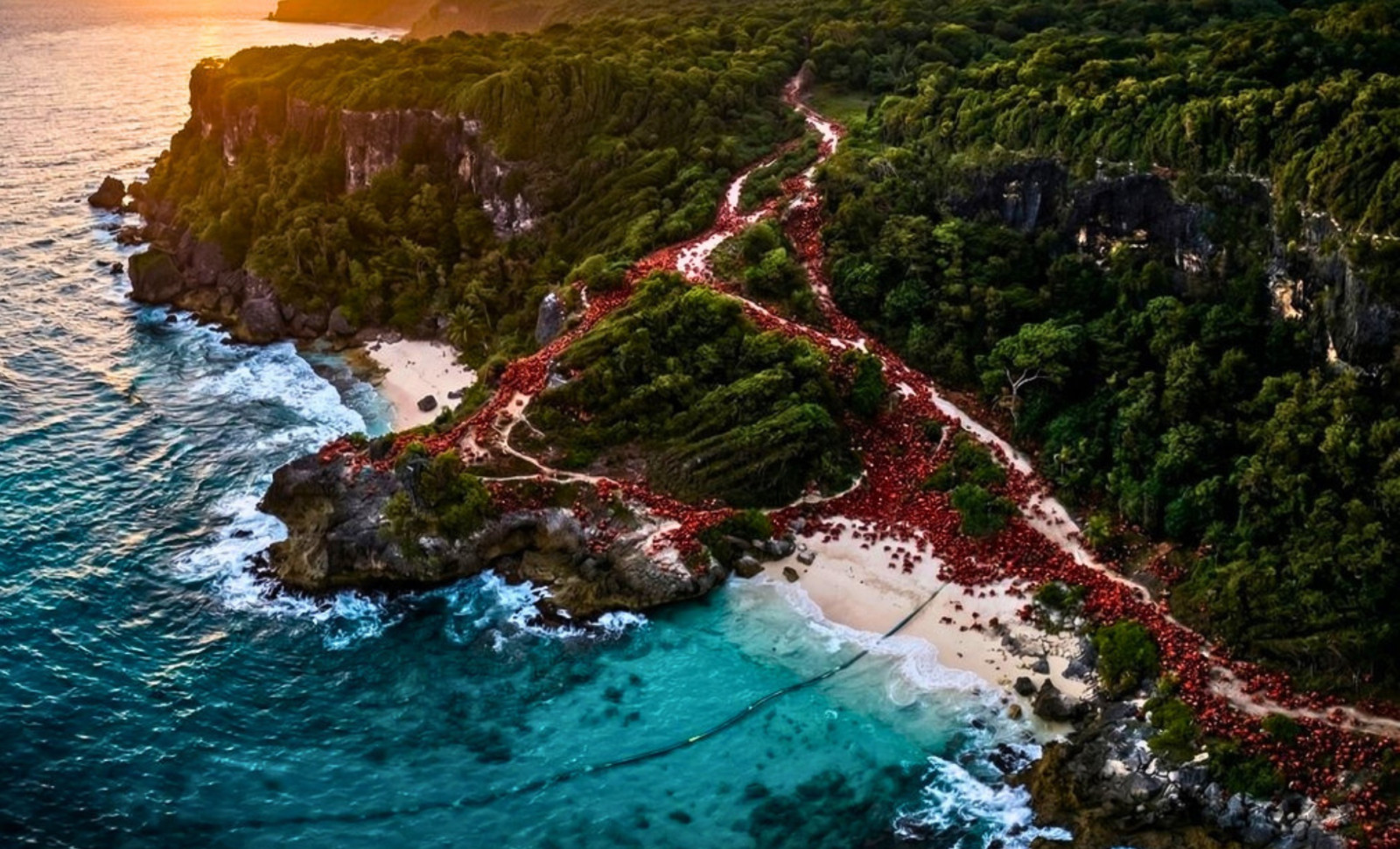
Installing a undersea internet cable across the Indian Ocean demands specialized vessels, precise engineering, and careful planning. On Christmas Island, the project also involves accommodating the epic march of 120 million red crabs crossing the island’s roads.
Google is developing the new Bosun cable to connect Darwin, Australia, with Singapore, routing through this remote Australian territory. This initiative establishes a vital data pathway between northern Australia and Southeast Asia. However, the construction schedule is uniquely governed by an ecological event that has been occurring for thousands of years. With the onset of the wet season rains, the island’s entire adult population of red crabs leaves the forest to migrate towards the ocean. Heavy machinery remains idle until this migration has safely concluded.
The timing of this extraordinary event influences the construction timeline, trenching activities, and access points for crews. Google and Australian regulators are collaborating to develop a construction plan that respects the crabs as a crucial natural phenomenon rather than treating them as a mere hindrance.

Key Link in Regional Connectivity
Located about 1,500 kilometers west of mainland Australia and roughly 350 kilometers south of Jakarta, Christmas Island strategically shortens the route between Australia and Singapore. The Bosun cable will stretch from Darwin to Christmas Island before extending to Singapore, reducing the need for signal boosters and lowering data latency. Additionally, a specialized interlink cable will connect Melbourne and Perth to Christmas Island, then onward to the same hub.
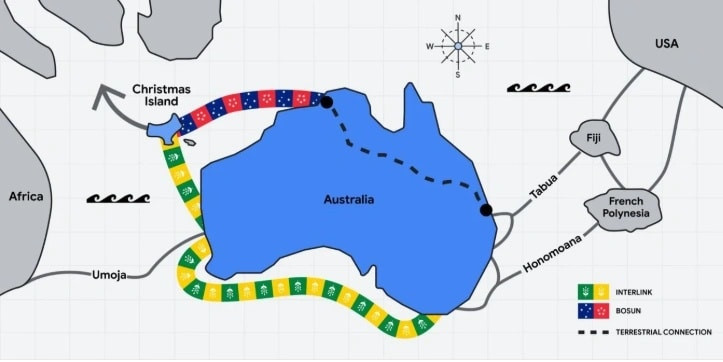
This new infrastructure integrates with Google's existing Tabua submarine cable network, which spans the United States, Australia, and Fiji. This comprehensive system offers alternative routes for data transmission, enhancing reliability amid potential technical faults or geopolitical tensions. Australia's Communications Minister Michelle Rowland emphasized that the cables will “expand and strengthen the resilience of Australia’s own digital connectivity through new and diversified routes.”
Project collaborators include Vocus, NextDC, and SubCo. According to Vocus, the combined cable networks will form an extensive 42,500-kilometer fiber optic system connecting the United States and Asia via Australia.
The Red Crab Migration Cycle
The annual migration of red crabs on Christmas Island starts with the first rains of the wet season, typically occurring in October or November. Male crabs initiate the journey from the island’s forest plateau to the ocean shore, followed by females joining the expansive procession, forming a vibrant torrent of crimson shells crossing roads, rocks, and sandy beaches.
The migration’s timing correlates with natural cycles. Crabs synchronize their spawning events with the predawn hours during the last quarter moon’s retreating high tide. Early rains cause the crabs to move leisurely, pausing frequently to feed and hydrate. Delayed rains accelerate their pace, while if the migration window entirely closes, some individuals postpone until the next month.
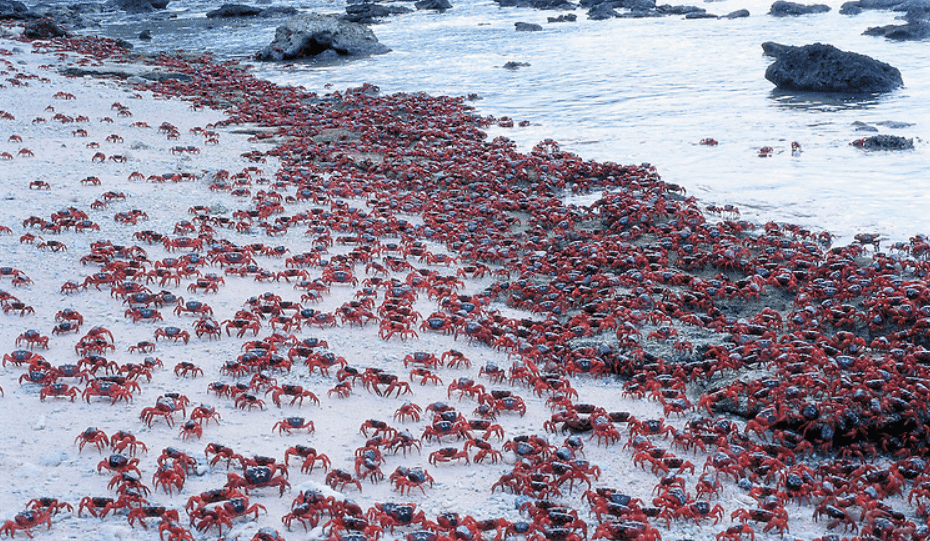
Upon reaching the shoreline, male crabs burrow into lower terraces to create shelters, while females arrive to mate and lay up to 100,000 eggs each. Females remain underground for roughly two weeks before congregating at the water’s edge.
Crab densities in some locations can reach 100 per square meter of beach. At dawn’s incoming tide, females venture into the sea to release their eggs. Upon contact with seawater, larvae emerge, most of which do not survive the ocean’s predators such as fish, manta rays, and whale sharks. Usually, only a handful of young crabs return, with occasional years when larger numbers survive to maintain the island’s population.
Adjusting Construction Around Nature
Google’s approach to minimize impact involves three main strategies. Firstly, terrestrial work is planned outside peak crab migration periods, ensuring trenching and soil disturbances happen during minimal crab activity.
Secondly, crew members utilize designated crab crossings, temporary barriers, and trained observers to redirect wildlife away from active zones. This builds upon existing island infrastructure such as crab bridges, which enable safe passage over roads during migration seasons.
Thirdly, cable landing sites and burial depths are carefully designed to avoid reef damage and reduce habitat disruption in coastal areas. The overarching goal is to install the fiber infrastructure without disturbing established crab migration corridors.
Brian Quigley, Google's Vice President of Global Network Infrastructure, explained that the Bosun cable will provide connections from Darwin to Christmas Island, while a secondary cable will link Melbourne and Perth before also reaching Christmas Island and then Singapore.
Significance of Geographic Location
This significant cable project coincides with Australia’s efforts to strengthen defense installations across its northern regions. The Australian and U.S. military forces are jointly enhancing airbase infrastructure, where rotating U.S. Marines will soon be joined by Japanese military personnel.
Christmas Island shares the Indian Ocean maritime corridor with the nearby Cocos Islands, where runway expansions are underway for maritime surveillance. Creating multiple subsea cable routes lessens susceptibility to digital interruptions and avoids reliance on a single chokepoint.
Globally, Google supports over 100,000 kilometers of underwater cables, and the Australia Connect initiative brings two fresh systems into this network.
SubCo stated that utilizing shared infrastructure between Sydney, Melbourne, Adelaide, and Perth will accelerate deployment and reduce ecological impact. The 5,000-kilometer domestic SMAP cable, expected to launch in 2026, will also connect with the new landing facilities.
Google has yet to reveal detailed capacity or launch dates for the Bosun cable, which remains in early project planning and coordination phases.
- Categories:
- News

0 comments
Sign in to Comment