
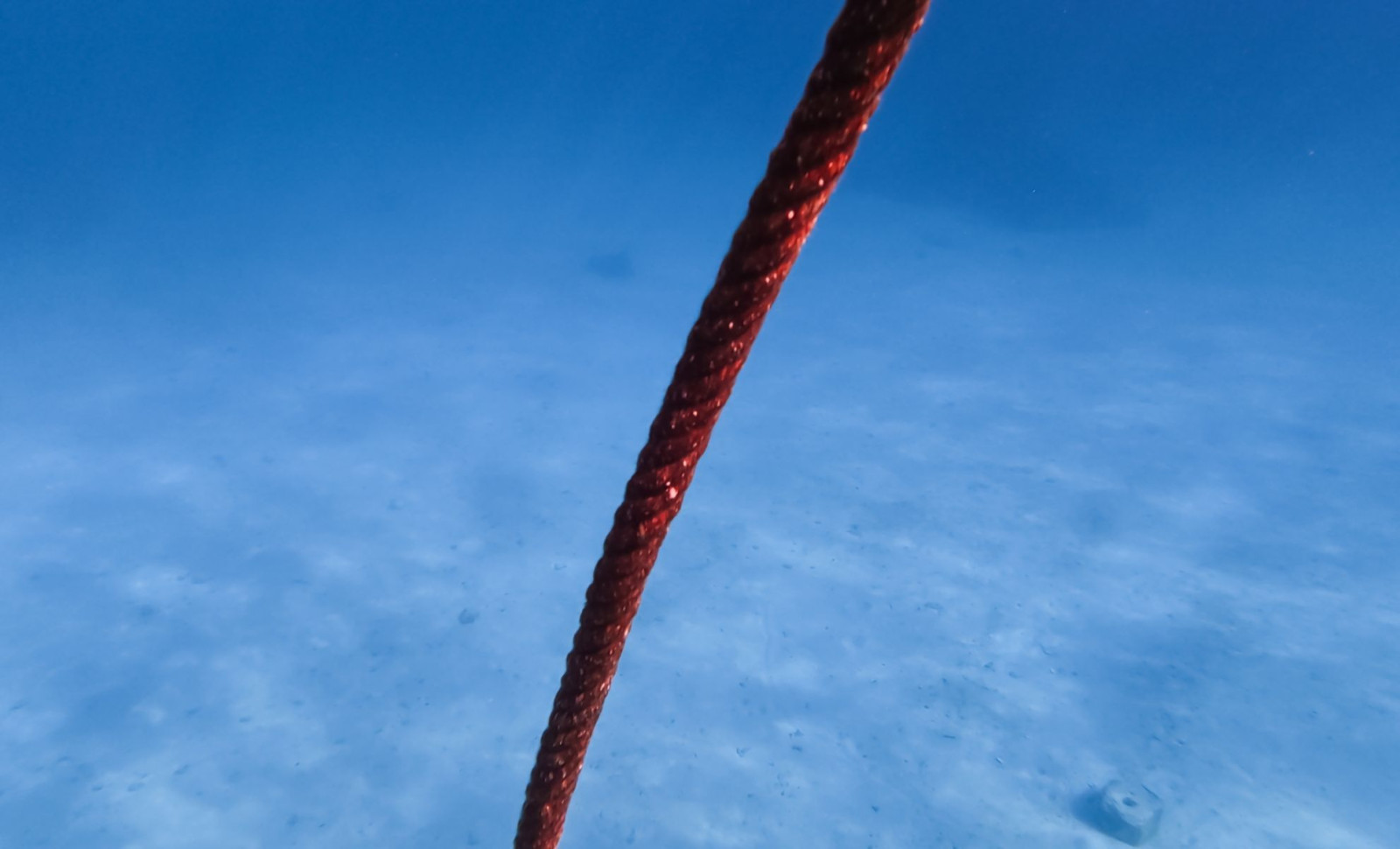
A fiber-optic cable resting on the ocean floor has remarkably recorded 56,000 iceberg separations within a mere three weeks. This innovative study offers an unprecedented glimpse into the processes of glacier fracturing, collapse, and their effects on surrounding marine environments. Glacial calving, the detachment of icebergs from glaciers, serves as a critical indicator of environmental changes in polar landscapes.
Along the coastline of Greenland, these calving incidents happen persistently, ranging from tiny ice shards to enormous chunks plunging into the ocean. Much of this activity remains hidden beneath the surface, posing a challenge for scientists who have struggled to monitor glacier fronts underwater. Traditional remote sensing methods capture only what is visible above water, leaving the submerged dynamics largely unexplored.
Revolutionary Fiber-Optic Deployment in Greenland Fjord
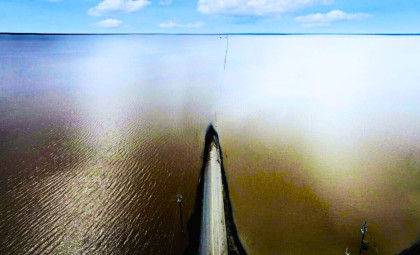
To bridge this knowledge gap, a research group led by Dominik Gräff at the University of Washington installed a 10-kilometer-long fiber-optic cable across a fjord near the Eqalorutsit Kangilliit Sermiat (EKaS) glacier in southern Greenland. As detailed in a publication in Nature, the cable was positioned around 500 meters from the glacier’s edge, effectively transforming the seafloor into a vast interactive sensing network.

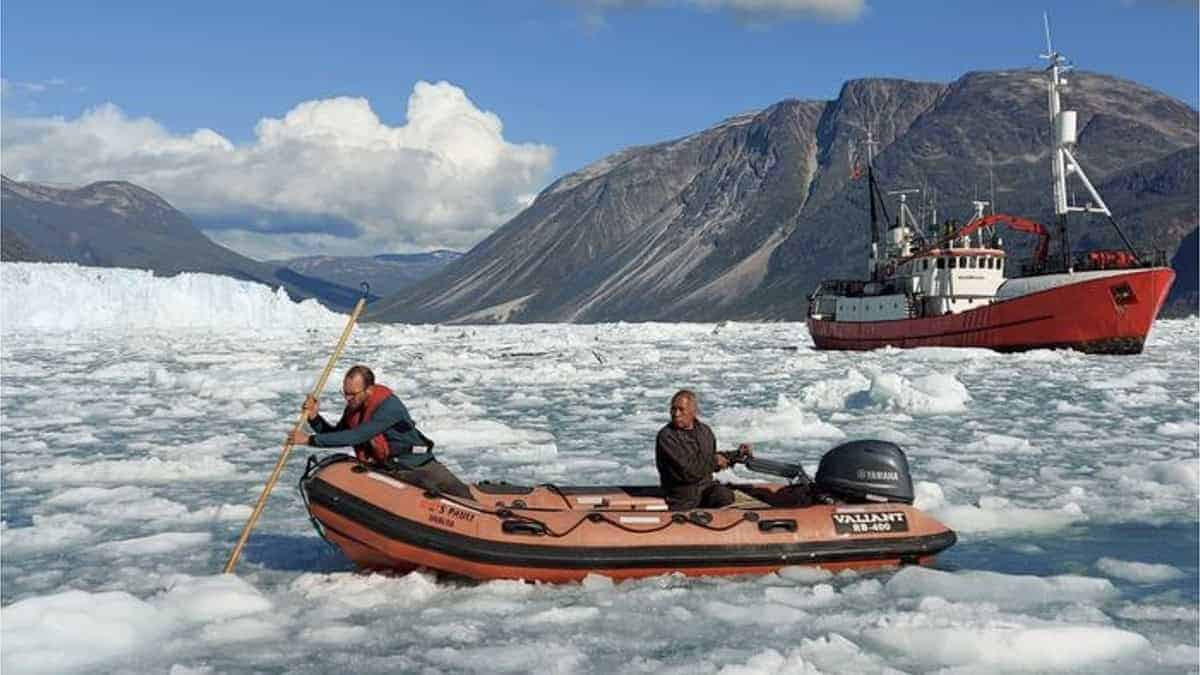
Navigating through dense ice mélange, a complex and shifting mix of sea ice and icebergs, was a critical part of the installation challenge. Gräff described the delicate timing involved:
“If you go too slow, the ice mélange that you push open with your vessel [will close] quickly, And that prevents your cable from sinking down.”
Once in place, the system utilized distributed acoustic sensing (DAS) and distributed temperature sensing (DTS). By sending laser pulses through the fiber, it detected vibrations and temperature variations across the cable’s length, capturing events that lasted only milliseconds.
Unveiling the Complete Calving Process Through Thousands of Recorded Events
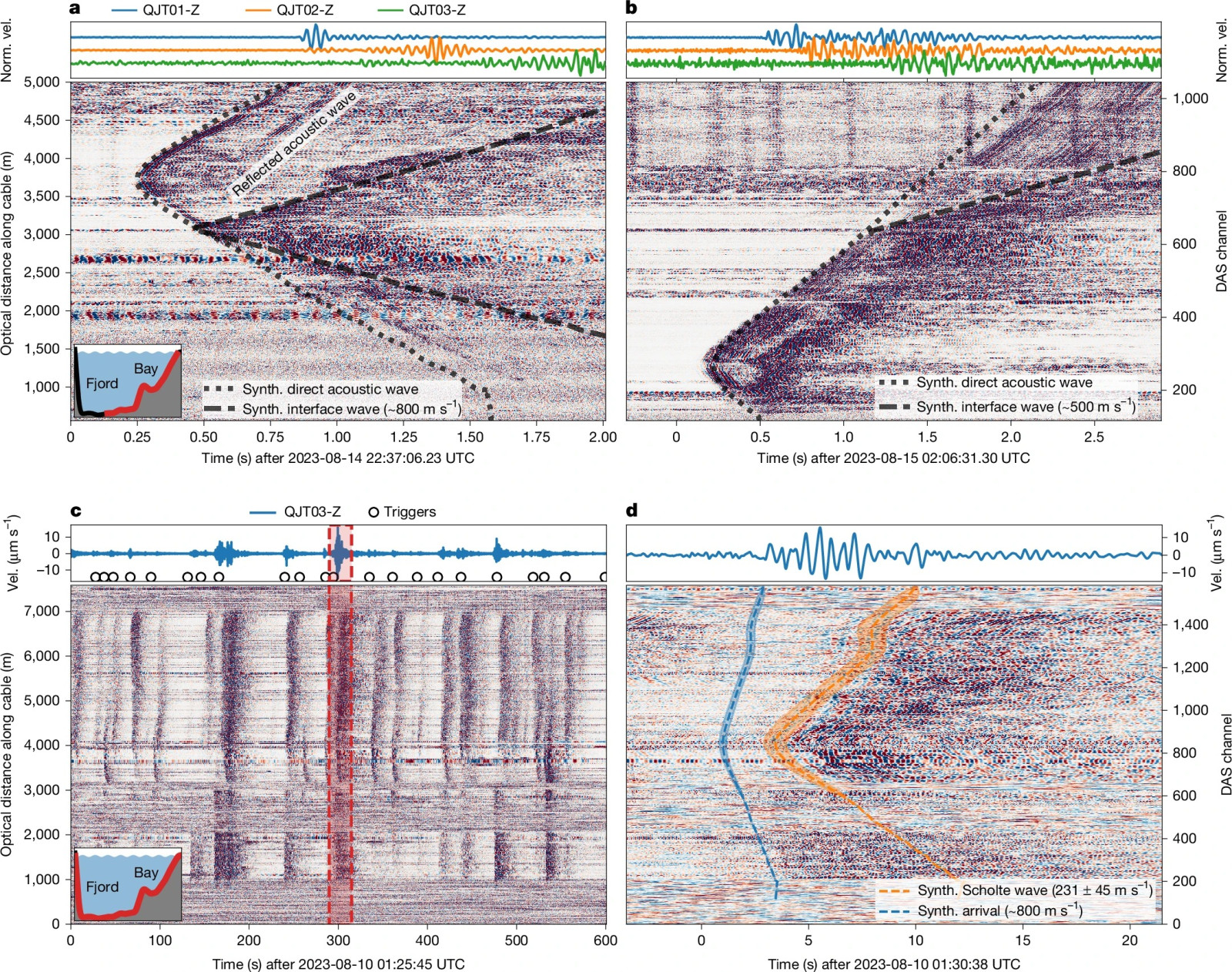
During the experiment’s three-week span, the fiber-optic cable documented over 56,000 iceberg calving incidents, offering an uninterrupted and detailed chronicle of glacier activity rarely attained before.
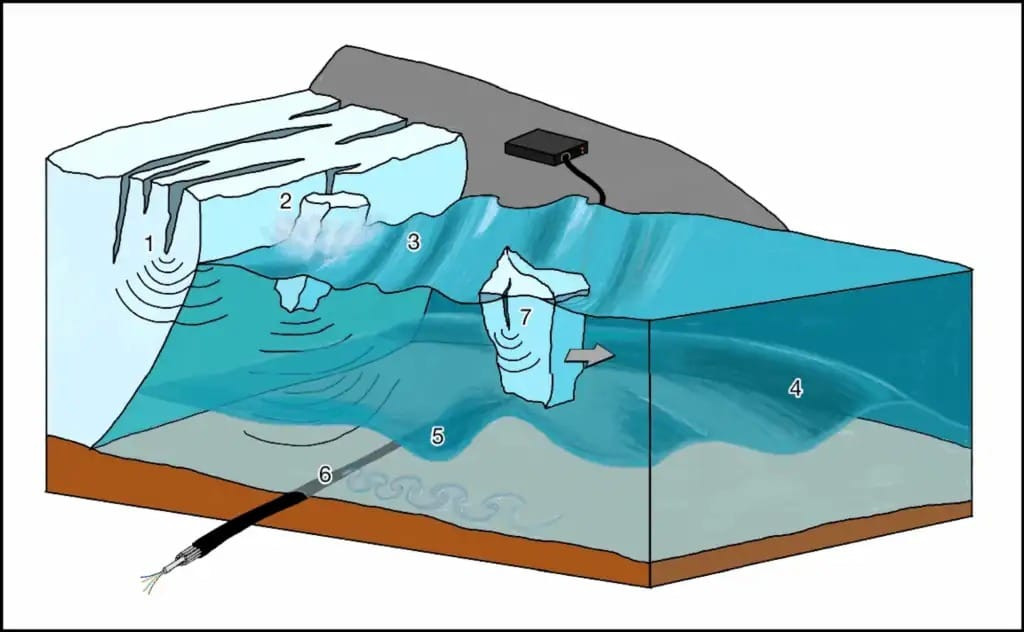
The data illuminated a distinct progression beginning with internal glacier cracking, generating acoustic signals traversing through the fjord. This is followed by iceberg detachment, which creates underwater wave formations and pressure fluctuations detectable by the cable.
Some detached ice blocks set off localized mini-tsunamis, while others caused more minor disturbances. Additionally, the system picked up the acoustic signatures of icebergs fracturing once submerged, resembling the initial cracking phase but occurring within the fjord itself.
Seismologist Andreas Fichtner from ETH Zürich remarked on the uniqueness of gathering so many diverse physical phenomena within a short timeframe:
“There are very few seismological datasets where, within such a short amount of time, you record so many different phenomena.”
Illuminating the Hidden Water Movements Beneath Icebergs
Beyond the visible detachment events, the fiber-optic cable revealed intricate underwater circulation previously difficult to observe. Notably, it detected internal gravity waves traveling along the interface between cold freshwater from melting ice and warmer saline waters below.
As icebergs drift away from the glacier, they create wakes that disturb these stratified layers. This activity influences heat transfer in the fjord and thus affects the melting rates of submerged ice. According to EOS Magazine, temperature monitoring via the cable captured these subtle but important fluctuations in real time.
The research also showed how iceberg dynamics drive circulation patterns, adding complexity to the calving phenomenon. These ice-ocean interactions have often been overlooked in previous models.
- Categories:
- News






0 comments
Sign in to Comment