

The Great Pyramid of Giza, one of the most remarkable achievements of ancient architecture, has long been believed to have four flat triangular faces. Yet, new findings challenge this traditional view.
Recent research reveals that this ancient marvel might actually possess more than four sides.
A Revelation That Transformed Our Perspective
For ages, this colossal monument, famous as the last standing wonder from antiquity, was recognized for its four smooth triangular panels, epitomizing ancient Egyptian design elegance.

Nevertheless, in 1940, British Egyptologist Flinders Petrie uncovered a subtle phenomenon that invited re-examination.
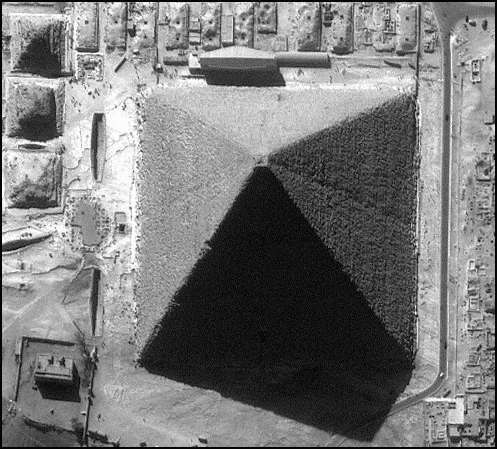
Under specific lighting, he observed delicate indentations running down the midpoint of each face.
These shallow grooves weren’t obvious at first glance and were most apparent when viewed from an elevated vantage point.
This insight indicated the pyramid's faces were slightly concave rather than flat, setting the Great Pyramid apart as an architectural rarity.
Revealing the Pyramid’s Eight-Sided Nature
In 1975, esteemed Egyptologist IES Edwards explored this intriguing characteristic in his renowned work The Pyramids of Egypt.
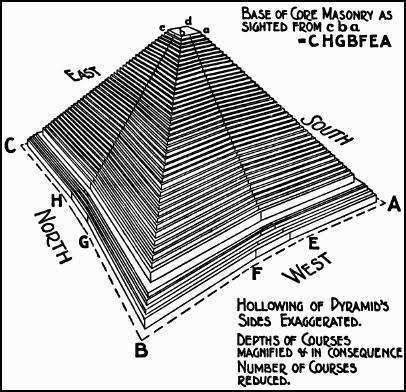
He pointed out that the stone courses were deliberately arranged to slope inward slightly, producing a central depression on each side.
More recently, a 2023 analysis featured in Archaeological Discovery has validated this feature and enhanced our grasp of the pyramid’s geometry.
Researcher Akio Kato concurs with earlier experts, stating, “The Great Pyramid at Giza is unique for the concavity along the centerlines of each face, from base to summit.”
Kato added that such subtle curvature is only discernible from an aerial perspective, explaining why it remained hidden until advances in technology made precise measurement possible.
Insights Into Ancient Architectural Skill
This discovery offers fresh insight into the Egyptians’ mastery of geometry and construction methods.
The slight inward curvature reflects advanced architectural planning, far surpassing previous assumptions about their capabilities.
Crafting the pyramid with such precision highlights the unparalleled craftsmanship and engineering genius of the civilization behind it, as discussed in related archaeological research.
Continuing Enigmas of Design
The presence of concave faces also hints at a sophisticated grasp of light interaction and optics by the pyramid’s builders.
The indentations become prominent under specific lighting, suggesting that the designers intended the monument to engage dynamically with its surroundings, beyond mere aesthetics.
This hypothesis invites further study into the symbolic meanings and functional roles of these architectural choices.
- Categories:
- Science













0 comments
Sign in to Comment