
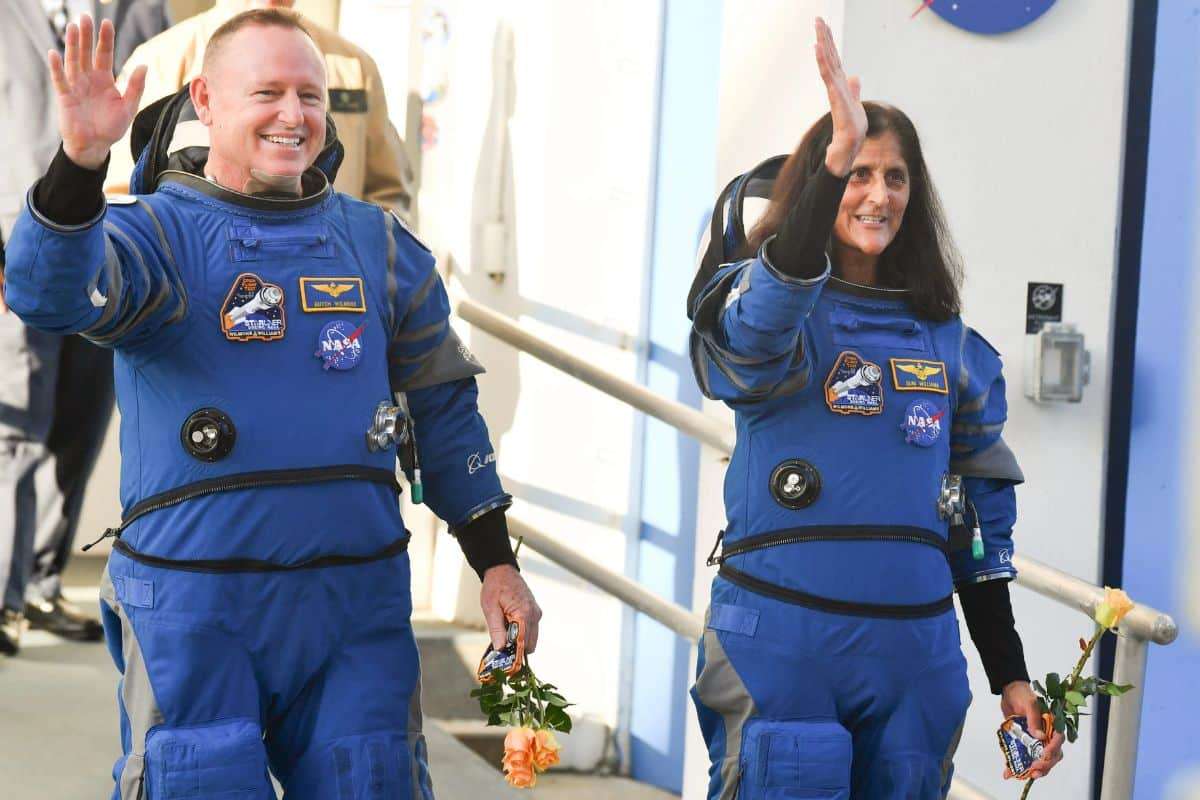
Butch Wilmore and Suni Williams, two NASA astronauts, have safely returned from an extended stay aboard the International Space Station (ISS). What was initially planned as a brief mission turned into over nine months in orbit due to unexpected delays with the Boeing Starliner spacecraft.
The astronauts’ homecoming is a significant event, but adjusting back to life under Earth’s gravity is a complex process. Their recovery involves weeks of dedicated therapy to rebuild muscle strength, coordination, and overall health.
The Impact of Microgravity on the Human Body
Life in zero gravity dramatically affects physical health. The absence of gravitational force causes muscle atrophy, bone loss, and fluid redistribution towards the upper body, which can lead to dizzy spells, unsteady balance, and vision difficulties after returning to Earth.
In the days following splashdown, astronauts may find it hard to walk steadily or even stand upright. As NASA flight surgeon Dr. Natacha Chough notes, the vestibular system, which controls balance, effectively “switches off” while in space. Consequently, simple movements on Earth feel disorienting at first.

Veteran astronaut Leland Melvin recalls the challenge of regaining normal movement: “You try to walk straight but end up veering, your vestibular senses are out of sync, and falling becomes a real risk,” he shared.
NASA’s Comprehensive Post-Mission Therapy
Butch Wilmore and Suni Williams concluded an unexpectedly long tenure aboard the International Space Station (ISS), originally planned as a short stint but extended past nine months due to setbacks involving the Boeing Starliner.
Recovering from extended exposure to microgravity is neither quick nor easy. It demands rigorous physical and psychological rehabilitation spanning several weeks to help astronauts regain fitness, equilibrium, and general wellness.
Ongoing Health Concerns Linked to Spaceflight
The effects of space extend far beyond immediate recovery. Bone density declines sharply without gravitational load, forcing astronauts to engage in intensive exercise routines while aboard the ISS. Despite these measures, they still endure a monthly bone density decrease of up to 1%.
Radiation poses another substantial threat. Without Earth’s atmosphere as a shield, space travelers face elevated chances of developing cancer, heart conditions, and brain issues. The twin astronaut study involving Mark and Scott Kelly revealed that prolonged missions can even modify DNA and impact immune responses.
A recent finding concerns Spaceflight Associated Neuro-Ocular Syndrome (SANS), a condition where fluid shifts in microgravity lead to optic nerve pressure and brain swelling.
Why Astronauts Accept These Risks
Despite these hurdles, many astronauts describe their missions as profoundly transformative. Leland Melvin reflected on his time orbiting Earth every 90 minutes, witnessing all of humanity below.
For Wilmore and Williams, their prolonged mission yields critical insights to inform future exploration. As NASA’s Artemis program readies itself for journeys to the Moon and Mars, understanding how long-term spaceflight affects human health is more crucial than ever.
- Categories:
- Science











0 comments
Sign in to Comment