
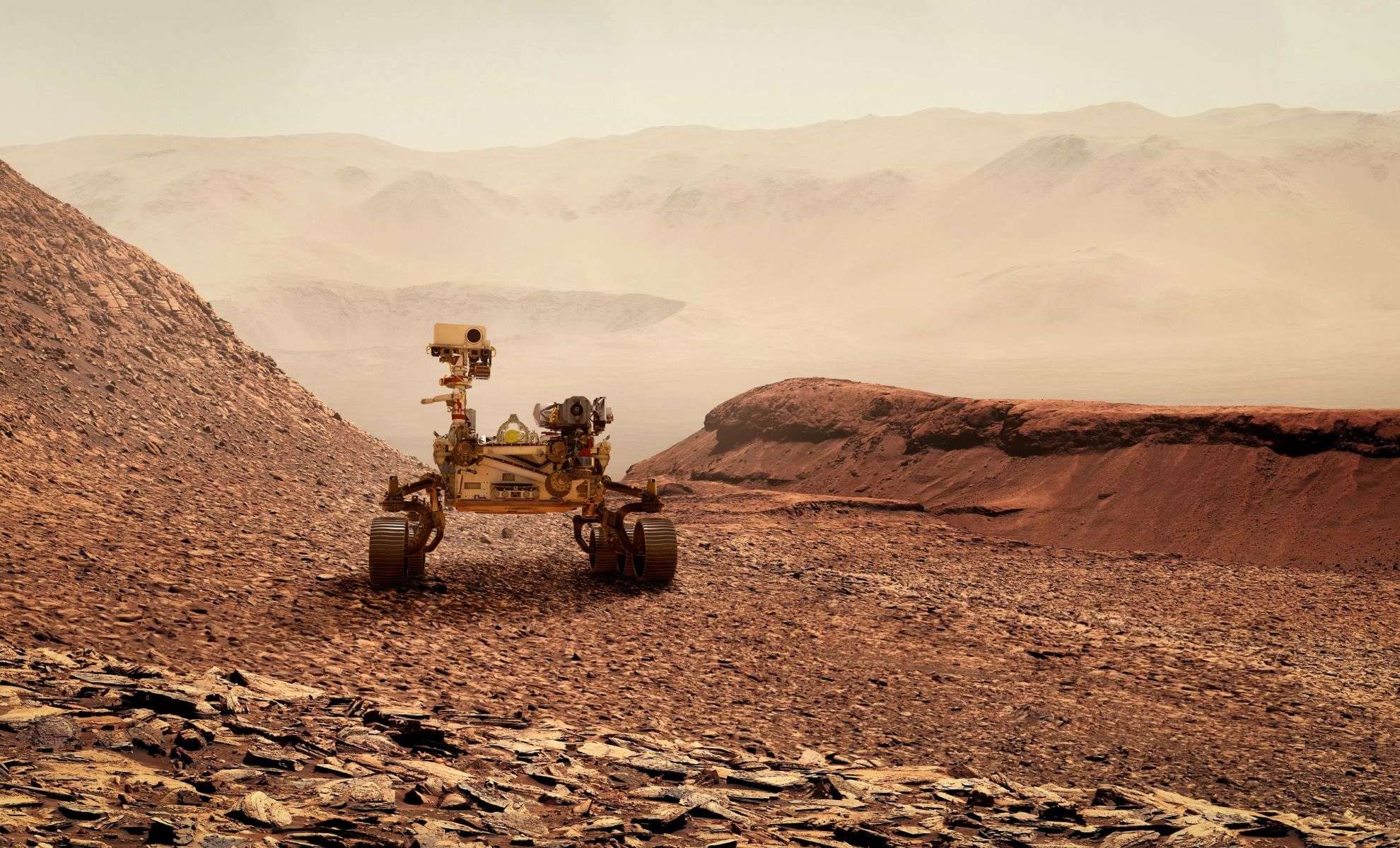
The Perseverance rover encountered a challenging obstacle on Mars when its drill bit became embedded in a rocky layer, delaying the collection of samples at the margin of Jezero Crater. This issue, which began around April 22, risked the loss of a crucial instrument, but engineers on Earth successfully freed the drill bit several days later without any damage to the equipment.
Resolving a Drill Malfunction on Mars
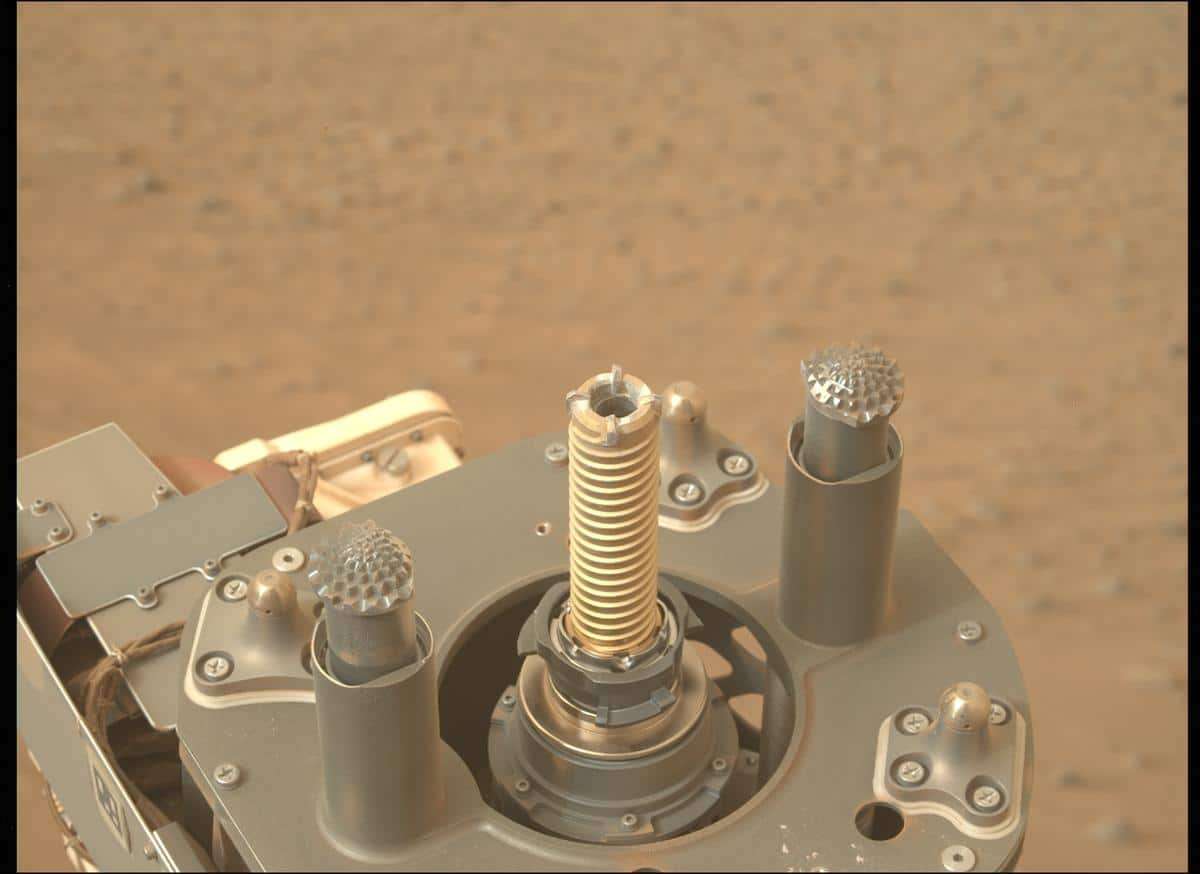
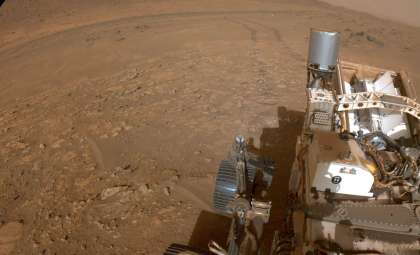
The complication occurred at Witch Hazel Hill, a rugged area where Perseverance was extracting a core from a darker rock layer. Images sent back to Earth clearly showed the jammed drill bit, prompting NASA’s Jet Propulsion Laboratory team to launch a remote intervention to recover the tool.
“The team was working to extract a drill bit from the most recent sample collection attempt, which was successfully accomplished as of late Tuesday night,” a NASA spokesperson confirmed, adding that the effort succeeded late on April 29.
Add Cosmo Herald as a Preferred Source

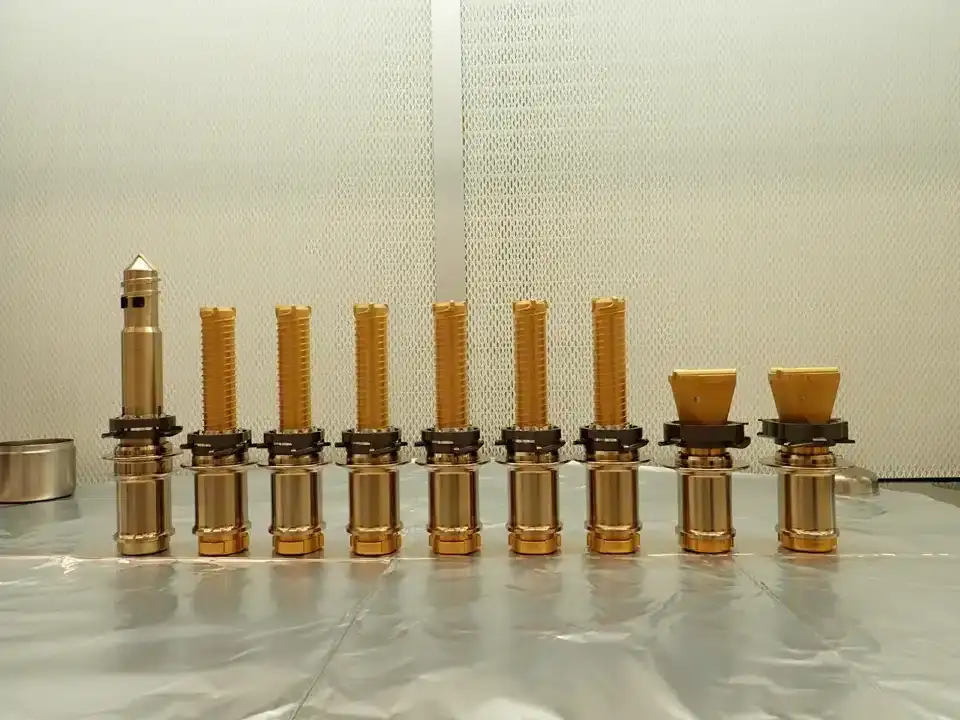
Built to endure such challenges, the rover carries nine drill bits onboard: six designed for coring rock, two for grinding surface materials, and one specialized for loose soil. NASA explains this configuration allows for swapping out tools when a bit is worn or stuck, enabling the mission to continue uninterrupted.
Investigating Jezero Crater’s Ancient Geological History
Jezero Crater remains one of Mars’ most scientifically significant locations. This basin once held a lake and river system, leaving sediment layers that may contain evidence of past environments capable of supporting microbial life billions of years ago.
Perseverance is examining alternating dark and light rock bands that represent different formation environments. Researchers are eager to understand how these rock layers differ and are arranged, as this helps reconstruct Mars’ historical environmental changes. In recent weeks, the rover sampled a lighter rock layer, while the latest drill targets a darker stratum that might reveal new insights into the planet’s past.
The Importance of Martian Rock Samples
Collecting samples for return to Earth underpins one of Perseverance’s key objectives. NASA’s Mars Sample Return (MSR) initiative aims to bring Martian rock, dust, and atmospheric samples back for detailed study during the 2030s. These analyses could finally confirm whether ancient life existed on Mars.
However, MSR faces significant financial and technical challenges. A 2023 independent review estimated the mission’s cost could exceed $11 billion and require nearly two decades to complete. To address these issues, NASA is evaluating two alternative approaches: one involving a commercial lander, and another employing the trusted sky crane technology used successfully for Perseverance and Curiosity landings.
Every Sample Advances NASA’s Mars Exploration
Since arriving on Mars in 2021, Perseverance has successfully gathered multiple rock and soil samples. Among these is a distinctive spotted rock discovered last year that holds some of the most promising signs of ancient Martian life, though confirmation requires Earth-based analysis.
Each new core strengthens the mission’s scientific contributions and raises the stakes for NASA to secure a feasible path for MSR. Finalized engineering plans are expected within the coming year. Meanwhile, Perseverance pushes forward, now operating one drill bit closer to revealing Mars’ deepest mysteries.
- Categories:
- News









0 comments
Sign in to Comment