
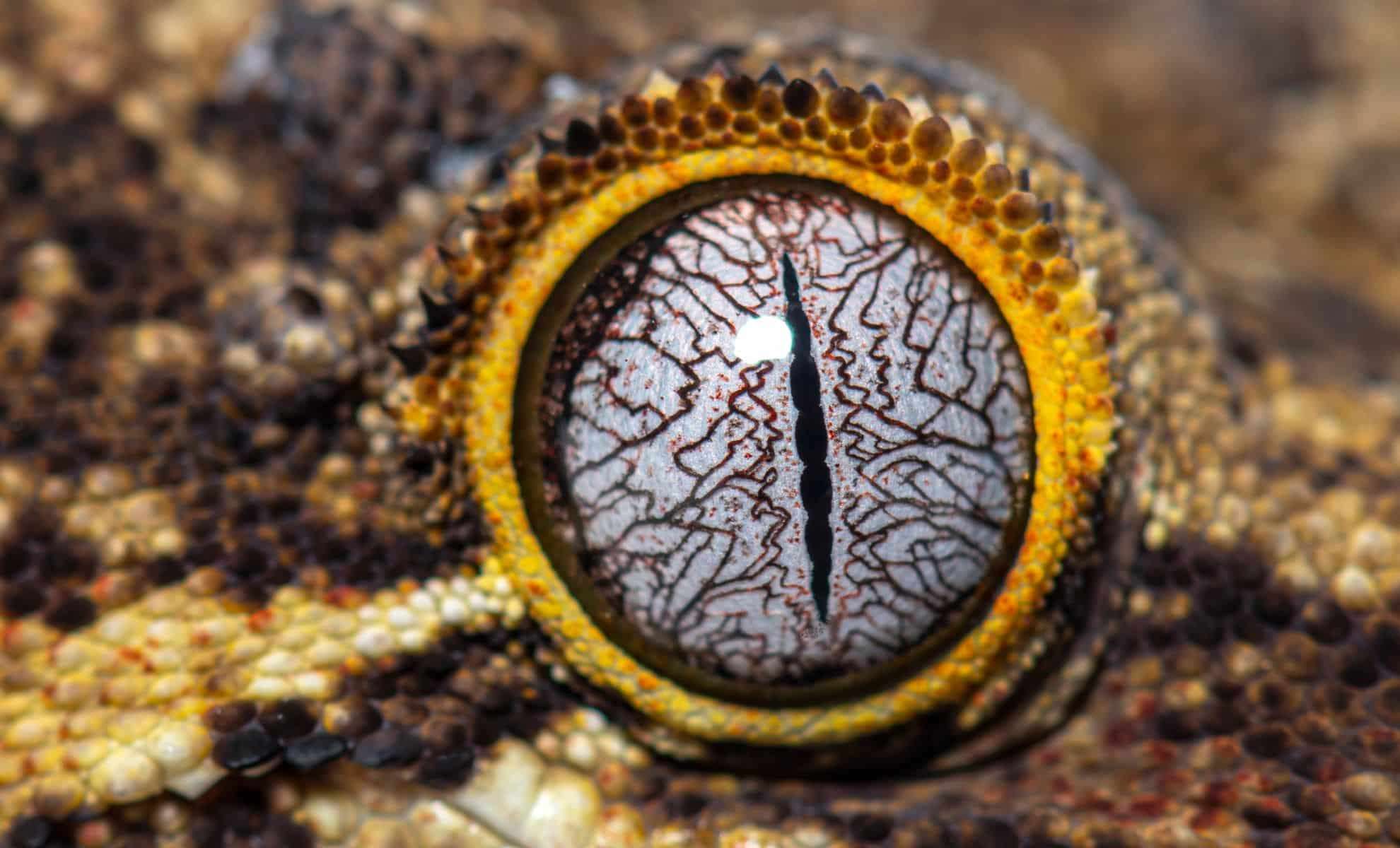
A new research reveals an incredible tale of resilience: night lizards, small reptiles native to North and Central America, survived the catastrophic asteroid impact that eliminated the dinosaurs 66 million years ago. These diminutive animals inhabited regions near the Gulf of Mexico and endured despite the devastation caused by this massive event.
Facing Earth's Greatest Cataclysm
The asteroid responsible for the Cretaceous-Paleogene (K-Pg) extinction was an enormous object, measuring about 7.5 miles (12 kilometers) in diameter. Its collision unleashed widespread destruction, igniting gigantic fires, triggering tsunamis, and initiating a “nuclear winter” effect that enveloped the planet in darkness. Nearly three-quarters of all species vanished in the wake of this event. Remarkably, two lineages of night lizards survived even though they lived near the blast site. Chase Brownstein, lead author and Yale University doctoral student, noted, “They would have been all around the margin of the asteroid impact.”
What Helped Night Lizards Persist
Though the exact reasons for their survival remain uncertain, several factors likely played a role. A key trait is their slow metabolism, which means night lizards need less food compared to many other animals.

During a period when food was scarce, this low energy requirement would have been beneficial. Night lizards belong to the Xantusiidae family, having occupied North and Central America since the Cretaceous era, nearly 90 million years ago.
Their long history in the region suggests these reptiles were already well-suited to their surroundings before the mass extinction took place. Despite being so close to the impact area, they managed to survive one of Earth's most devastating disasters.
Tracing Night Lizards’ Evolution
Researchers reconstructed the evolutionary history of the three existing night lizard genera (Lepidophyma, Xantusia, and Cricosaura) using molecular clock techniques to determine their age. Results indicate their most recent common ancestor lived during the Cretaceous period, preceding the asteroid impact.
The study shows that two distinct lineages of night lizards endured the extinction event. One lineage led to Xantusia, found from the southwestern U.S. to Mexico, and Lepidophyma, which spans parts of North and Central America. The other lineage resulted in Cricosaura, whose sole species today, the Cuban night lizard (Cricosaura typica), is native to Cuba. This supports the idea that night lizards have survived since the asteroid impact and remained native to these regions ever since.
The Remarkable Resilience of Night Lizards
Typically small and secretive, night lizards reach only a few inches in length and prefer habitats like rock crevices, thick vegetation, or under bark and fallen logs. Their ability to adapt has allowed them to endure extremely challenging conditions over millions of years.
While other groups such as avian dinosaurs (modern birds), some fish species, and mammals also survived the mass extinction, night lizards are unique among terrestrial vertebrates for having stayed endemic to North and Central America since the impact. Their survival offers a captivating glimpse into evolutionary persistence.
- Categories:
- News








0 comments
Sign in to Comment