
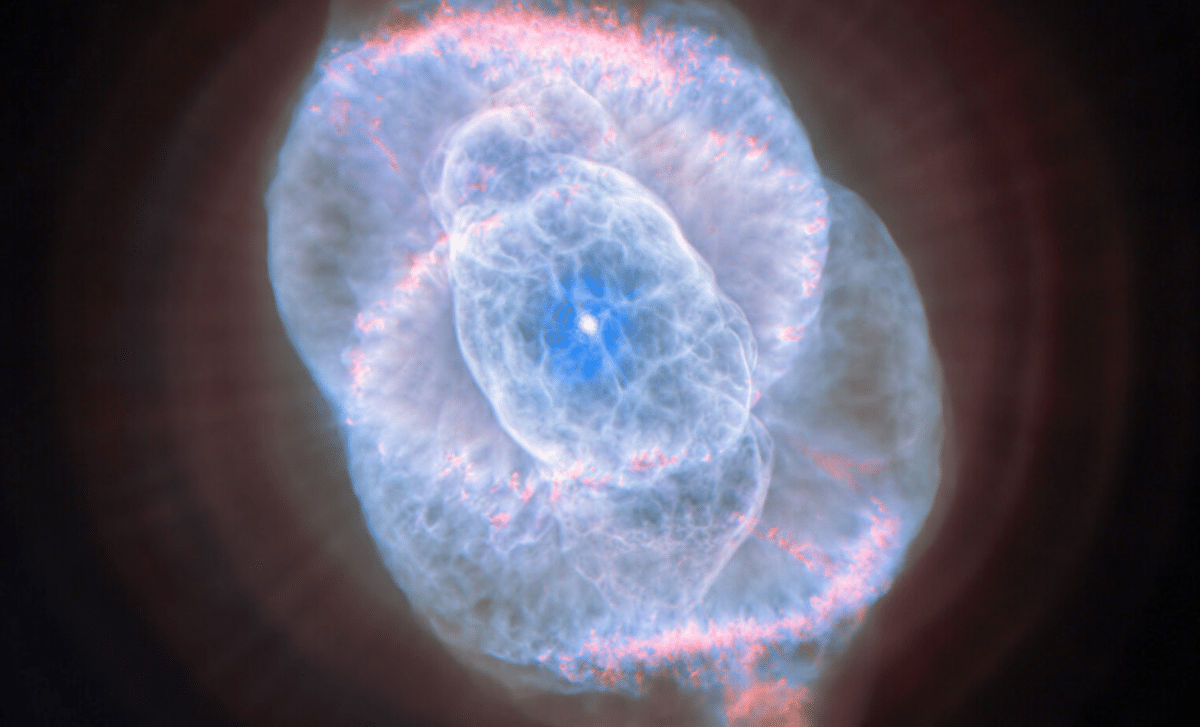
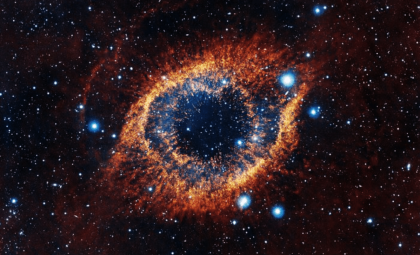
The universe’s countless celestial wonders often remain hidden, but thanks to advanced space missions and cutting-edge technology, we are unveiling the mysteries of distant cosmic formations. A prime example emerges from the collaboration between NASA/ESA’s Hubble Space Telescope and the European Space Agency’s Euclid mission, providing an extraordinary new perspective on the Cat’s Eye Nebula (NGC 6543). According to a recent report by the European Space Agency (ESA), these two observatories have combined their strengths to produce breathtaking images that reveal the intricate structure of this planetary nebula, showcasing the spectacular remnants left behind by a dying star and offering a rare glimpse into its final evolutionary phases.
Hubble and Euclid: A Synergistic Duo Illuminating the Cosmic Eye
The Cat’s Eye Nebula, positioned roughly 4,300 light-years from Earth in the Draco constellation, is celebrated for its visually elaborate and multi-layered structure. Astronomers have long been fascinated by its complexity. Utilizing the complementary capabilities of the Hubble and Euclid telescopes, the nebula’s detailed transformation is now accessible in unmatched clarity. This partnership enables a comprehensive view that captures both the nebula’s intimate beauty and its surrounding cosmic environment.
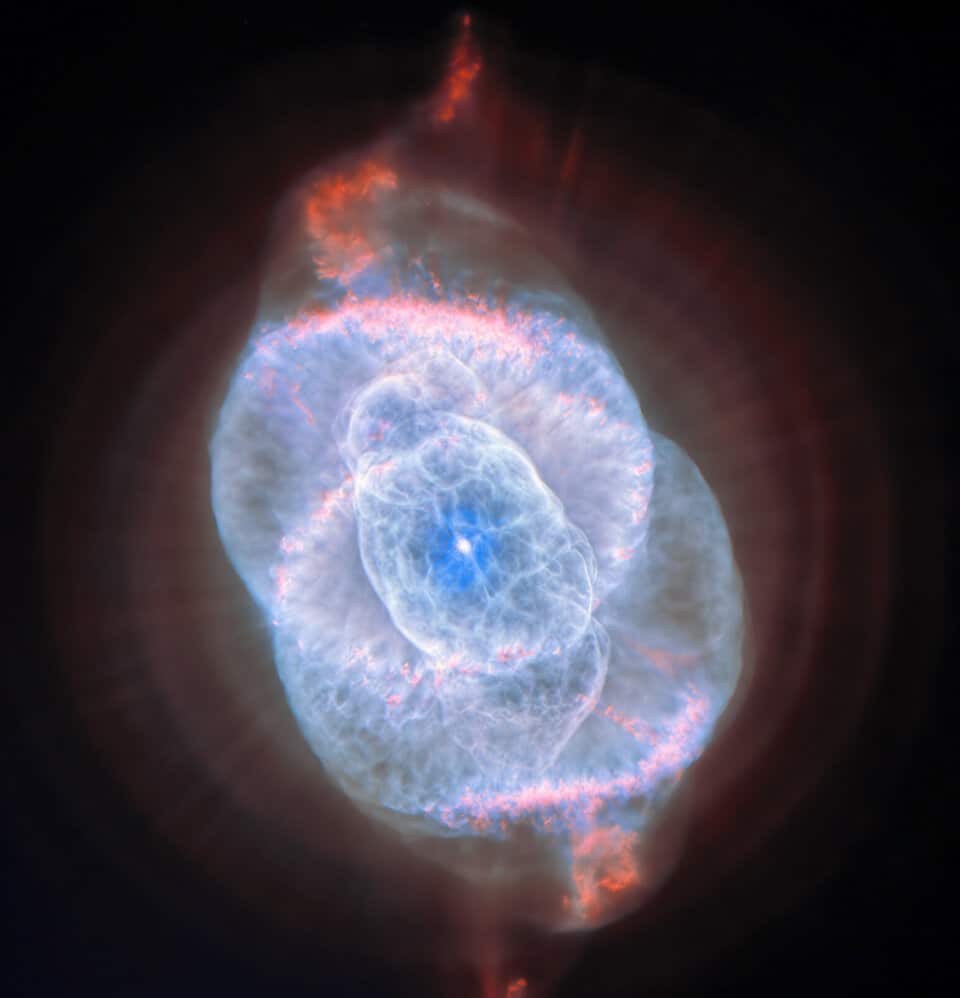
NASA/ESA’s Hubble Space Telescope excels in high-resolution visible-light imaging and focuses primarily on the nebula’s central region. It captures the intricate concentric gas shells, energetic jets, and dense knots sculpted by shock waves, creating an ethereal, detailed scene. On the other hand, ESA’s Euclid mission—originally developed to study the far reaches of the universe—provides expansive wide-field images in visible and near-infrared wavelengths, revealing the nebula’s extended halo and the colorful gas trails expelled from its core star.

First identified in 1864, the Cat’s Eye Nebula was the earliest nebula where gas was conclusively detected, a discovery pivotal to our understanding of how stars evolve. Now, with these state-of-the-art missions, its mesmerizing features are unveiled with newfound precision.
The Cat’s Eye Nebula’s Contribution to Our Understanding of Stellar Life Cycles
Despite their planetary name, planetary nebulae like the Cat’s Eye are unrelated to planets. Instead, these formations arise when stars release gas during the final phases of their life, marking the shift from red giants to white dwarfs. The Cat’s Eye Nebula vividly illustrates this transformative stage.
The nebula’s intricate structure holds evidence of episodic mass ejections from its central dying star. These expulsions create diverse gas shells and rings, forming an elaborate and lively framework that astronomers analyze to better grasp a star’s concluding stages. Its unique patterns of gas and dust act much like a cosmic archive, preserving critical episodes in stellar evolution.
Euclid’s Role in Capturing the Nebula’s Expansive Environment
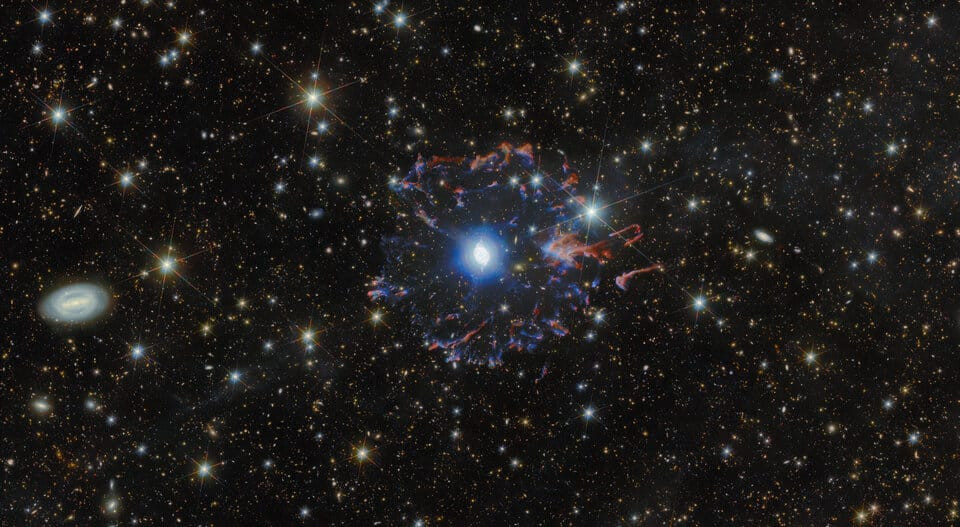
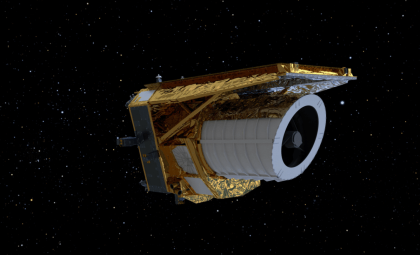
Euclid’s main objective is mapping the distant cosmos and studying dark energy that influences universal expansion. Nevertheless, it has also been invaluable in studying the Cat’s Eye Nebula. Euclid provides a wide-angle view that exposes the nebula’s outer halo and the gas fragments expelled earlier in the star’s lifespan. By employing visible and near-infrared imaging, it contextualizes the nebula within a broader cosmic landscape.
Euclid’s strength lies in positioning the nebula amid a backdrop of remote galaxies, granting astronomers insight into the nebula’s place within the greater universe, bridging local star phenomena with faraway cosmic realms.
Hubble’s Detailed Examination of the Nebula’s Core
Complementing Euclid’s broad perspective, Hubble’s sharp imaging capabilities delve into the heart of the Cat’s Eye Nebula. Its observations reveal extraordinary detail in the nebula’s central area, unveiling concentric shells, shock-formed knots, and rapidly moving gas jets that characterize the complex mass loss from the star’s final stages.
Hubble’s high-definition visuals present an elaborate and sometimes otherworldly vista of gas and dust structures. This central region acts as a cosmic “fossil,” preserving the dramatic final phases of the star’s life, thus serving as an essential resource for the study of stellar transformation.
Uniting Hubble and Euclid: Crafting a Holistic Cosmic Portrait
The combined capabilities of Hubble and Euclid mark a breakthrough in nebula research. While Hubble prioritizes detailed, close-up views and Euclid gathers expansive, wide-field data, merging their observations furnishes a richer, more complete understanding of such celestial bodies. This blend of detailed and panoramic imagery enhances our knowledge of the Cat’s Eye Nebula’s complex structure and its relation to the surrounding cosmos.
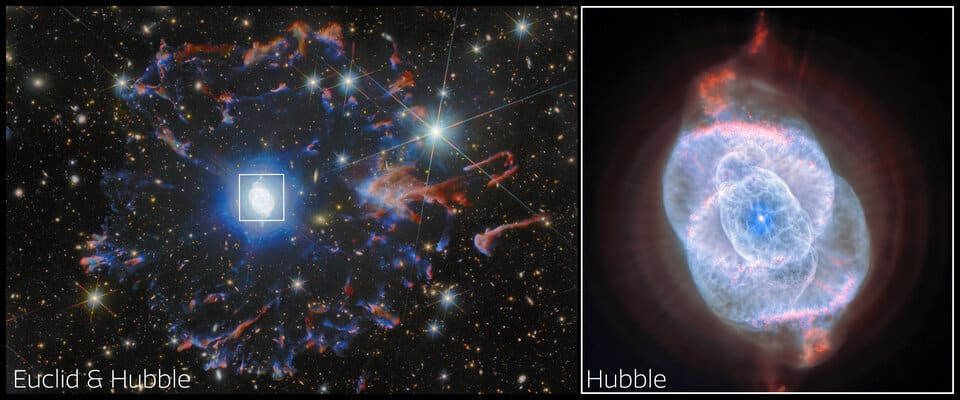
This integrative technique underscores the strength of modern astronomy, where diversified tools and missions collaborate to unlock the universe’s complexities. By harnessing the complementary perspectives of both telescopes, scientists uncover not only the nebula’s fine details but also its integral role within the grand, expanding cosmic tapestry.
Examining the Cosmic ‘Fossil Record’ Left by a Star at Its End
The Cat’s Eye Nebula captivates astronomers due to its role as a cosmic relic. The elaborate arrangements of gas shells, jets, and shock fronts are more than mere shapes—they are a testament to the processes a star undergoes during its final phase. This celestial “fossil” unveils vital information about how stars expel material and transition into white dwarfs.
Studying these patterns provides valuable insight into the forces driving stellar change in a star's last moments. Observing such a nebula in high detail offers a rare window into the natural phenomena governing star lifecycles and the shaping of the surrounding space environment.
- Categories:
- Space


0 comments
Sign in to Comment