
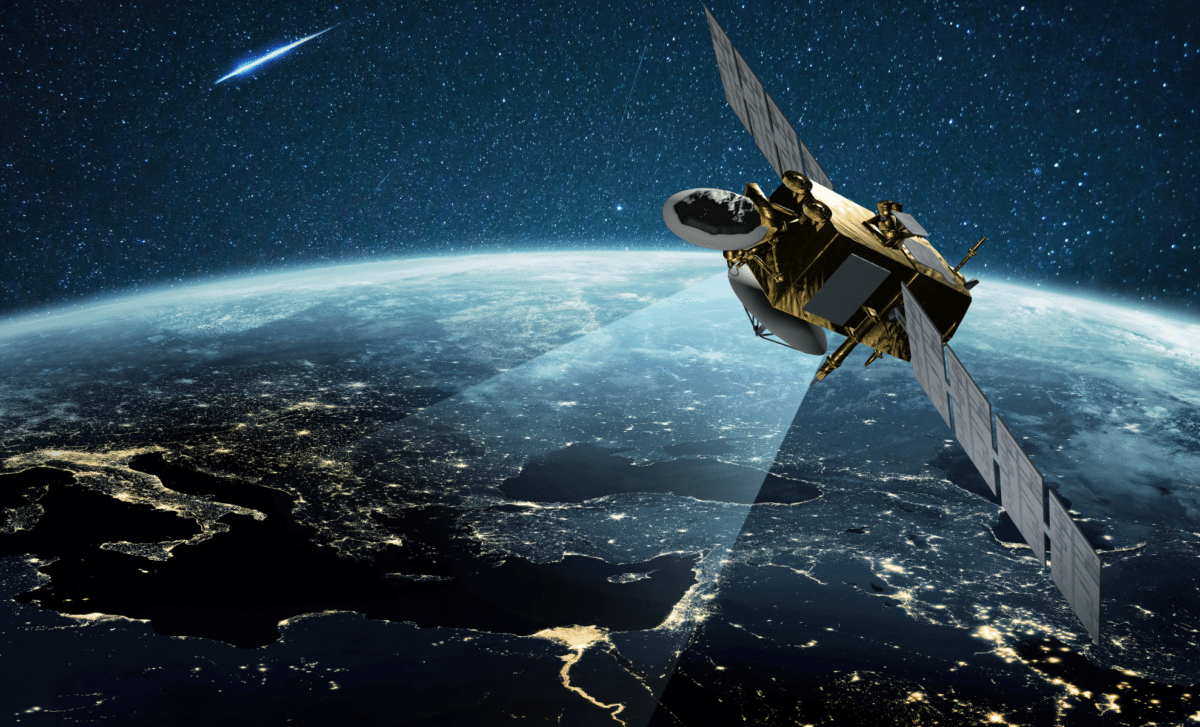
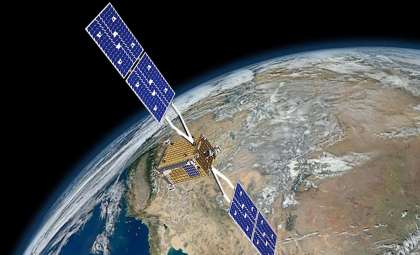
Though it sounds like a concept straight out of a sci-fi thriller, scientists are investigating how magnetic fields might enable satellites to navigate around one another without relying on conventional fuel sources. A research paper on arXiv presents a novel technique called Electromagnetic Formation Flight (EMFF), which harnesses solar-powered electromagnetic coils to create precise magnetic forces between spacecraft. With the rapid increase in satellites orbiting Earth—driven largely by massive satellite constellations—the demand for sustainable, fuel-free maneuvering alternatives is growing.
An Emerging Paradigm in Satellite Movement
The arXiv publication introduces a concept where satellites control their relative positions by producing magnetic fields through electromagnetic coils energized by renewable resources such as solar energy. When many satellites are equipped with these systems, they can gently pull towards or push away from one another, preserving formation or preventing collisions without traditional rocket propellant, which typically limits mission lifespans.
This approach, called Electromagnetic Formation Flight (EMFF), has been under investigation for several years but is gaining renewed focus due to the soaring number of satellites within Earth's orbit.

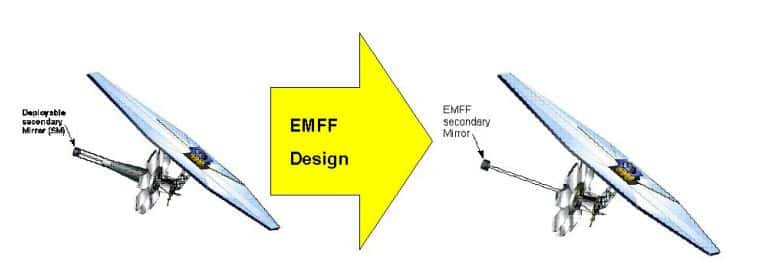
“The leap in complexity from coordinating two satellites to coordinating three is substantial,” notes Alvar Saenz Otero from the University of Washington, underscoring challenges in scaling EMFF for larger satellite formations. While primarily theoretical at present, successful experiments both on Earth and in microgravity environments indicate promising potential.
Ray Sedwick at the University of Maryland points out that although EMFF has exciting prospects for spacecraft control, it remains unsuitable for application in crowded orbital regions.
“Everything we ever did for EMFF was always about deep space operations,” he says. “It’s not something that applies at a constellation level.”
Currently, EMFF is better suited for deep space ventures such as asteroid missions or long-term scientific platforms far from Earth and its dense debris field.
Challenges and Prospects of Using Superconducting Magnets
The principal hurdle for EMFF is the limited distance over which its magnetic forces can act, typically only a few meters. Nonetheless, emerging studies suggest that using superconducting magnetic coils could greatly enhance the range, broadening the system’s practical usability.
“The range that EMFF can work over increases significantly if you employ superconducting magnetic coils, but there are technical challenges here,” explains Sedwick.
The difficulties include maintaining superconductors at extremely low cryogenic temperatures and fitting these components into compact, energy-efficient satellite designs. Although complex, advancements in materials science and cryogenic technology could help overcome these obstacles soon.
Scientists anticipate that advanced superconducting EMFF platforms may enable coordinated satellite constellations to autonomously reorganize mid-mission, navigate space debris, or perform sophisticated maneuvers in distant orbits like those around the Moon or Mars.
Not Yet Ready for Large-Scale Use
While EMFF provides an enticing vision of eco-friendly, propellant-free satellite navigation, the technology’s current constraints prevent it from replacing thrusters in Earth-orbiting mega-constellations in the near term. Sedwick emphasizes that this method cannot yet manage dense satellite clusters due to weak magnetic forces and unpredictable spatial dynamics when hundreds or thousands of spacecraft operate simultaneously.
Instead, researchers are channeling their efforts toward specialized applications involving small satellite groups operating in deep space where collision hazards are minimal and orbital adjustments are less frequent. “It’s not something that applies at a constellation level,” Sedwick reiterates, noting remaining issues with engineering complexity and energy requirements.
Nonetheless, optimism remains high. Progress in superconducting materials, autonomous controls, and device miniaturization could eventually bring this visionary approach into routine satellite operations. Meanwhile, EMFF stands as a compelling innovation with the potential to extend mission longevity and diminish reliance on finite fuel stores.
- Categories:
- Space





0 comments
Sign in to Comment