
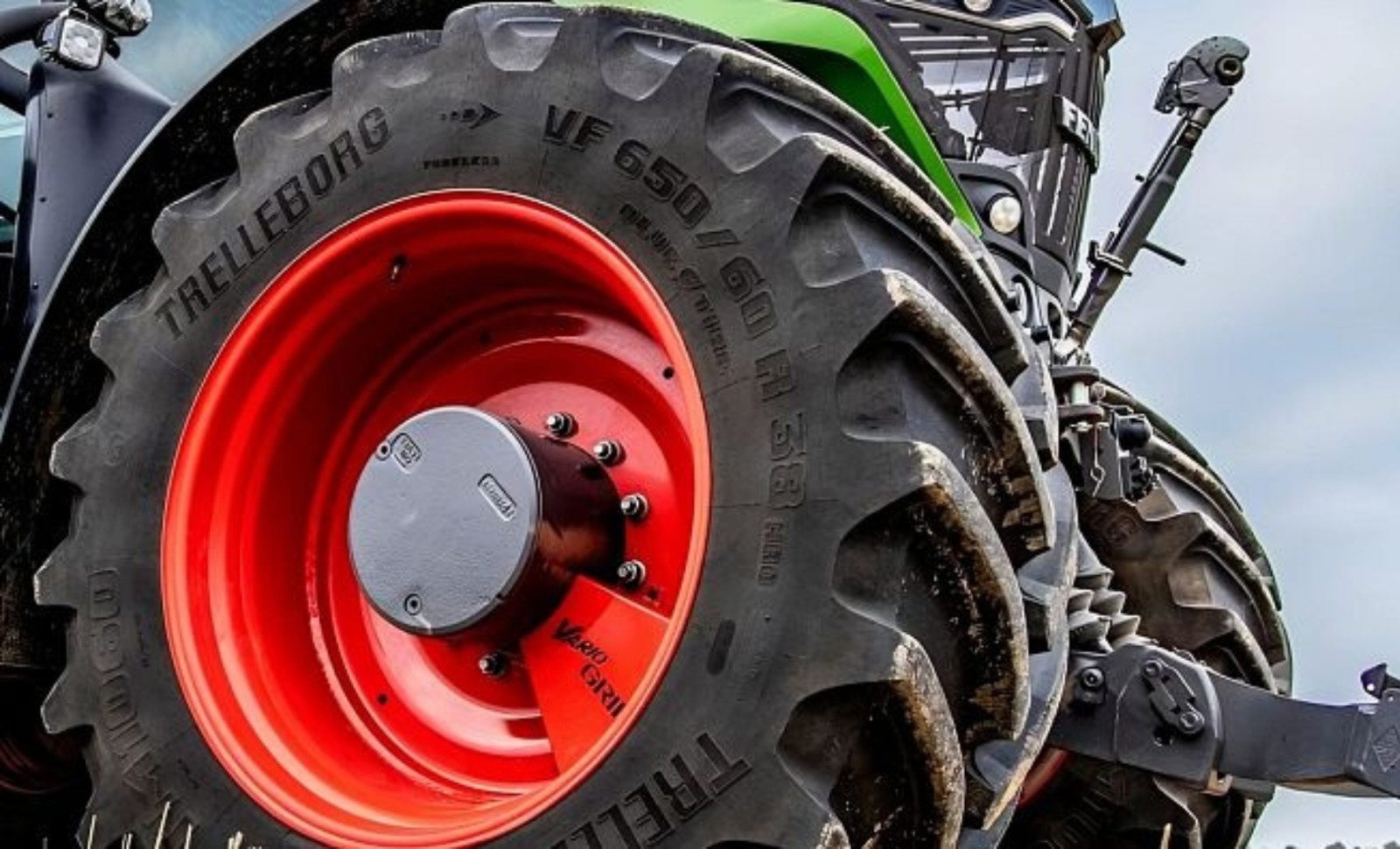
A groundbreaking technique for hydrogen storage in farm machinery is emerging in Germany. Instead of placing pressurized tanks on the tractor’s roof or near the cabin, engineers are investigating embedding hydrogen storage directly inside the tractor wheels. This method, highlighted recently by Fuel Cells Works, aims to increase operating time and maximize available space on agricultural and construction vehicles.
This approach tackles a key design issue with hydrogen-powered farming equipment. Since tractors have limited space, installing hydrogen tanks on the roof or around the cabin takes away from structural integrity and balance. Integrating storage within the wheels rebalances weight near the axles and frees up critical space elsewhere on the machine.
Insights from the Fendt Helios Prototype
The challenge of packing sufficient hydrogen onboard a tractor is well established. The Fendt Helios concept, developed through Germany’s publicly sponsored H2Agrar project in Lower Saxony, currently uses five compressed hydrogen tanks mounted on its roof. Each tank contains 4.2 kilograms of hydrogen pressurized up to 700 bar. Together, they provide between 5 and 8 hours of operation depending on the workload.

The Helios combines a 100 kW fuel cell with a 25 kWh buffer battery to generate electricity powering a 100 kW electric traction motor plus other tractor systems. Dr. Benno Pichlmaier, AGCO’s Director of Global Research and Advanced Engineering, explains the tractor’s capabilities: “The Fendt Helios performs all typical agricultural tasks comparable to a diesel-powered tractor with similar horsepower.”
However, the limit of 21 kilograms of hydrogen across five roof tanks sets a cap on the tractor’s range. The novel wheel-integrated hydrogen storage concept seeks to overcome this limitation.
Hydrogen Storage Challenges in Farming Equipment
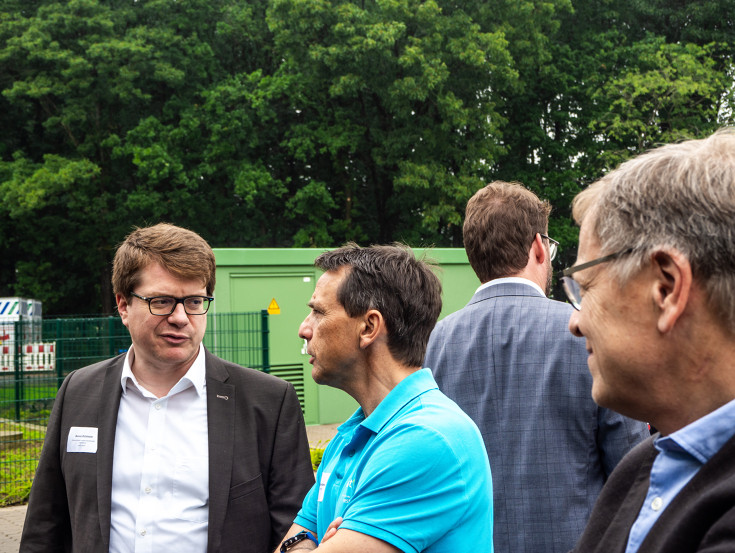
Hydrogen’s volumetric energy density is much lower than diesel—even at 700 bar—posing a significant challenge for vehicle space management. Professor Ludger Frerichs from TU Braunschweig’s Institute for Mobile Machinery and Commercial Vehicles, a collaborator in the H2Agrar initiative, laid out the core problem: “Adapting tractors to hydrogen storage requires handling its comparatively lower energy density than diesel.” His research team is actively assessing various tank designs and tractor configurations to address this.
One project partner, Röchling Engineering Plastics from Haren, sees high-pressure hydrogen tanks made with carbon-fiber reinforcement as crucial to growth. The firm is developing hydrogen containers both for vehicle integration and logistic transport in the regional Emsland area.
Using the internal volume of large tractor wheels—traditionally dedicated solely to structural support—offers a space-efficient option. Proper engineering could fit hydrogen pressure vessels into wheels without compromising mechanical function. Nonetheless, this presents engineering complexities such as maintaining pressure integrity during rotation, enabling safe hydrogen transfer, and facilitating refueling.
A Comprehensive Regional Initiative
Initiated in February 2021, the H2Agrar project—backed by €7.6 million from Lower Saxony—represents Germany’s first full-scale pilot demonstrating hydrogen’s agricultural viability. It integrates hydrogen production, infrastructure, and machinery within one local ecosystem.
The clean hydrogen is generated by a nearby community wind farm with 16 turbines close to Haren. Two 1 MW electrolysers produce around 900 kilograms of hydrogen daily. This hydrogen is fed into the local gas network and a dedicated hydrogen refueling station for Fendt Helios tractors, which fill at pressures up to 700 bar. The filling station, designed by Schwelm Anlagentechnik, supports simultaneous dispensing at 350 and 700 bar and stores up to 480 kilograms in total.
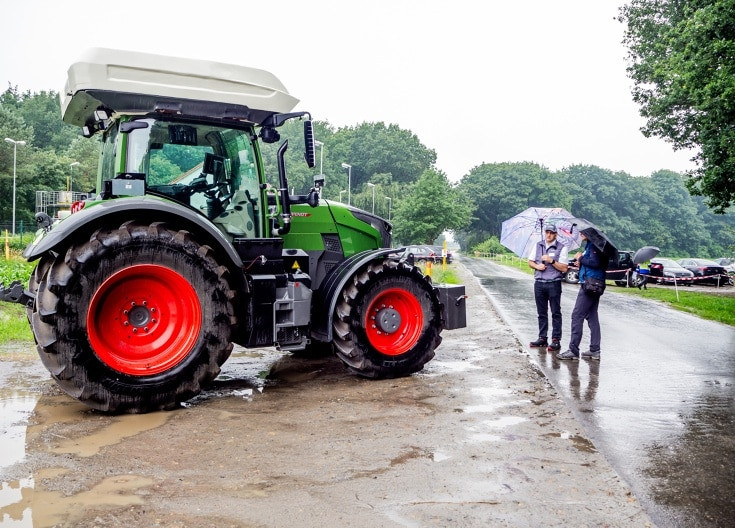
The initiative attracted about 160 participants across industries, policy sectors, and academia when presented at German Hydrogen Week in June 2024. Lower Saxony’s Minister for Economic Affairs, Olaf Lies, was also involved. Beyond the project's three-year official term, the two Fendt Helios tractors remain active on farms in the region.
Current Development and Future Potential
The Fendt Helios entered harvest field trials in 2024, yielding critical data on hydrogen consumption under demanding conditions. These findings guide ongoing work to explore alternative hydrogen storage solutions.
The wheel-integrated hydrogen tank design is a promising pathway researchers are exploring to extend the operational range of hydrogen-powered tractors, surpassing what can be achieved with traditional roof-mounted tanks. Whether this concept will advance beyond design phases to prototypes is still unconfirmed.
Agricultural machinery contributes roughly 8.5 percent of Germany’s farming-related emissions, according to federal data cited by the H2Agrar project. The Fendt Helios tractors continue farming operations as part of Fendt’s broader Clean Energy Strategy, gathering performance and environmental data in real-world conditions.
- Categories:
- News












0 comments
Sign in to Comment