
Deep within the thick woodlands of northwestern Poland, researchers have identified some of Europe’s earliest known megalithic burial sites. These long, stone-lined mounds, dating back to the 4th millennium BCE, are locally referred to as Giant’s Graves or the Kujawian tumuli. Recent findings have sparked renewed interest by uncovering previously hidden pyramid-shaped tombs beneath the forest canopy.
A Remarkable Testament to Prehistoric Engineering
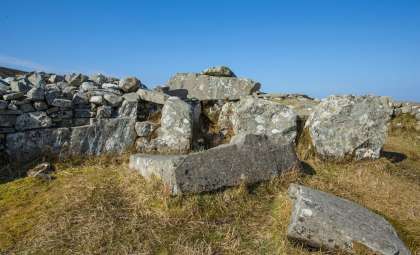
As reported in a press release, these Polish megaliths differ significantly from the famous pyramids of Egypt. Instead of towering stone pyramids, the local monuments consist of large earthen mounds shaped into elongated trapezoids and lined with gigantic stone slabs. Some stones weigh as much as 10 tons and stand as tall as small houses, an astonishing achievement for Neolithic people using no metal tools or wheels. Crafted from locally sourced materials, these tombs are oriented west to east, possibly aligned with solar patterns.
Experts believe these pyramids served as burial sites for prominent individuals—perhaps leaders, shamans, or religious figures. Although centuries of weathering and human activity have degraded many, some stones remain that resemble ancient Neolithic dwelling shapes, preserving critical cultural insights.

Modern Technology Sheds Light on Ancient Secrets
Researchers from Adam Mickiewicz University utilized cutting-edge remote sensing to detect recently discovered tombs in the Dezydery Chłapowski Landscape Park, situated in west-central Poland’s Wielkopolska region. In 2019, they revealed two new pyramid-style graves, with one tentatively dated to approximately 5,500 years ago, linking it to the Funnelbeaker culture—a largely settled community prominent in that part of Europe during the Neolithic.
The construction style and burial customs hint at a society with complex rituals and social hierarchy. While erosion and modern development have removed some distinctive stones, including an entrance marker, ample structure remains intact to allow detailed study of the tombs’ layout and symbolic design.
What Treasures Might These Tombs Conceal?
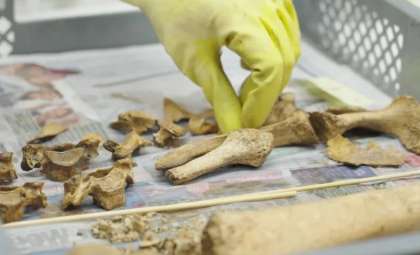
Though comprehensive digs remain in progress, initial evidence suggests these mounds housed individual burials, with bodies positioned face-up and feet facing east toward entry points. According to Artur Golis, a local landscape park expert, while the remains may not have survived, “grave goods may have”, potentially including stone axes, small hatchets, pottery shards, or distinctive clay containers.
Such burial orientations and artifacts reinforce the idea that these tombs belonged to socially or spiritually significant individuals, even within largely egalitarian communities.
After confirming these pyramidal structures in Dezydery Chłapowski Landscape Park, archaeologists hypothesize that at least three more similar sites might be buried nearby. Future explorations may provide a richer understanding of Neolithic mortuary rites, construction methods, and the Funnelbeaker culture’s impact on early European history.
- Categories:
- News







0 comments
Sign in to Comment