
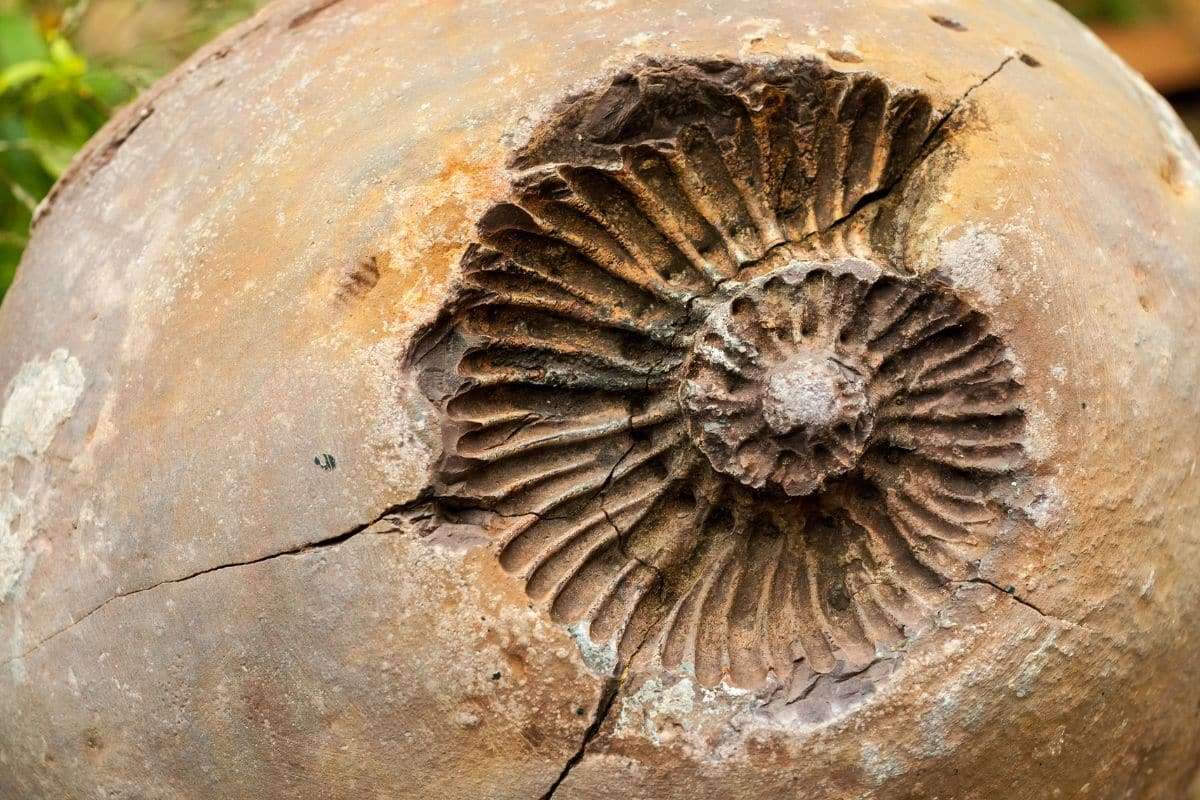
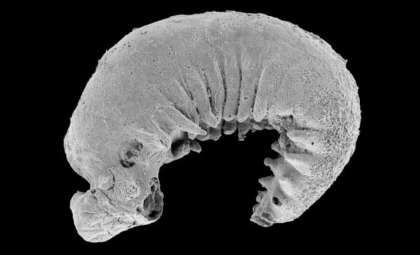
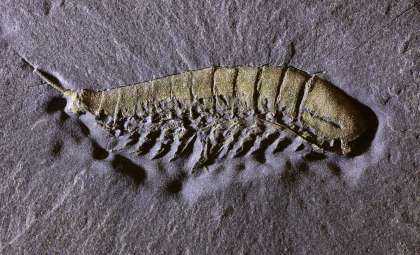
Scientists have recently revived a 520-million-year-old larva in stunning detail, revealing both its brain and digestive structures intact. This rare fossil offers an unprecedented portrait of early arthropod anatomy and evolution.
Uncovering Soft Tissues from a Time Long Past
Fossils are commonly associated with hard, mineralized remains like bones and shells, as soft tissues generally degrade rapidly after death. However, this extraordinary larva fossil breaks this pattern, preserving delicate organs such as the brain, gut, and even nerve traces for over half a billion years.
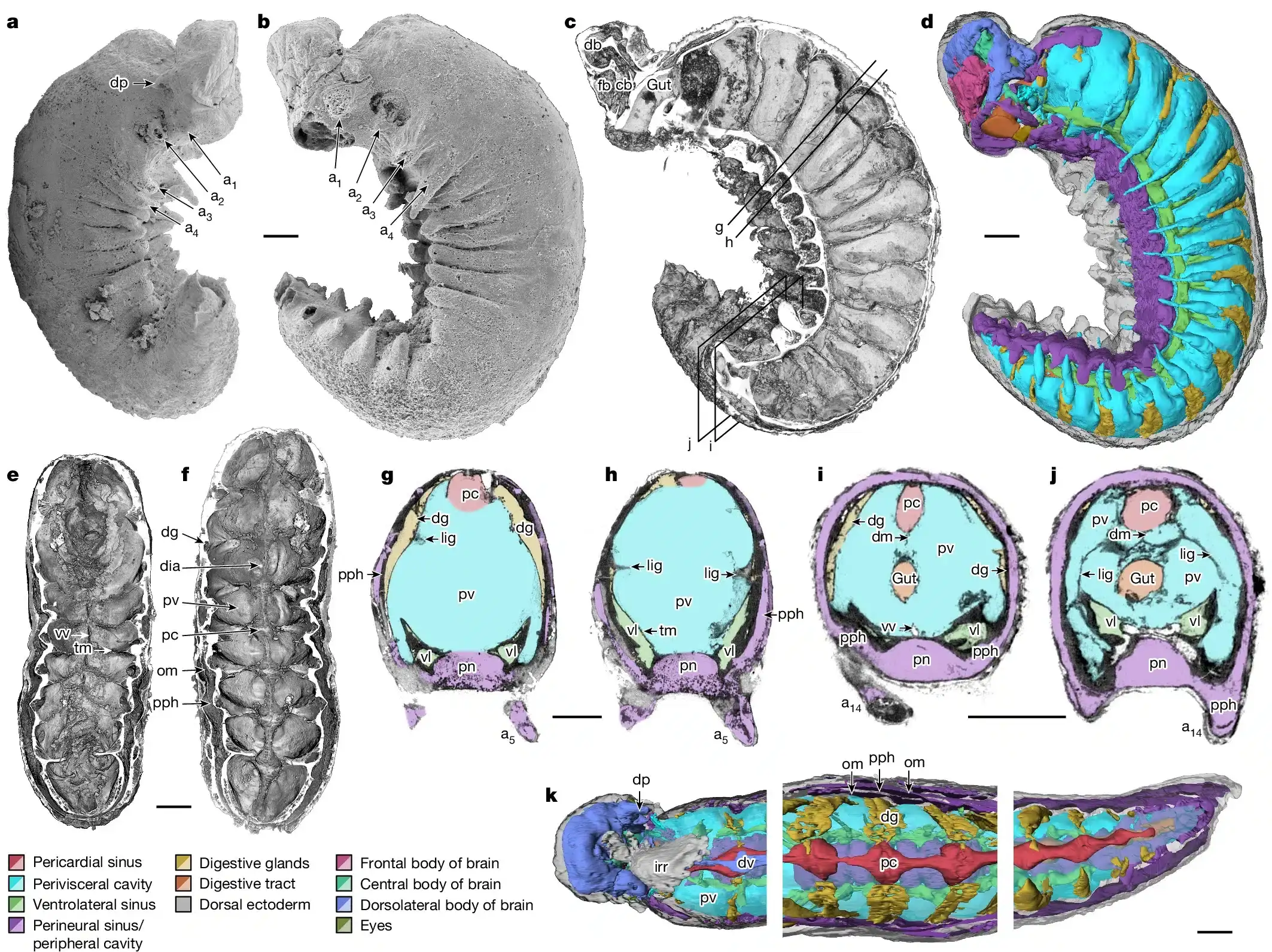
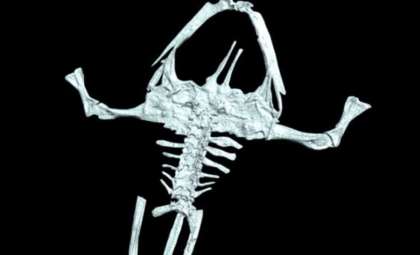
The specimen was recovered by a team studying early arthropods—a group that includes insects, crabs, lobsters, and millipedes. They employed advanced synchrotron X-ray tomography, a three-dimensional imaging method, to investigate the fossil’s intricate features with exceptional precision.

New Insights into Arthropod Origins
Co-author Katherine Dobson remarked, “While 3D imaging often reveals fascinating details, this remarkably preserved larva demonstrates an extraordinary instance of natural fossilization reaching near-perfect conservation.”
This high-resolution viewing illuminated previously hidden complexities of early arthropods, confirming their sophisticated nature during the Cambrian explosion—a pivotal period in life’s history on Earth, previously understood mostly through less detailed evidence.
The Brain’s Critical Role in Early Arthropods
Among the fossil’s most noteworthy features is its brain, especially a region called the protocerebrum.
Lead scientist Martin Smith emphasized the significance, saying, “I always dreamed of discovering an arthropod larva fossil because it holds vital clues to their development. Yet, considering how tiny and delicate larvae are, fossilization seemed almost impossible.”
The protocerebrum’s preservation allows scientists to trace the evolutionary development of arthropod heads, vital for the group’s adaptability. Their evolutionary success spans environments from deep ocean depths to Antarctica’s icy terrains, revealing the protocerebrum’s key role in shaping this versatility.
Remarkable Preservation and Its Implications
This fossil’s survival is a rare and fortunate event. Smith recalled, “I immediately knew this worm-like fossil was extraordinary. But seeing its complex internal structures perfectly retained after 520 million years was astonishing—how did these delicate parts avoid decay for so long?”
Serving as a priceless snapshot, this specimen enriches our understanding of Cambrian ecosystems and the early underpinnings of Earth’s vast biological diversity.
- Categories:
- Science

0 comments
Sign in to Comment