
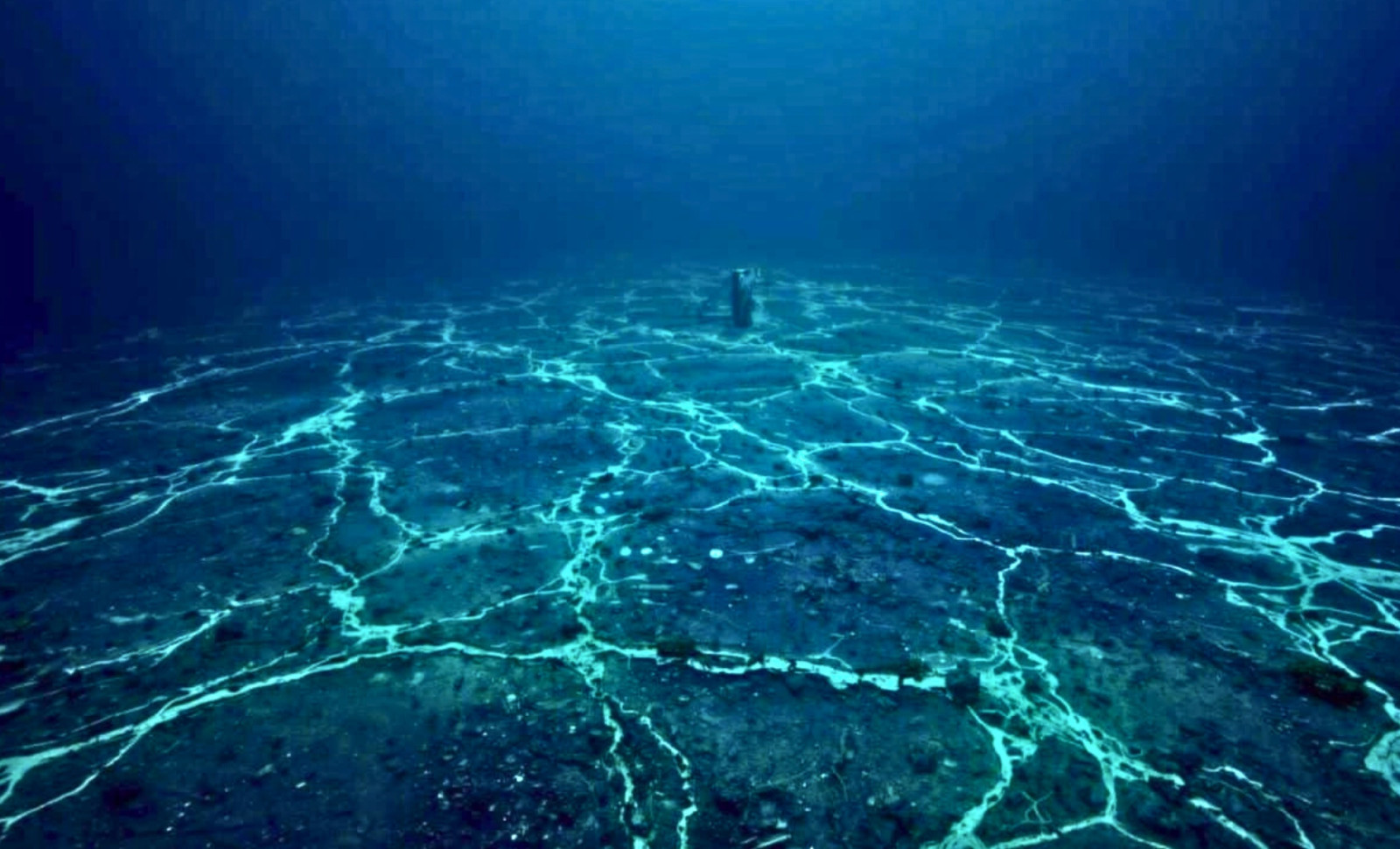
A Japanese ocean drilling vessel has successfully retrieved sediment loaded with rare earth elements from almost 6,000 meters beneath the Pacific Ocean, near the isolated island of Minamitorishima, situated southeast of Tokyo. The sample was collected by the scientific ship Chikyu, with authorities in Japan highlighting the operation as an unprecedented deep-sea retrieval at this extreme depth.
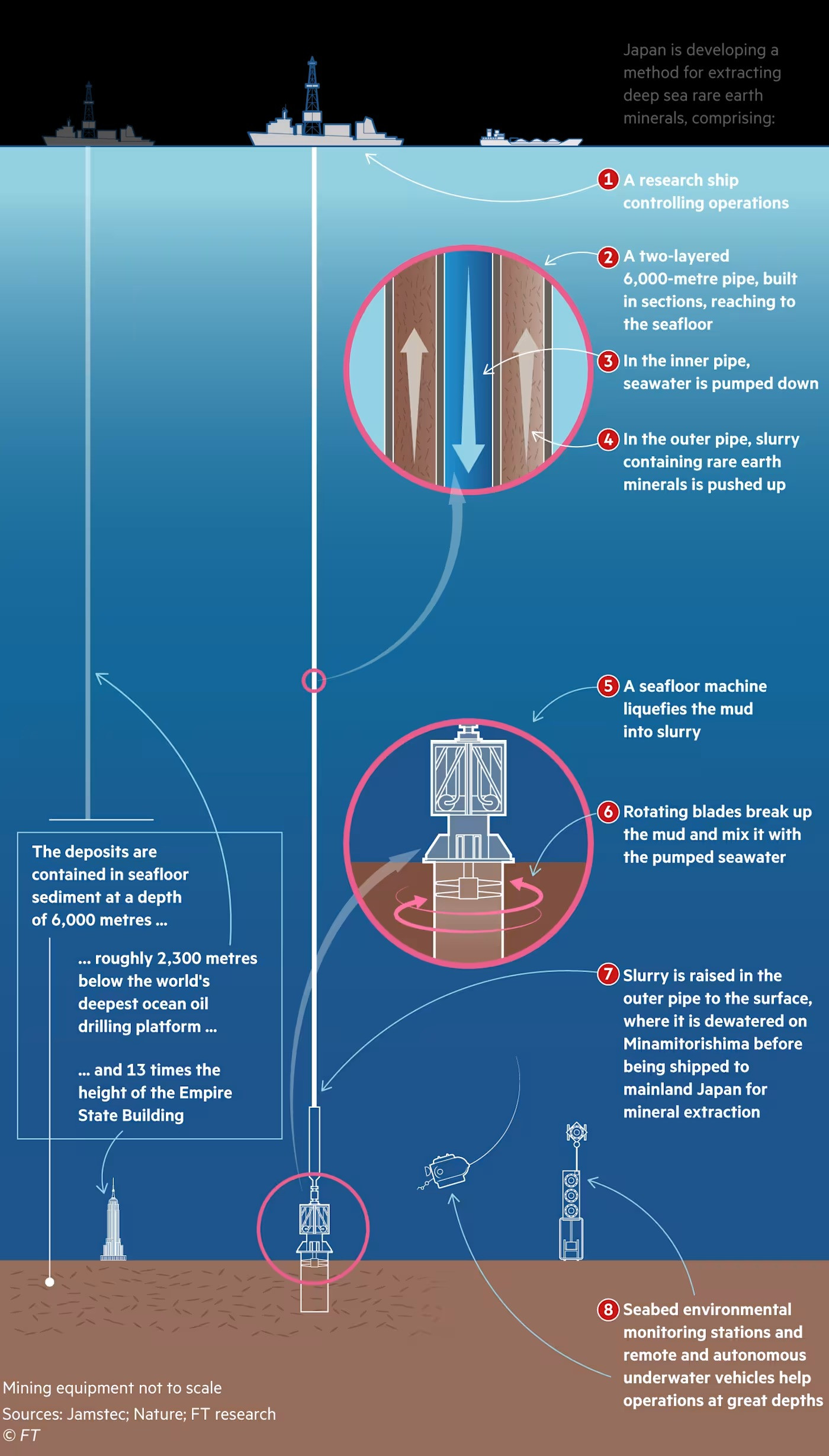
In January, Chikyu embarked on a mission to the vicinity of Minami Torishima, which lies within Japan’s exclusive economic zone. Images released via the Associated Press captured specialized mining gear being lowered to the seabed on January 18, penetrating the seafloor sediment by January 30, and collecting rare earth-rich mud into containers by February 1.
Prime Minister Sanae Takaichi noted the material came from nearly 6,000 meters (approximately 19,700 feet) under the ocean surface, describing the operation as a “world first.” She framed this as the initial phase toward industrial-scale production of domestically sourced rare earths, linking it to Japan’s ambitions to strengthen “resilient supply chains” for rare earth and other critical minerals, thereby reducing dependency on any single nation.

Years of Exploration Led to This Moment
This achievement builds on earlier investigations. Researchers from Japan had discovered rare earth element-rich mud in the waters near Minamitorishima during explorations conducted in the 2010s. The region, located within Japan’s exclusive economic zone, is believed to hold over 16 million tonnes of rare earth deposits. Citing Nikkei, Al Jazeera reported this to be the third-largest reserve worldwide. This figure was corroborated by Indian Defence Review, which also traced it back to earlier Japanese explorations.
This substantial reserve has drawn international interest. Rare earth metals are vital for high-tech magnets and numerous components used in defense systems and electric vehicles. The Associated Press emphasized that China currently dominates the production of heavy rare earths globally.
Verification Continues as Analysis Underway
Japanese authorities remain cautious regarding confirmed details. Government representative Kei Sato mentioned that the extracted sediment is undergoing analysis to ascertain the quantity of rare earth elements it contains. Science and Technology Minister Yohei Matsumoto stated that “rare earth mud” was successfully collected, but comprehensive data on its volume and make-up are pending. The Associated Press also indicated that complete analysis, including the concentration of rare earth elements, is still being performed.
Deputy Chief Cabinet Secretary Masanao Ozaki described the retrieval as “a significant accomplishment from the vantage points of economic security and comprehensive maritime development.” This viewpoint was echoed in reports by Al Jazeera quoting Kei Sato, who framed the operation as beneficial for economic security and oceanic advancement.
At this stage, the confirmed milestone is the collection of rare earth-laden sediment from remarkable depths. However, the feasibility, profitability, and readiness for commercial-scale mining have yet to be established.
Strategic Timing Amid Global Supply Concerns
Supply chain security is a major driver behind this initiative. As reported by Al Jazeera, Japan formalized a cooperative agreement late last year with the United States aimed at securing rare earth resources amid concerns over China’s dominant role in critical mineral markets. The report further noted that Japan currently sources nearly 70 percent of its rare earth imports from China, referencing Yomiuri Shimbun.
Geopolitical tensions intensified after China imposed export controls on “dual-use” materials potentially linked to military applications, following remarks from Takaichi about Taiwan. This geopolitical backdrop explains why Japanese officials emphasize the retrieval as an economic security matter rather than solely scientific exploration.
Commercial Mining Still Lies Ahead
Transitioning from sediment collection to actual mining operations remains a challenge. The Associated Press reported that industrial-scale mining will require validating the entire extraction and refining process and assessing its economic viability. Although the Indian Defence Review published a sensational headline, it acknowledged that sample collection does not signify commercial mining, and no official schedule for starting production has been announced.
Therefore, confirmed reports affirm Japan’s successful sediment recovery containing rare earth elements from around 6,000 meters below the seabed near Minamitorishima, reflecting a strategic move to lessen dependency on China. The expansive claims of a 700-year supply stem primarily from the Indian Defence Review’s headline, while their article clarifies that detailed material analysis and commercial mining efforts are still in the early stages.
- Categories:
- News




0 comments
Sign in to Comment