
Japan has made a remarkable paleontological breakthrough with the identification of a pterosaur species based on skeletal fossils unearthed within its territory. This remarkable find introduces the species Nipponopterus mifunensis to the fossil records, originating from Kyushu Island, which enriches the understanding of prehistoric air life in the region.
An Ancient Pterosaur From the Late Cretaceous Era
The Nipponopterus mifunensis fossils date back approximately 90 million years and indicate a wingspan ranging between 3 to 3.5 meters. This discovery stands out as the first time that Japan has yielded skeletal remains of pterosaurs, marking a significant milestone for scientists. Classified within the Azhdarchidae family, this species was active during the Turonian-Coniacian interval of the Late Cretaceous period, soaring through prehistoric skies.
Initially found in the 1990s at the Mifune Group formation in Kumamoto Prefecture, the fossils were recently examined in detail using advanced CT scanning technology.

Distinctive Traits of Nipponopterus
The defining characteristic setting Nipponopterus mifunensis apart is its cervical vertebrae count—possessing six, unlike other known pterosaurs. This unique skeletal feature helped confirm it as a separate genus and species within the Azhdarchidae family. The specialized vertebral anatomy was central to its flight mechanics, contributing new insights into the varied evolutionary adaptations of pterosaurs.
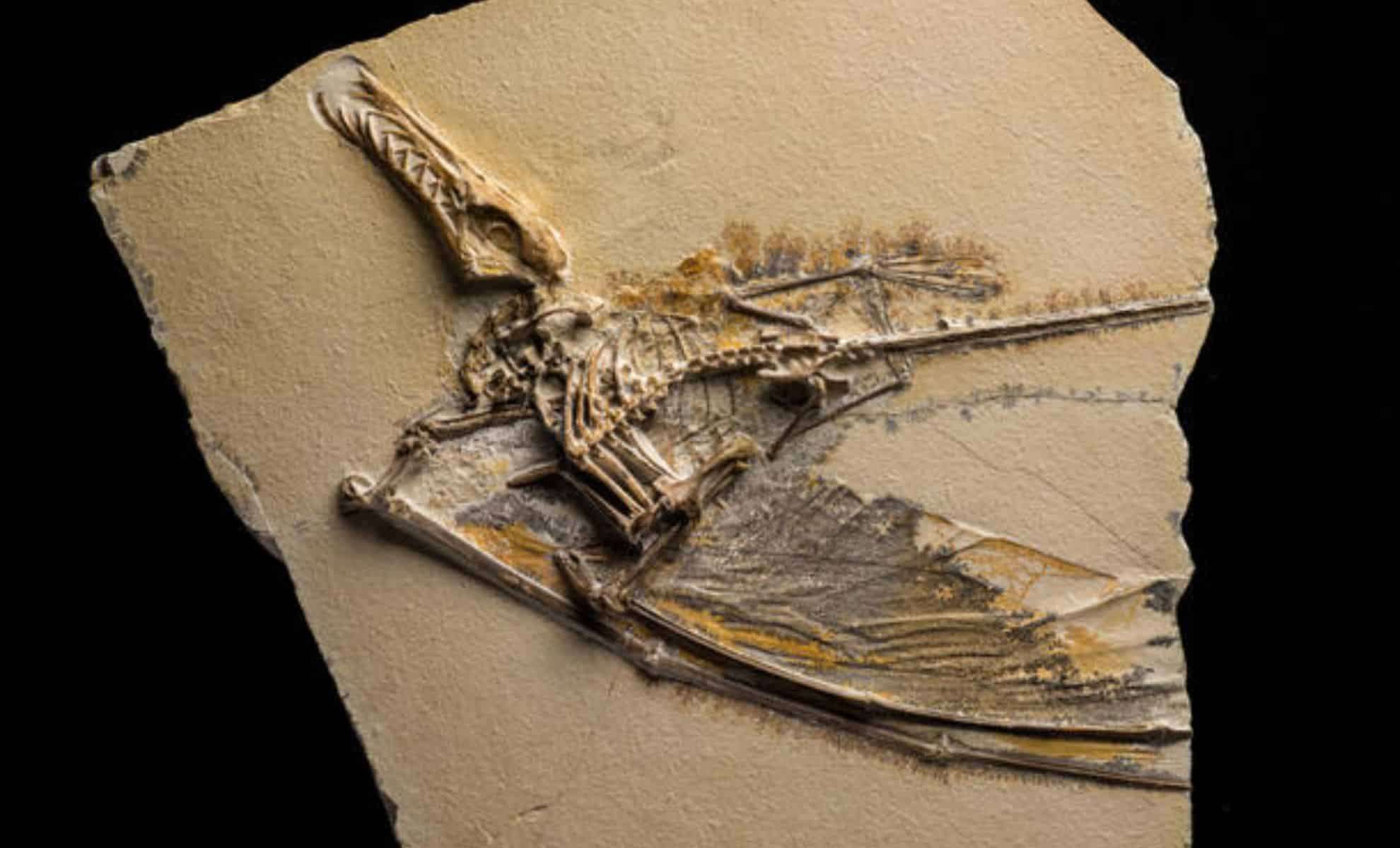
STUNNING fossil of the pterosaur Rhamphorhynchus muensteri, from Germany.
It is SO well preserved, even the soft wing membrane has been preserved 150 million years after this animal died!
(Image D. Finnin) #FossilFriday pic.twitter.com/UxZWZkRG97— Jan Freedman (@JanFreedman) November 19, 2021
Global Scientific Teamwork
This revelation was the fruit of international partnership involving experts from Shihezi University in China, the Zoology Museum at the University of São Paulo in Brazil, along with several Japanese institutions such as Kumamoto University, Hokkaido University, and the Mifune Dinosaur Museum.
Their collaboration illustrates how science connects researchers worldwide, helping to push the boundaries of knowledge. Utilizing cutting-edge CT imaging, the team confirmed Nipponopterus belonged to the large-bodied Azhdarchidae family, renowned for their impressive flight adaptations. This finding extends our awareness of these giant flying reptiles, indicating they once glided above not only Japan but also prehistoric North America and Mongolia.
Linking Japan to Ancient Flying Reptiles
By discovering Nipponopterus mifunensis, scientists have bridged Japan to the global pterosaur narrative, revealing connections with contemporaries found in regions such as North America and Mongolia.
Dr. Naoki Ikegami, a leading paleontologist on the team, called the discovery “a significant advancement for paleontology in Japan.” The specimen is now exhibited at the Mifune Dinosaur Museum, allowing visitors to marvel at this majestic creature that once claimed the skies over Japan.
- Categories:
- News








0 comments
Sign in to Comment