
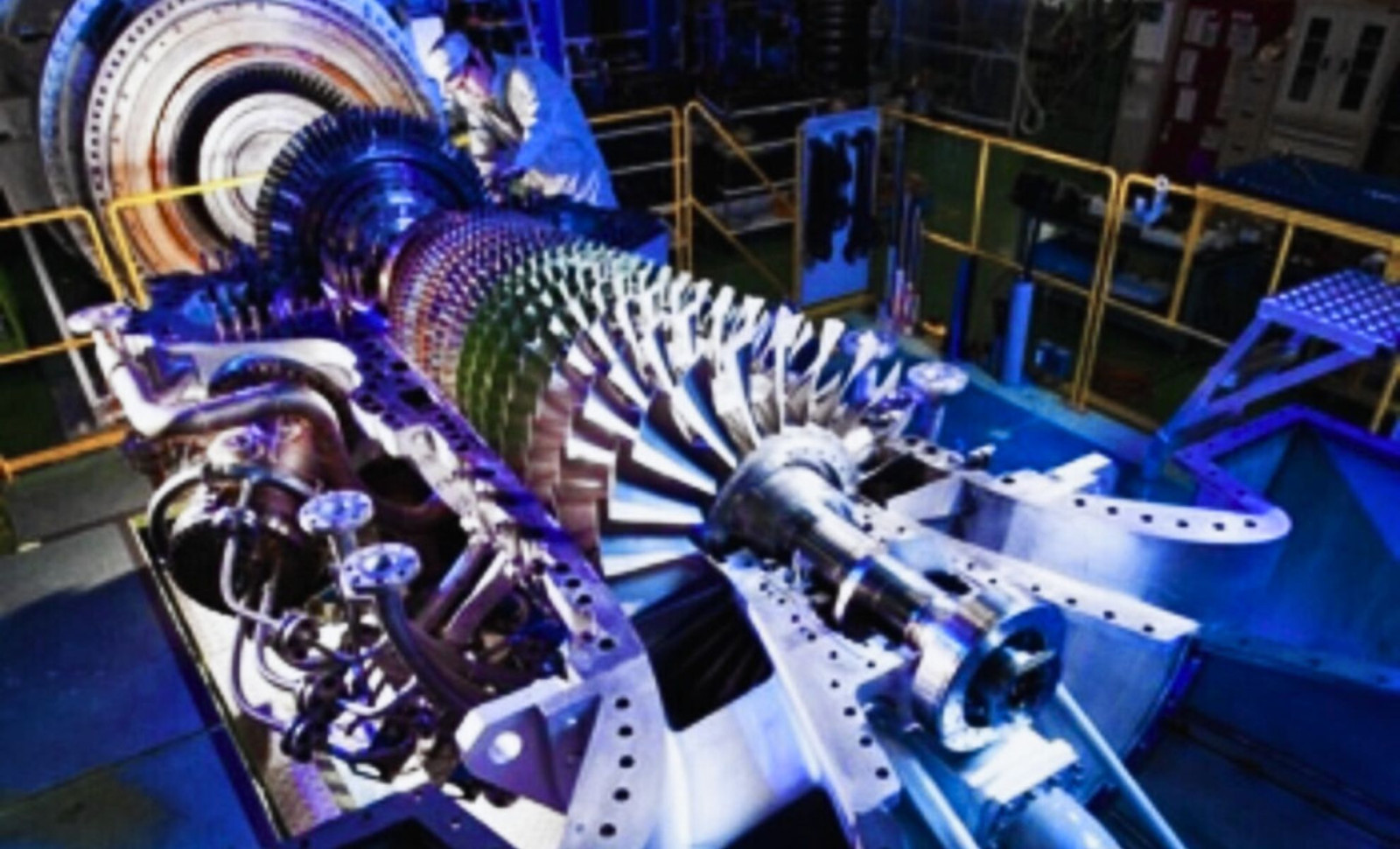
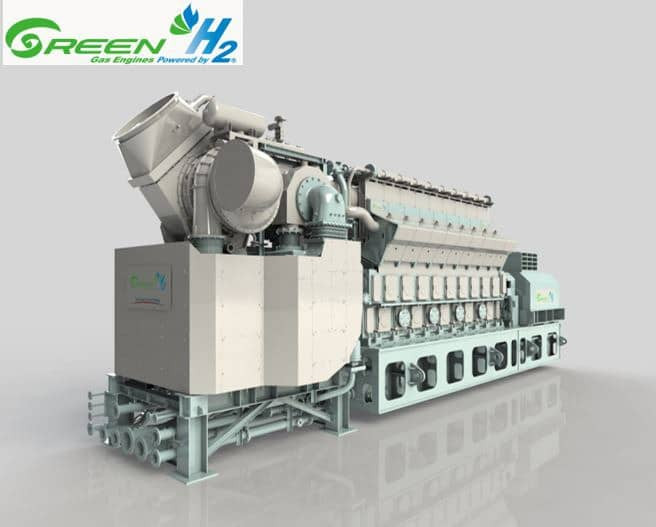
For the first time globally, a commercial gas engine designed to operate on a fuel mix containing 30 percent hydrogen is now open for purchase. This innovative engine model, developed by Kawasaki Heavy Industries, became available for order in September 2025 after successfully completing an 11-month trial at their Kobe facility.
The engine combusts a blend of up to 30 percent hydrogen by volume combined with natural gas, a ratio that allows it to utilize existing gas pipeline infrastructure with minimal adjustments. However, widespread hydrogen availability remains limited. Japan relies heavily on energy imports, and the establishment of large-scale hydrogen supply networks is expected to take several more years.
An Intermediary Solution with Retrofit Capabilities
The KG series engine isn’t yet capable of running solely on hydrogen. The 30 percent hydrogen blend is defined by Kawasaki as a “drop-in” level, enabling operators with current natural gas setups to switch to this engine model without needing to overhaul pipelines or storage systems.

Kawasaki’s gas engine division has spent over a decade enhancing this platform. Earlier iterations of the KG series introduced since 2011 have received more than 240 orders and are adaptable to hydrogen co-firing configurations. This means power plants originally designed for natural gas can transition to utilizing hydrogen blends, extending operational life and moving toward lower carbon emissions without the expense of replacing entire fleets.
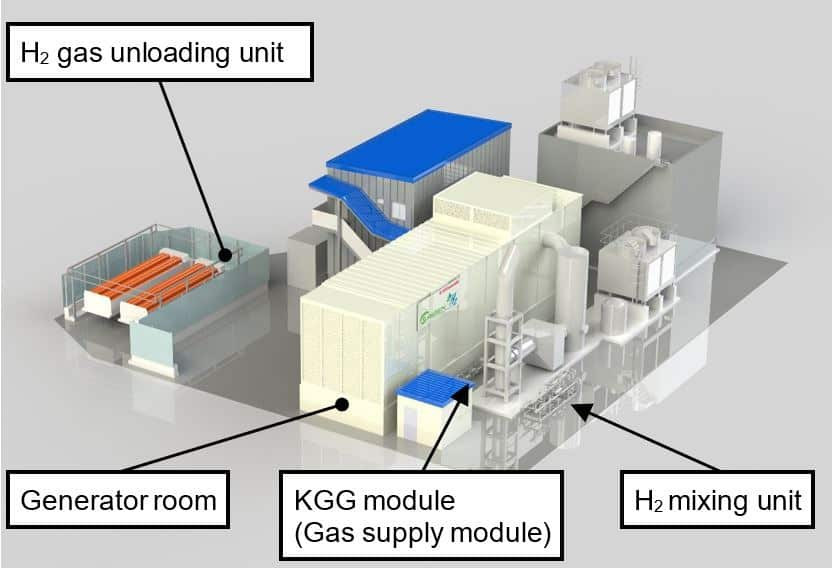
Kawasaki’s testing phase spanned from October 2024 to September 2025, targeting real-world operating conditions beyond controlled laboratory settings. The trials assessed integration within hydrogen supply networks, ease of maintenance, and especially safety features such as hydrogen leak detection and fuel line purging mechanisms designed to address hydrogen’s unique properties.
Because hydrogen molecules are the tiniest, they tend to leak through seals that work for methane, cause metal brittleness over time, and ignite across a broader mixture range than natural gas. The KG series engines include strategically placed hydrogen leak sensors throughout the fuel delivery system and nitrogen purging systems that neutralize fuel lines during startup, shutdown, or fault conditions.
Hydrogen Propulsion Advances in Shipping
This stationary power milestone coincides with progress in marine applications. On October 28, 2025, Kawasaki, Yanmar, and Japan Engine Corporation revealed the world’s first land-based demonstration of marine hydrogen engines.
The demonstration involved different engine types powered by a novel liquefied hydrogen supply system. Kawasaki and Yanmar showed stable hydrogen combustion in medium-speed four-stroke engines at full power output. Japan Engine Corporation is working on a low-speed two-stroke hydrogen engine, utilized in large container ships, with initial operations expected by spring 2026.
All these engines feature a dual-fuel system, capable of switching between hydrogen and traditional diesel fuel as circumstances require. This flexibility addresses the challenges of hydrogen supply variability during transit and at ports while infrastructure develops, which may take decades. Such adaptability allows vessels to operate continuously throughout this energy transition rather than waiting for full hydrogen availability.
The marine initiative is part of Japan’s Green Innovation Fund, managed by NEDO (New Energy and Industrial Technology Development Organization). The Japanese government has allocated roughly 2 trillion yen, approximately 13 billion US dollars, to this fund to support its target of achieving carbon neutrality by 2050.
Building the Essential Support Systems
Both the stationary and marine hydrogen engine programs depend heavily on infrastructure still under development. Kawasaki is concurrently investing in hydrogen supply chain capabilities, as outlined on their official website.
In November 2025, Kawasaki Heavy Industries teamed up with Japan Suiso Energy to commence construction of the Kawasaki LH2 Terminal in Ogishima. This facility is billed as Japan’s first major liquid hydrogen import terminal. Equipped with a 50,000-cubic-meter liquid hydrogen storage tank—the largest of its kind globally—and featuring maritime cargo handling plus truck dispatch operations, it aims to be operational by 2030.
Designed to serve as both an import and bunkering center for hydrogen produced internationally, the terminal addresses Japan’s limited capacity for domestic renewable energy production. The partners are also planning a 40,000-cubic-meter liquid hydrogen carrier ship, scaling up markedly from the 1,250-cubic-meter Suiso Frontier vessel, which completed the world’s first hydrogen shipment from Australia to Japan in 2022.
Kei Nomura, Executive Central Manager of Kawasaki’s Hydrogen Strategy Division, remarked regarding the marine tests, “liquid hydrogen is a vital key to realizing a sustainable energy society, and we have long been committed to building the technological foundation to support it.”
This technological groundwork now incorporates the new hydrogen-compatible engines. While fuel terminals and supply vessels are projected for deployment toward the decade’s end, early adopters of the KG series engine face decisions: procure hydrogen from scarce, localized sources at likely premium prices; operate the engines on natural gas alone, foregoing hydrogen’s benefits; or wait for supply availability to improve.
- Categories:
- News












0 comments
Sign in to Comment