
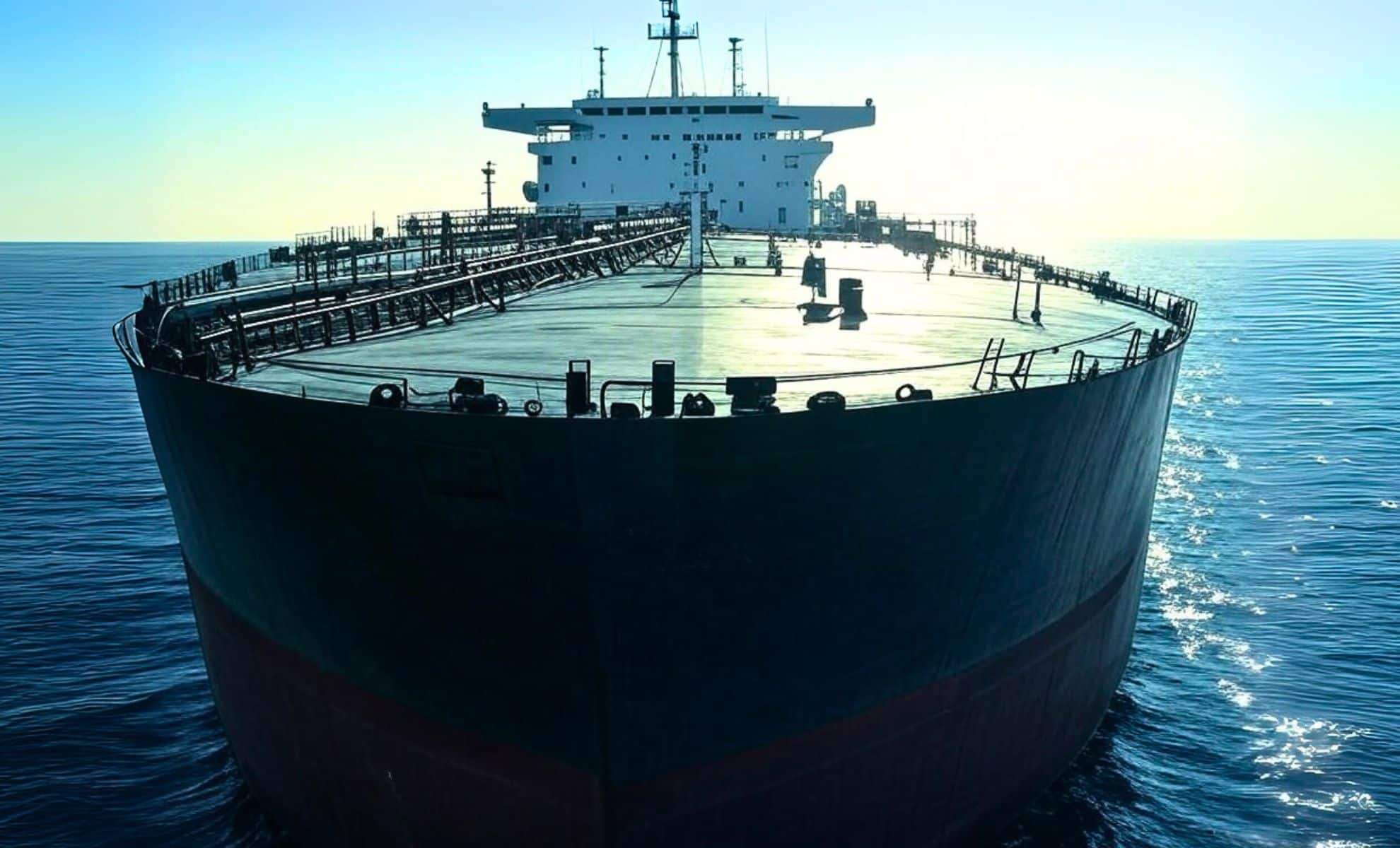
Japan continues to lead in maritime advancements with the creation of an innovative oil tanker aiming to minimize greenhouse gas emissions. Expected to be launched in 2028, this vessel will be among the world’s largest crude oil carriers and will pioneer the use of methanol as a cleaner fuel source in this class of ships.
A Significant Advancement in Eco-Friendly Shipping
As the shipping industry emits close to 1 billion tons of CO₂ every year—roughly equal to the emissions output of a nation like Germany—Japan’s latest development is remarkable. Per Interestingengineering, the tanker is categorized as a Very Large Crude Carrier (VLCC), boasting a deadweight tonnage of 310,000 tons and dimensions reaching 339.5 meters long and 60 meters wide.
Specifically engineered to traverse the Malacca Strait—a narrow yet crucial shipping lane linking the Indian and Pacific Oceans—the tanker meets the “Malacca Max” criteria, ensuring it remains operational along one of the busiest oil corridors from the Middle East to East Asia.

Innovative Dual-Fuel Technology Enhances Efficiency
Conceived by Japan’s prominent shipping firm Nippon Yusen Kaisha (NYK) Line, the VLCC incorporates a dual-fuel mechanism allowing it to run on both heavy fuel oil and methanol. While heavy fuel oil is cost-effective, it is also a significant source of pollution.
Utilizing methanol lowers the tanker’s carbon dioxide emissions by a minimum of 15%, with the possibility of reaching reductions up to 40% when powered by "green" methanol derived from biomass or synthesized using captured CO₂ combined with renewable hydrogen.
Methanol’s role as an emerging alternative fuel is already established in chemical manufacturing, and unlike hydrogen or battery solutions, it can be seamlessly integrated into present maritime frameworks. This positions methanol as a practical choice for large-scale vessels undertaking extensive voyages.
The ship will also be fitted with a shaft generator that harnesses rotational energy from the engine and reallocates it to the propulsion system, enhancing energy efficiency by minimizing losses during operation.
A Fully Domestic Partnership Drives the Project
This landmark VLCC is the outcome of a comprehensive collaboration among Japanese industry leaders. NYK Line has worked alongside Idemitsu Tanker, IINO Kaiun Kaisha, and Nippon Shipyard to design and develop the vessel. The consortium began efforts in January 2024 and revealed the design by October.
Construction responsibilities lie with Nippon Shipyard, while Idemitsu Tanker has secured a long-term charter agreement, ensuring that the tanker’s operations commence promptly and sustain economic feasibility.
The initiative aligns with NYK’s broader ambition to become carbon neutral by 2050. Although fully electric maritime transport remains challenging for long routes, this project represents a to significantly reduce emissions in the shipping sector within the near future.
- Categories:
- News








0 comments
Sign in to Comment