

On June 11, 2025, the full moon will reach its lowest point in the night sky seen in many years. This occurrence results from the Moon’s distinct orbital patterns and long-term cyclical movements that subtly alter its sky trajectory over nearly two decades.
The Moon’s Evolving Orbit and Its Celestial Rhythm
The Moon doesn’t follow a straightforward orbit around Earth. Instead, it is inclined about 5.15 degrees relative to the ecliptic, the plane in which Earth revolves around the Sun. Because of this tilt, the Moon’s position in the sky varies significantly, oscillating between roughly 28.65 degrees north and south in declination. This number comes from the interplay of Earth’s axial tilt of 23.5 degrees combined with the Moon’s orbital tilt. This orbital inclination is also why eclipses don’t happen monthly but only during specific eclipse seasons twice annually.
These shifts bring about what astronomers refer to as lunar standstills, times when the Moon’s declination reaches its most extreme highs or lows. This cycle spans approximately 18.6 years from one prominent lunar standstill to the next. The last major lunar standstill happened in 2006, and in 2025, the Moon enters a phase that causes it to trace a notably lower path across the sky during the full moon.

Watching the Uncommon Trajectory of the June Full Moon
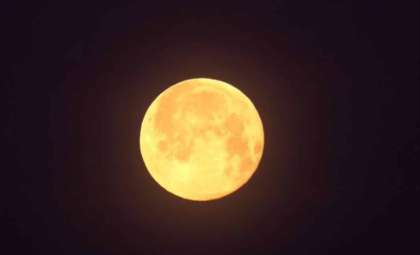
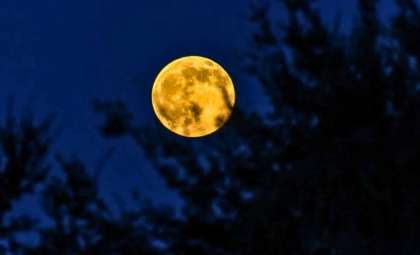
This June full moon 2025, often called the Strawberry Moon, occurs close to the southern solstice. In mid-northern latitudes, the Moon will barely clear the southern horizon, often just grazing the tops of trees. For locations above 60 degrees north latitude—including parts of Alaska, Greenland, and Iceland—the Moon might remain below the horizon throughout this full moon night.
Meanwhile, those in the Southern Hemisphere will witness the Moon towering high in their winter sky, mirroring what the Northern Hemisphere experienced last December during the “Long Night’s Full Moon.”
The Moon’s Trajectory and Stellar Events
This astronomical event coincides with rare interactions between the Moon and prominent stars, producing fascinating occultations. For instance, on June 6, viewers in Tasmania and southern New Zealand can observe the Moon passing in front of the star Spica, while on June 10, a similar occultation of Antares will be visible across Australia and New Zealand, just before the full moon peak. During these moments, the Moon temporarily obscures the stars from view.
These occurrences highlight a unique period when the Moon’s orbit intersects with three of the four bright stars it can occult, Regulus included in July. The bright star Aldebaran remains the exception. Such celestial events offer star gazers exceptional opportunities to witness the intricate gravitational choreography of our solar system.
Historical Insights into the Moon’s Orbital Patterns
Ancient civilizations had a deep awareness of the Moon’s changing path and incorporated its cycles into their timekeeping. For example, the Bronze Age monument of the Callanish Stones in Scotland is thought to align with the Moon’s extreme rising and setting positions during its standstill phases.
This historical connection highlights how the Moon has shaped humanity’s understanding of time and the cosmos for thousands of years. Whether observed in a backyard or from a remote summit, the event serves as a striking demonstration of the celestial forces molding our night skies.
- Categories:
- News







0 comments
Sign in to Comment