
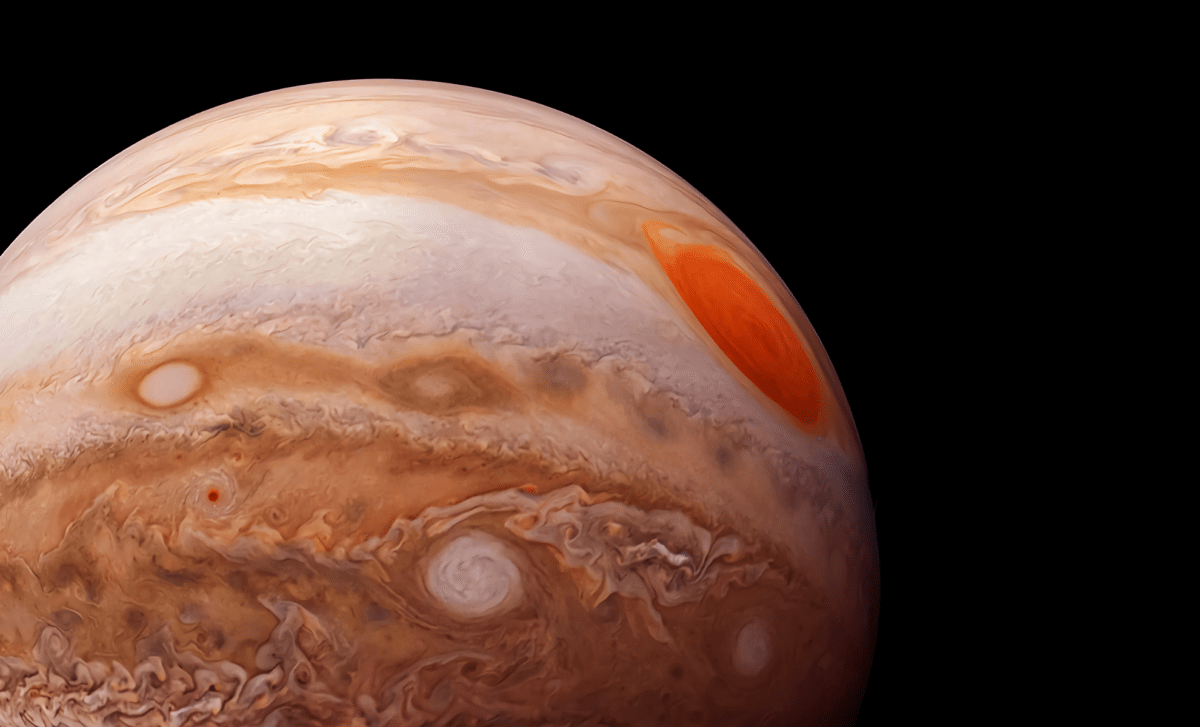
On March 10, 2026, Jupiter will seem to shift its movement in the night sky, signaling the conclusion of its retrograde phase that began in November 2025. This event happens when Earth overtakes Jupiter along their orbits, creating the illusion of the giant planet traveling backward against the starry background. For a comprehensive overview of this occurrence, see the article from Space.com. Here, we explore what retrograde motion entails, how it arises, and why it matters for those observing the heavens.
Decoding Retrograde Motion: The Astronomical Illusion Explained
Retrograde motion is one of astronomy’s most captivating yet puzzling phenomena. According to Space.com, it describes the apparent backward travel of planets as seen from Earth, caused by our planet passing an outer planet in orbit. While the planet isn’t genuinely reversing its course, the shift in point of view makes it look that way.
This visual trick occurs because Earth moves around the Sun faster than outer planets like Mars, Jupiter, and Saturn. As Earth approaches and overtakes them, these planets appear to decelerate, stop, and temporarily glide westward before resuming their eastward journey. In Jupiter’s case, this retrograde cycle extends for several months and is most prominent when Jupiter is positioned opposite the Sun, an event called opposition.

Although retrograde motion is merely an optical effect, it can be confusing to amateur skywatchers. Grasping the orbital mechanics behind it enhances viewers’ appreciation of planetary movements, even when the finer details of celestial dynamics remain complex.
Jupiter’s Prolonged and Noticeable Retrograde Motion
Because of its brightness and size, Jupiter’s retrograde motion stands out vividly. Unlike inner planets such as Mercury or Venus that exhibit short retrograde episodes, Jupiter’s backward apparent movement lasts for months. Starting in November 2025, it continues until March 10, 2026, when Jupiter will once again proceed eastward.
During this period, Jupiter appears to drift westward across the stars within the constellation Gemini, creating a striking spectacle as it briefly reverses its path. Once Earth advances further in orbit, Jupiter’s usual eastward route resumes, bringing an end to the retrograde illusion.
This is a prime moment for observers to study Jupiter and its celestial context. The planet’s directional shift offers a fascinating opportunity to track its movement against star backgrounds, especially at its peak brightness and visibility. Familiarity with this event helps stargazers follow Jupiter’s course more accurately over time.
Why Observing Jupiter’s Retrograde Motion Is So Intriguing
Jupiter’s retrograde phase offers both professional astronomers and hobbyists a special chance to witness solar system mechanics in action. Although retrograde motion is illusory, it highlights the variation in orbital velocities between Earth and outer planets. It serves as a reminder of the intricate dance of celestial bodies.
As Earth overtakes Jupiter, the shifting perspective brings insight into planetary orbit behavior. What appears as a simple backwards movement actually showcases planetary motions and aids astronomers in predicting planetary positions.
This phenomenon has fascinated stargazers for millennia, dating back to the ancient Greek astronomers who were puzzled by such planetary reversals. Their curiosity helped pave the way for the modern understanding of the solar system’s structure.
After March 10: What Lies Ahead for Jupiter
Following March 10, Jupiter will resume its standard eastward trek among the stars. It will continue this path until late June before disappearing from view near solar conjunction in late July—when it moves too close to the Sun’s glare to be seen with the naked eye.
Jupiter will reemerge in August as a morning object, providing an excellent viewing opportunity in the pre-dawn hours. As it distances itself from the Sun, the planet will gradually become visible again in the evening sky later in the year.
How Jupiter’s Retrograde Motion Benefits Stargazers
For both amateur astronomers and casual skywatchers, Jupiter’s retrograde period is eagerly awaited. Its brightness during this phase makes it easy to spot, perfect for telescope or binocular observations and astrophotography.
Additionally, retrograde motion serves as a practical lesson about planetary interaction and orbital mechanics, enriching one’s understanding of our celestial neighborhood. Recognizing this motion deepens appreciation for the dynamic universe we observe.
Regardless of experience level, tracking Jupiter’s retrograde movement offers a captivating way to engage with the cosmos.
- Categories:
- News










0 comments
Sign in to Comment