
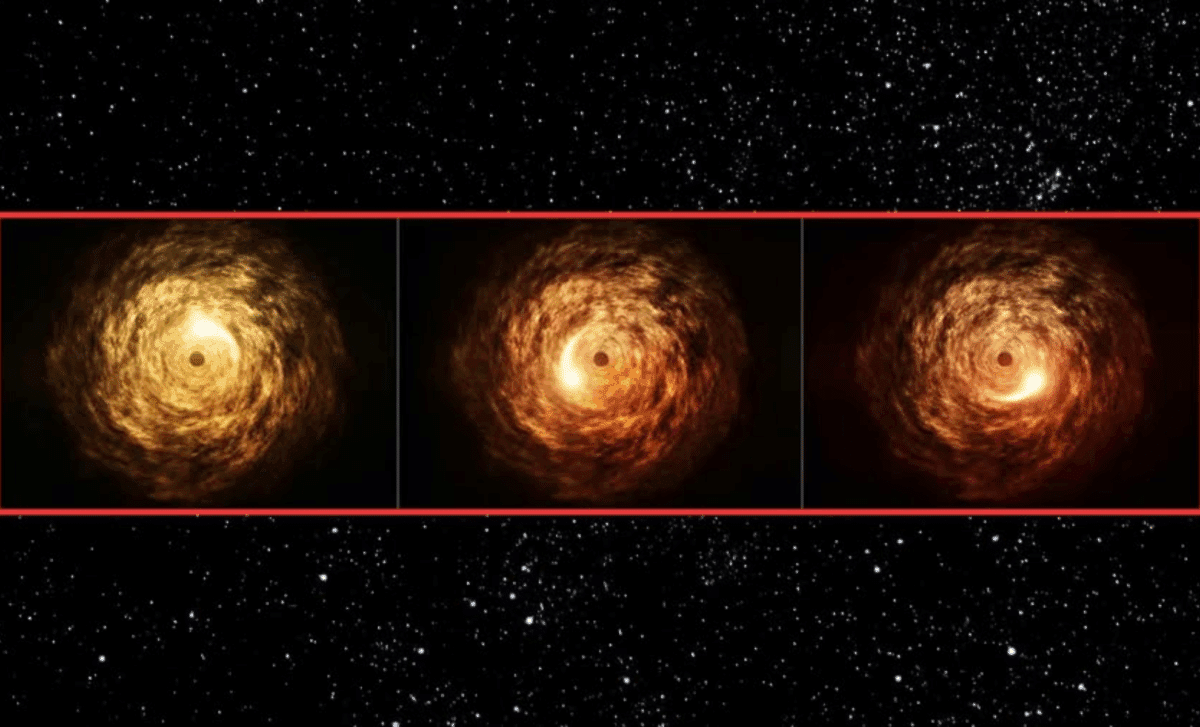
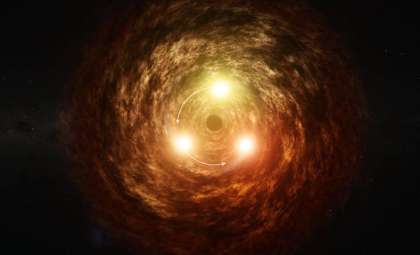
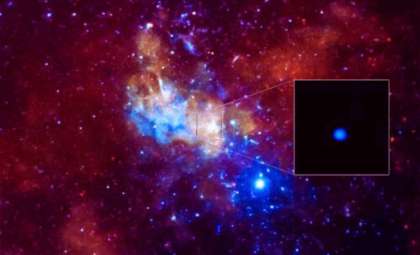
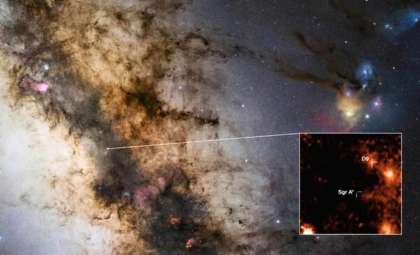
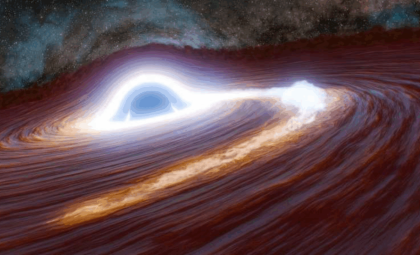
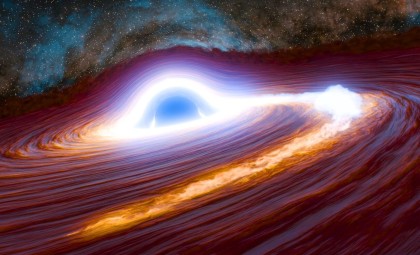
Utilizing the advanced capabilities of the James Webb Space Telescope (JWST), astronomers have identified a novel phenomenon emanating from the core of our galaxy’s supermassive black hole, Sagittarius A*. For the first time, mid-infrared emission has been detected as a brief flare, shedding new light on the dynamics governing black holes. Published as a preprint on arXiv, this discovery offers valuable perspectives on how these massive celestial objects impact their cosmic neighborhoods, potentially transforming our comprehension of galactic cores.
Unveiling Sagittarius A* Through Mid-Infrared Eyes
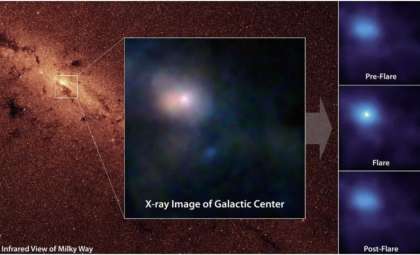
The detection of a mid-infrared flare originating from Sagittarius A*, the massive black hole at the center of the Milky Way, represents an important leap in black hole observations. Lasting about 40 minutes, this flare was recorded by JWST’s MIRI (Mid-Infrared Instrument) on April 6, 2024, marking the first occasion such an event has been captured in this section of the electromagnetic spectrum. This vantage point unveils previously hidden phenomena occurring close to the black hole.
Mid-infrared light’s ability to penetrate dense clouds of dust and gas surrounding the Galactic Center significantly enhances our observational reach, surpassing the limitations of visible wavelengths. This approach enables scientists to monitor fluctuations in flare brightness over time, granting insights into the properties of energetic particles and magnetic fields near Sagittarius A*.

Conducted by a team headed by Sebastiano von Fellenberg from the Max Planck Institute for Radio Astronomy, the analysis exposed a distinctive brightness pattern supporting the major influence of magnetic fields in flare production. The findings, published as a preprint in arXiv, also indicate a possible relationship between this mid-infrared variability and previously noted fluctuations at millimeter wavelengths. As Fellenberg explained, “Our research indicates that there may be a connection between the observed variability at millimeter wavelengths and the observed mid-IR flare emission.”
Magnetic Reconnection as the Driving Force Behind Flares
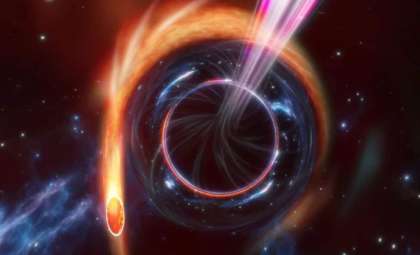
The investigation further explores potential triggers for the detected flare near Sagittarius A*. Magnetic reconnection—a process where magnetic field lines break and rejoin, unleashing large bursts of energy—is a leading candidate in explaining these sudden luminous outbursts.
The study suggests that the same group of rapidly moving electrons responsible for millimeter-wave radiation may also generate the mid-infrared flare emission. This link supports the notion that magnetic reconnection plays a central role in producing the flare, offering a consistent and plausible mechanism compared to random disturbances that would otherwise cause sporadic energy releases.
By simulating the black hole’s magnetic environment, the researchers estimated magnetic field strengths ranging from 40 to 70 Gauss in the flare zone. Such powerful fields can accelerate particles nearly to light speed, facilitating the emission of high-energy radiation detected by astronomers. These insights contribute to refining the models describing energy release under the intense conditions around black holes and may be applicable to other similar cosmic objects.
Future Prospects in Black Hole Research
This groundbreaking mid-infrared observation paves the way for new avenues in black hole study, representing only the initial step. Researchers look forward to determining if the approximate 10-minute lag between mid-infrared and subsequent radio flares consistently occurs or is unique to certain incidents. Combining JWST data with radio observations from arrays like the Submillimeter Array will further illuminate the pathways of energy around black holes.
The JWST’s mid-infrared measurements also enable examination of particle cooling after flares. As the emission fades, its light spectrum shifts toward longer wavelengths, providing evidence of how electrons dissipate their energy—a process key to understanding the physics near these extreme objects.
Anticipated improvements in infrared instrumentation promise even more detailed insights into Sagittarius A* and other supermassive black holes. This could address longstanding questions about how these entities influence galaxy formation and evolution, including their effects on star creation, gas movement, and galactic structure. Upcoming research harnessing infrared observations may soon unlock answers to these cosmic mysteries.
- Categories:
- Space


0 comments
Sign in to Comment