
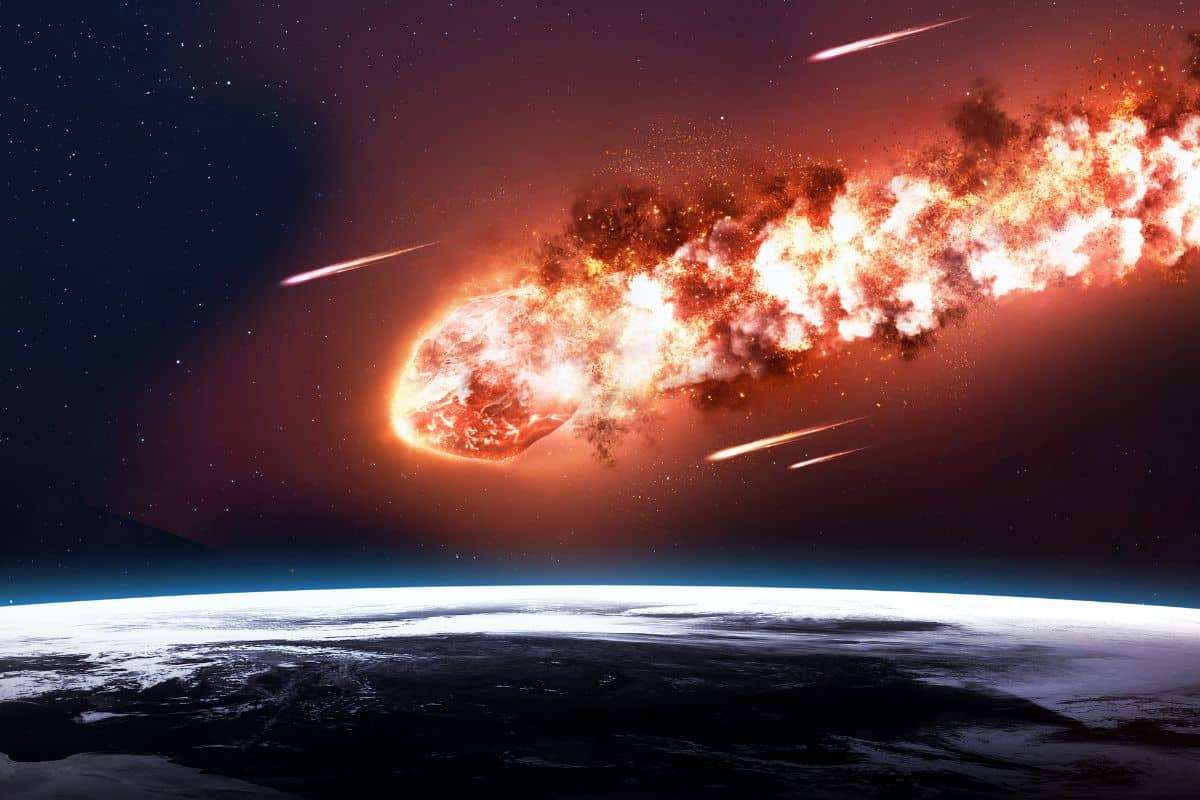
Earlier this year, asteroid 2024 YR4 captured significant attention due to concerns that it might collide with Earth. Fortunately, updated analyses have ruled out any risk of impact. Recently, the James Webb Space Telescope (JWST) has offered the most comprehensive observations of this space rock so far.
From Alarm To Insights
Initially detected in January 2024, asteroid 2024 YR4 sparked concern because early orbital data suggested a 1 in 83 chance of striking Earth in 2032 — roughly a 1% possibility.
Subsequent tracking refined these predictions, and by late February the chance of collision dropped close to zero. While the threat faded, the asteroid remained the focus of scientific curiosity for what it can reveal.

Close-Up Views Using JWST’s Instruments
In March, researchers used the JWST’s NIRCam and MIRI instruments to image 2024 YR4 in both visible and infrared light. These observations confirmed the asteroid measures approximately 200 feet (60 meters) across — comparable in height to a 15-story building, as explained by Johns Hopkins University planetary scientist Andy Rivkin.
Beyond size, the team examined the asteroid’s heat absorption and emission patterns, revealing insights into its surface features and rotation. Rivkin noted that its thermal signature differs from that of larger asteroids, which tend to have smoother, more insulating layers of dust.
Instead, 2024 YR4’s exterior appears rugged and uneven, with surfaces dominated by rocks possibly as large as fists or bigger. This texture affects how the asteroid heats up during sunlight hours and cools off at night.
Implications for Future Planetary Defense
The significance of JWST’s detailed study extends to improving how we might respond to real asteroid threats. Rivkin highlighted that observations of near-Earth objects via JWST are crucial for enhancing planetary defense strategies.
Although 2024 YR4 is no longer considered dangerous, it provides valuable data allowing scientists to quickly evaluate an asteroid’s composition, size, spin, and surface conditions — all vital factors when deciding how to mitigate potential impacts through deflection, fragmentation, or evacuation plans.
Turning Concern into Scientific Advancement
JWST’s unprecedented close examination of this once-worrisome asteroid exemplifies how initial fears can evolve into valuable research opportunities. It also marks progress in space observation technology, now capable of characterizing near-Earth objects just tens of meters in size—objects that previously might have gone undetected until too late.
“All together, we have a better sense of what this building-sized asteroid is like,” said Rivkin.
With new telescopes launching and ongoing data analysis from missions such as NASA’s DART, the planetary defense community is increasingly prepared for future cosmic challenges. While asteroids like 2024 YR4 no longer pose a direct threat, they remain essential objects of study.
- Categories:
- Space









0 comments
Sign in to Comment