
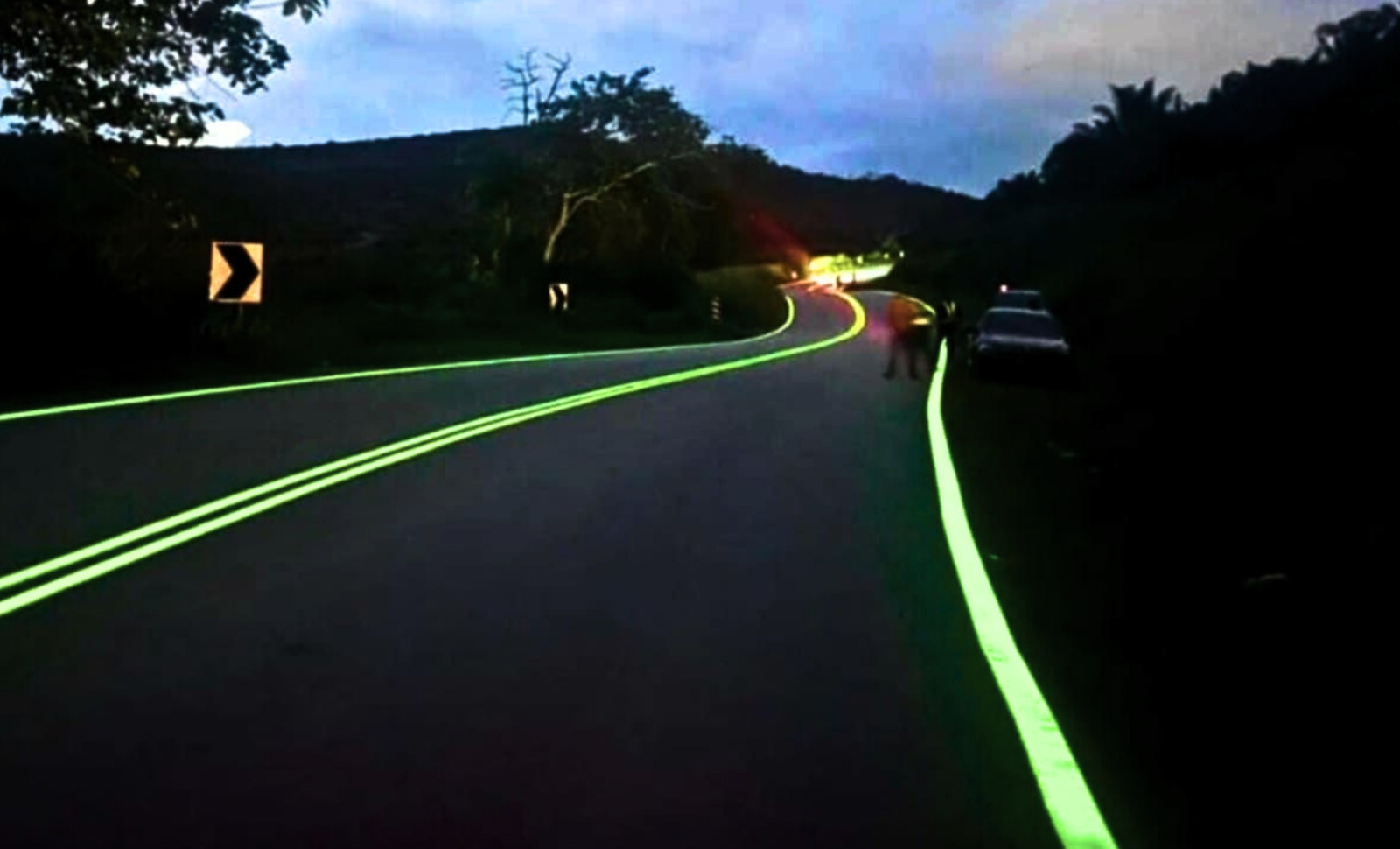
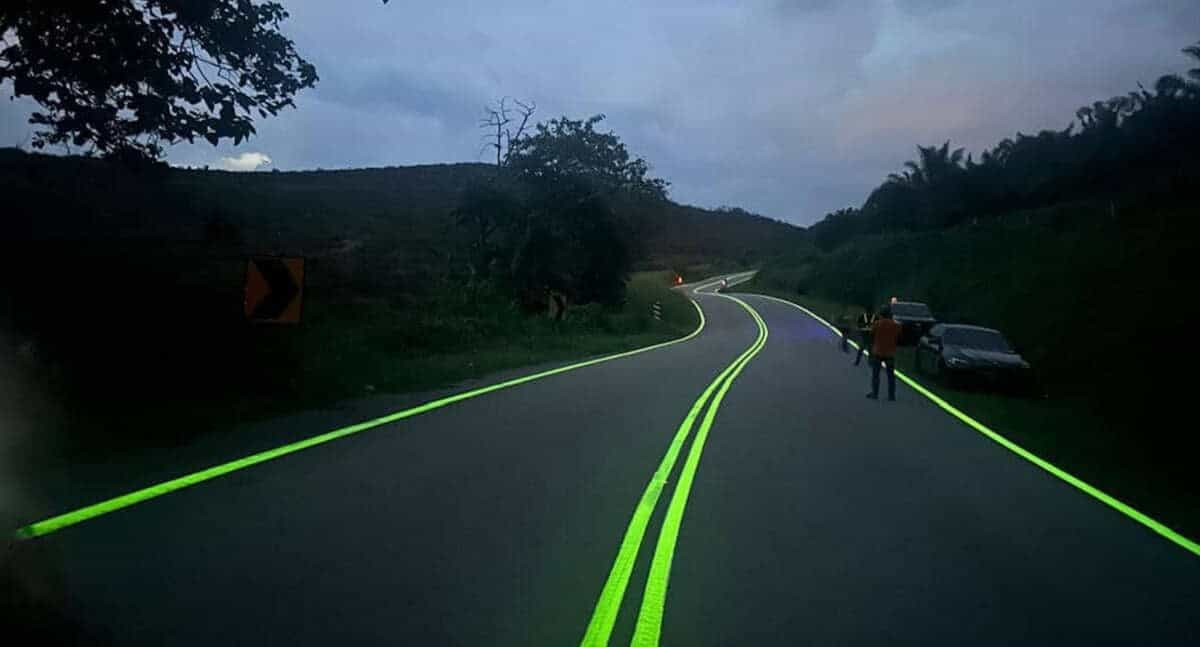
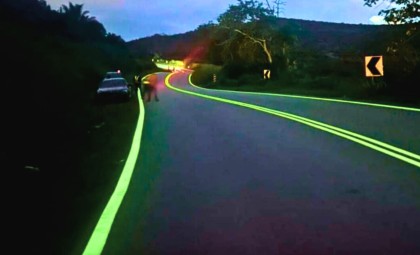
Near Semenyih, a road segment once seemed to offer a glimpse into the future of road safety. Instead of traditional street lamps, this two-lane roadway in Hulu Langat, Selangor, featured lane markings that emitted a glow at night by absorbing sunlight during the day. Launched in October 2023 at the intersection of Jalan Sungai Lalang and Jalan Sungai Tekali, the trial spanned 245 meters.
The initiative addressed a practical concern: the lack of street lighting in the area. Malaysia’s Public Works Department described it as a functional road safety improvement rather than a mere novelty. Sharing insights on a JKR Facebook page, the department highlighted this as “our effort to introduce innovation into road engineering.”
Initially, the response was promising. Drivers appreciated the enhanced visibility on a road where conventional lane markings were difficult to see in darkness. Works Minister Alexander Nanta Linggi noted the markings could maintain visibility for up to 10 hours and provided substantial glow during rainy conditions, though the ministry remained in the process of assessing project costs and practicality.

What Sparked Public Interest in the Pilot
The Semenyih project promised safer navigation on roads devoid of standard lighting. According to Paul Tan’s Automotive News, the pilot featured 490 meters of phosphorescent road markings over a 245-meter stretch, offering an alternative to traditional road studs or “cats’ eyes.” While appearing normal during daylight, the markings emitted light at night without electricity.
This concept isn’t unique to Malaysia. The Dutch Smart Highway project by Studio Roosegaarde and Heijmans deployed Glowing Lines that absorbed daytime light and illuminated up to eight hours nightly during a three-month trial. Here, the road itself functioned as a lighting element.
Malaysia’s approach was more grounded in practical application. Positioned as a measure to enhance visibility on dim rural roads, the Semenyih pilot was clearly aimed at real-world traffic safety, reflected by early media coverage emphasizing its pragmatic purpose.
Plans for Wider Use Met by Economic Challenges
Following encouraging initial outcomes, expansion was proposed. By February 2024, plans emerged to extend the glow-in-the-dark markings to 15 other sites across all nine districts in Selangor. This rollout would cover roughly 15 kilometers, including locations such as Sepang, Kuala Langat, and Petaling, with estimated expenses of around RM900,000.
Other states explored the idea as well. Johor earmarked 31 roads for testing, including a 300-meter segment on Jalan Paloh J16 in Batu Pahat. The efforts suggested the project was evolving from a localized experiment toward a broader policy conversation focused on improving nighttime road visibility.
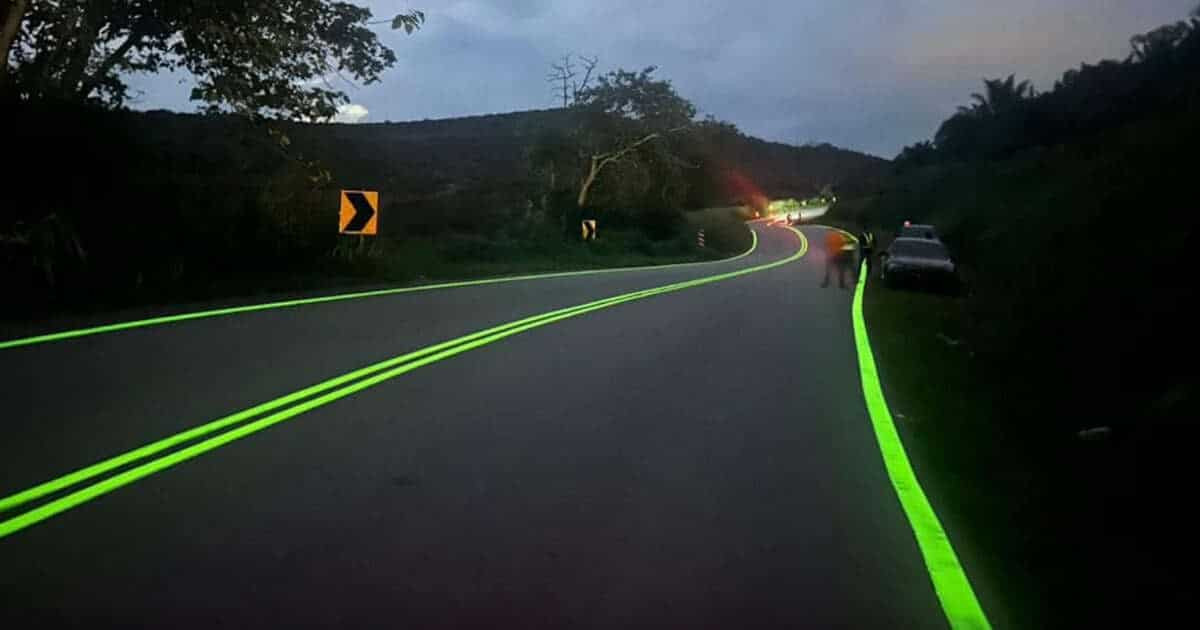
However, financial factors began to stifle momentum. The government revealed that photoluminescent paint costs approximately RM749 per square meter, a stark contrast to the RM40 per square meter price for ordinary road paint. This nearly 20-fold cost difference raised concerns about feasibility before durability and upkeep considerations were fully resolved.
A Pivotal Statement Alters the Outlook
By November 2024, perspectives shifted decisively. Speaking in Parliament, Deputy Works Minister Ahmad Maslan said, “The cost is too high, so we are probably not going to continue with the glow-in-the-dark lanes.” He also noted, “We ran tests, but it did not satisfy the experts from the ministry.”
These remarks transformed an innovative pilot into a somewhat familiar infrastructure narrative. Though drivers liked the effect, budget constraints and expert evaluations ultimately doomed the expansion. The government focused public messaging on economic and technical grounds rather than visual appeal or novelty.
What seemed like a promising new lighting solution instead confronted a common hurdle: even a technology that draws interest and provides value can falter when faced with practical issues like maintenance, engineering standards, and budget limits.
Insights from the Trial Remain Valuable
Despite the setback, the initial issue persists. Road authorities worldwide face the ongoing challenge of improving lane visibility in low-light scenarios and adverse weather, especially where streetlights are scarce. Japan’s National Institute for Land and Infrastructure Management has conducted research on lane marking upkeep for expressways, emphasizing the importance of visibility as a key road safety component.
The trial at Semenyih underscores this delicate balance. Malaysia demonstrated a compelling technology that initially enhanced safety on unlit roads. Yet, on cost and performance grounds evaluated by ministry experts, glowing markings failed to merit wide adoption. The project remained, ultimately, a limited test rather than a new infrastructure standard.
In this light, the initiative illustrated both the promise and limits of innovation in road safety. A radiant lane can captivate attention, but transforming such concepts into regular infrastructure demands overcoming significant challenges.
- Categories:
- News









0 comments
Sign in to Comment