
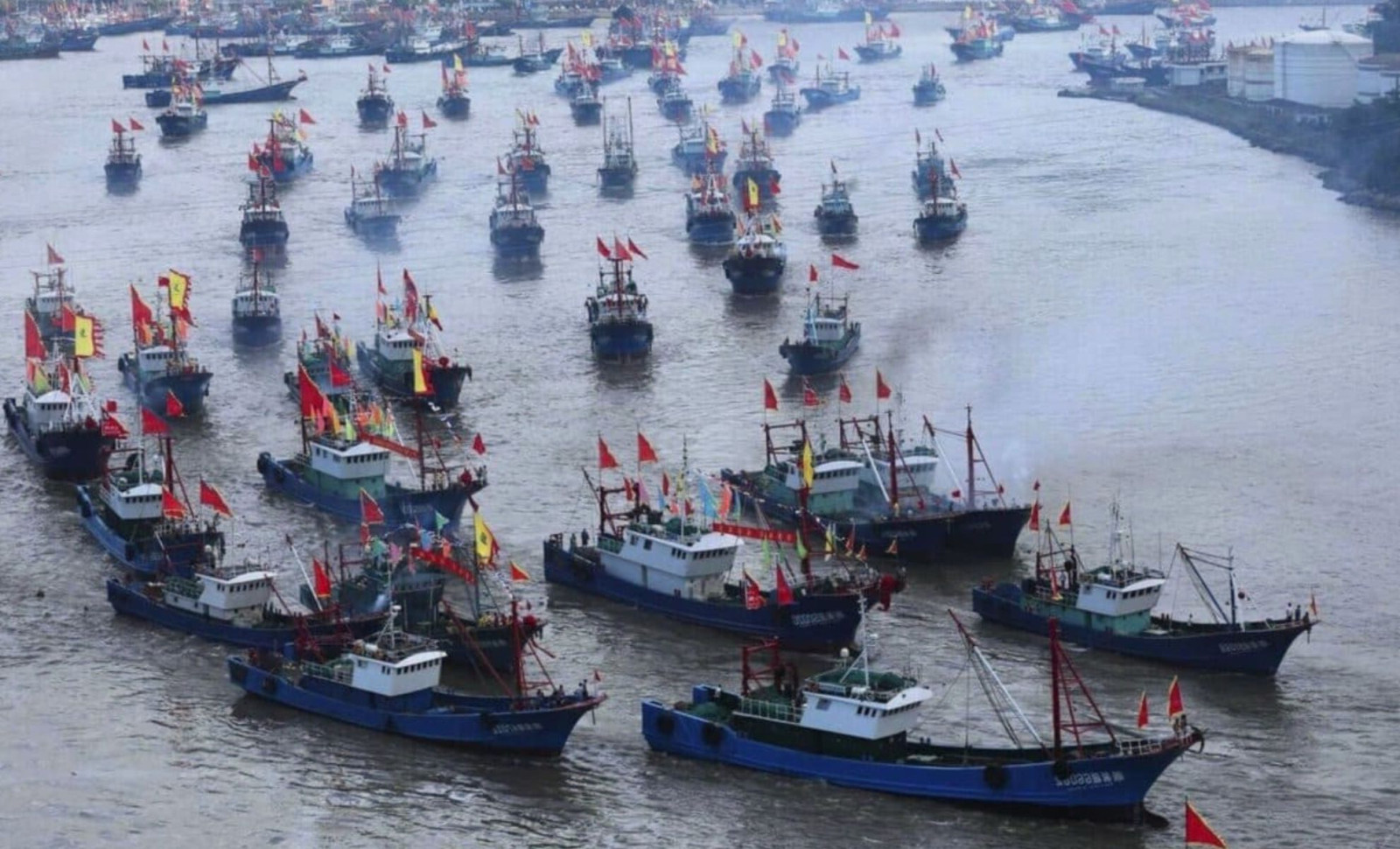
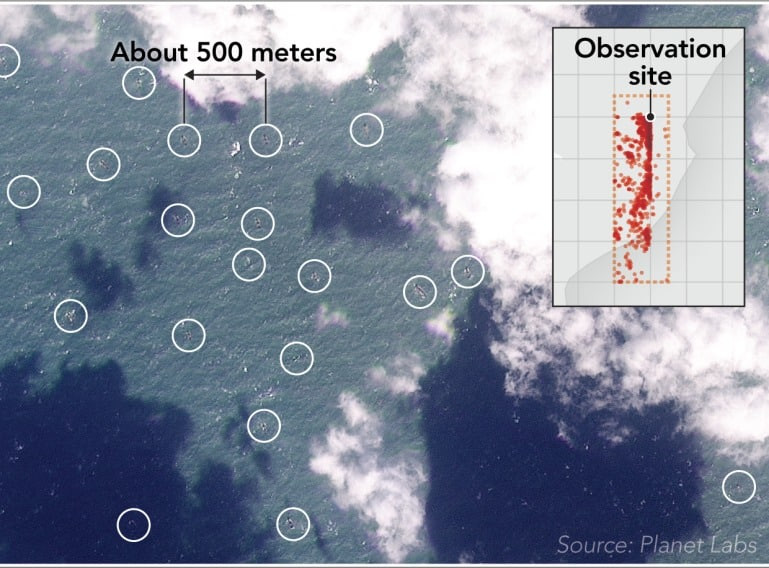
In mid-January 2026, a commercial satellite captured striking images over the East China Sea showing thousands of vessels densely packed near islands governed by Japan. However, the movement and arrangement of these boats did not resemble typical fishing activities.
These images quickly drew attention from maritime security experts and analysts. The fleets remained stationary across several days and multiple satellite passes, defying normal behaviors such as trawling or dispersing in search of fish.
Japan Coast Guard reconnaissance flights corroborated the satellite data, confirming the large concentrations of vessels as seen in media reports. In response, Japan dispatched patrol boats and issued radio warnings to any vessels encroaching on its territorial waters.

Insights Gained from Satellite Observations
Between late January and early February 2026, cutting-edge commercial satellite imagery provided frequent revisits that allowed analysts to track vessel positions closely. The boats held fixed spots, showing no drifting behaviors common to fishing operations.
Most of these ships transmitted Automatic Identification System data, as mandated for fishing vessels, but analysts emphasized that AIS data reveals location only, not intent or unit coordination. Normally, fishing boats disperse in response to local fish concentrations and environmental factors, a pattern absent in these formations.
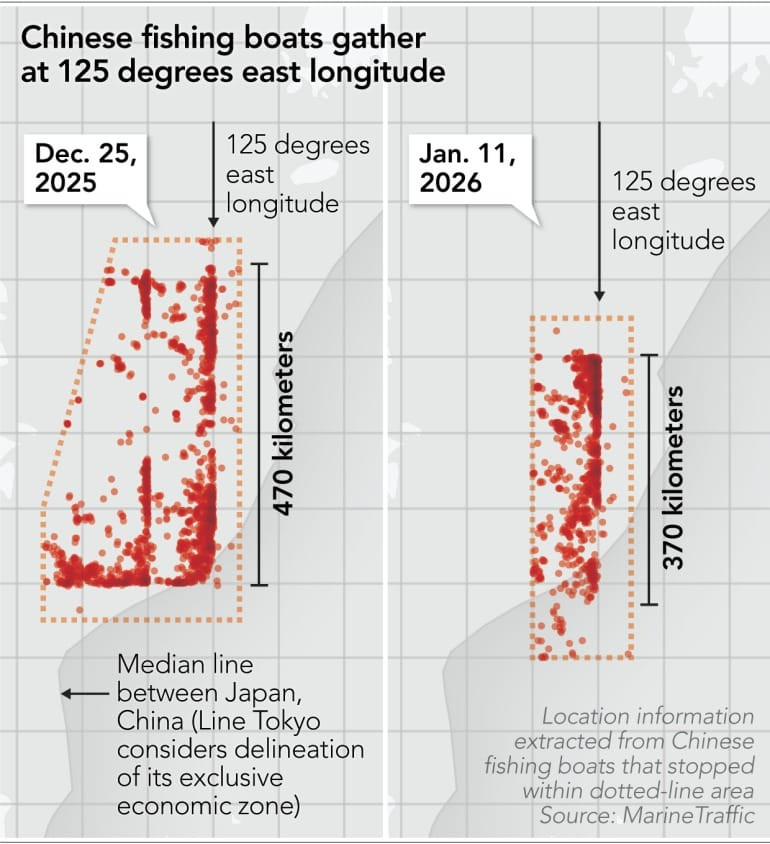
The bulk of the stationary fleets appeared near the Senkaku Islands, uninhabited islets administered by Japan but claimed by China, a region known for escalating tensions. Chinese coast guard vessels frequently enter what Japan regards as its territorial waters here. As detailed in Nikkei Asia’s coverage, officials in Japan highlighted that the scale and arrangement of these 2026 fleets markedly differed from patterns seen in prior years, a conclusion made by cross-checking with historic satellite data.
Japanese Authorities Detain a Vessel Captain Citing Fisheries Violations
Not long after the satellite evidence surfaced, Japan escalated its response. On February 12, 2026, the Fisheries Agency’s patrol vessel Hakuo Maru intercepted the Chinese fishing vessel Qiong Dong Yu inside Japan’s exclusive economic zone, approximately 89.4 nautical miles south-southwest of Meshima island near Nagasaki Prefecture. The 47-year-old captain, Zheng Nianli, defied orders to stop and attempted to escape.
According to the Fisheries Agency, “The vessel was commanded to halt for inspection but the captain disregarded the order and fled.” The Guardian reported this as the first Chinese fishing boat seizure since 2022, noting that Japan boarded foreign vessels 30 times but only seized five over five years leading up to 2025. Chief Cabinet Secretary Minoru Kihara affirmed Japan would maintain strict enforcement to deter illegal fishing by foreign ships.
China quickly responded. Foreign ministry spokesman Lin Jian urged Japan to abide by the China-Japan fisheries agreement and ensure the protection of Chinese crew members’ rights. Beijing did not address the satellite evidence of large fleet formations nor indicate any retaliatory steps.
Use of Civilian Fleets as Maritime Strategy in Contentious Zones
This incident unfolded amid rising diplomatic tensions. In November 2025, Japanese Prime Minister Sanae Takaichi declared potential military intervention should China attempt forceful control over Taiwan. In retaliation, China summoned Japan's ambassador, advised its citizens against traveling to Japan, and imposed export curbs on strategic materials including rare-earth elements. The fishing boat detention added fuel to this tense atmosphere.
Deploying vast fishing fleets near disputed maritime regions is a tactic observed elsewhere. Philippine officials have reported comparable maneuvers in the South China Sea, where Chinese fishing vessels congregate densely near contested reefs, generating friction without deploying formal naval forces. Since these vessels are civilian and registered for commercial use, legal and enforcement actions become complex compared with engaging military ships.
The operation of maritime militia in this ambiguous legal space involves coast guard interventions, diplomatic objections, and fisheries law enforcement. As of late February 2026, Japanese and Chinese officials continued diplomatic dialogue while the fishing vessels maintained their positions throughout the East China Sea.
- Categories:
- News








0 comments
Sign in to Comment