

On New Year's Eve, residents of a small village in Kenya were stunned when a colossal metal ring fell from the sky, landing in a nearby field and sparking widespread curiosity about its origins. This extraordinary event caught local and scientific attention alike, raising important issues about how space debris is managed on Earth.
Unraveling the mystery of the fallen object
On December 30, villagers were astonished when an enormous metal ring, measuring approximately 8.2 feet in diameter and weighing close to 500 kilograms, suddenly appeared in their field. Fortunately, the impact caused no injuries despite the ring’s massive size and unexpected descent.
Speculation quickly spread as locals and experts debated the identity of the object. Some suggested it might be remnants from an aircraft or parts of a satellite, while others toyed with more fantastical ideas involving extraterrestrial craft. These theories underscore the ongoing challenges related to space debris and its potential consequences for populations on the ground.

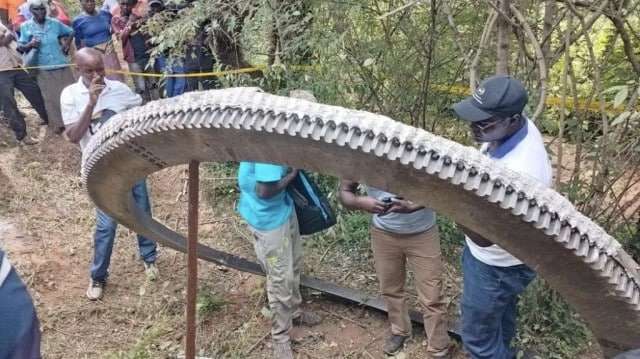
Investigators identify the object
Authorities promptly secured the site, preventing bystanders from approaching. The Kenyan Space Agency (KSA) conducted a detailed examination and within two days confirmed the ring was a separation component from a space launch vehicle, designed to detach during ascent to space.
KSA emphasized that such debris is ordinarily expected to burn up during atmospheric reentry or fall harmlessly into unpopulated areas such as oceans. This rare landing in an inhabited location highlighted a breach in space debris management protocols, prompting Kenyan officials to launch a formal investigation under international space regulations.
Tracing the debris’ origin proves complicated
While the identity of the object was established, pinpointing its precise launch or mission remained elusive. The agency noted that space debris can orbit Earth for extended periods before descending unpredictably, complicating tracking efforts.
On January 3, 2025, the KSA dispelled rumors reported by Nation Africa suggesting Kenya had sought reparations from India. The agency clarified the investigation is ongoing and stated no evidence links the debris to any operations by the Indian Space Research Organisation (ISRO).
The growing importance of space debris management
This incident highlights the pressing issue of space junk orbiting Earth. Each satellite launch contributes additional fragments—from microscopic paint chips to large rocket parts—that pose risks to operational satellites and could have repercussions on Earth.
NASA estimates millions of debris pieces currently orbit our planet, with more than 27,000 items of sufficient size to be tracked. An increasing number of objects raises collision risks, fueling concerns over the Kessler Syndrome, a cascade of collisions jeopardizing future near-Earth space activities.
Advancements and challenges in space debris solutions
Efforts worldwide focus on innovative approaches such as satellites engineered to capture debris, passive deorbiting mechanisms for retiring spacecraft, and materials designed to withstand impacts. However, widespread deployment faces technical complexity and financial hurdles.
The Kenya metal ring event serves as a stark reminder that space is not an unlimited dumping ground. What occurs in orbit can have tangible effects on the ground, underscoring the necessity for international cooperation and responsibility in safeguarding both current space operations and the long-term sustainability of space exploration.
- Categories:
- Space









0 comments
Sign in to Comment