
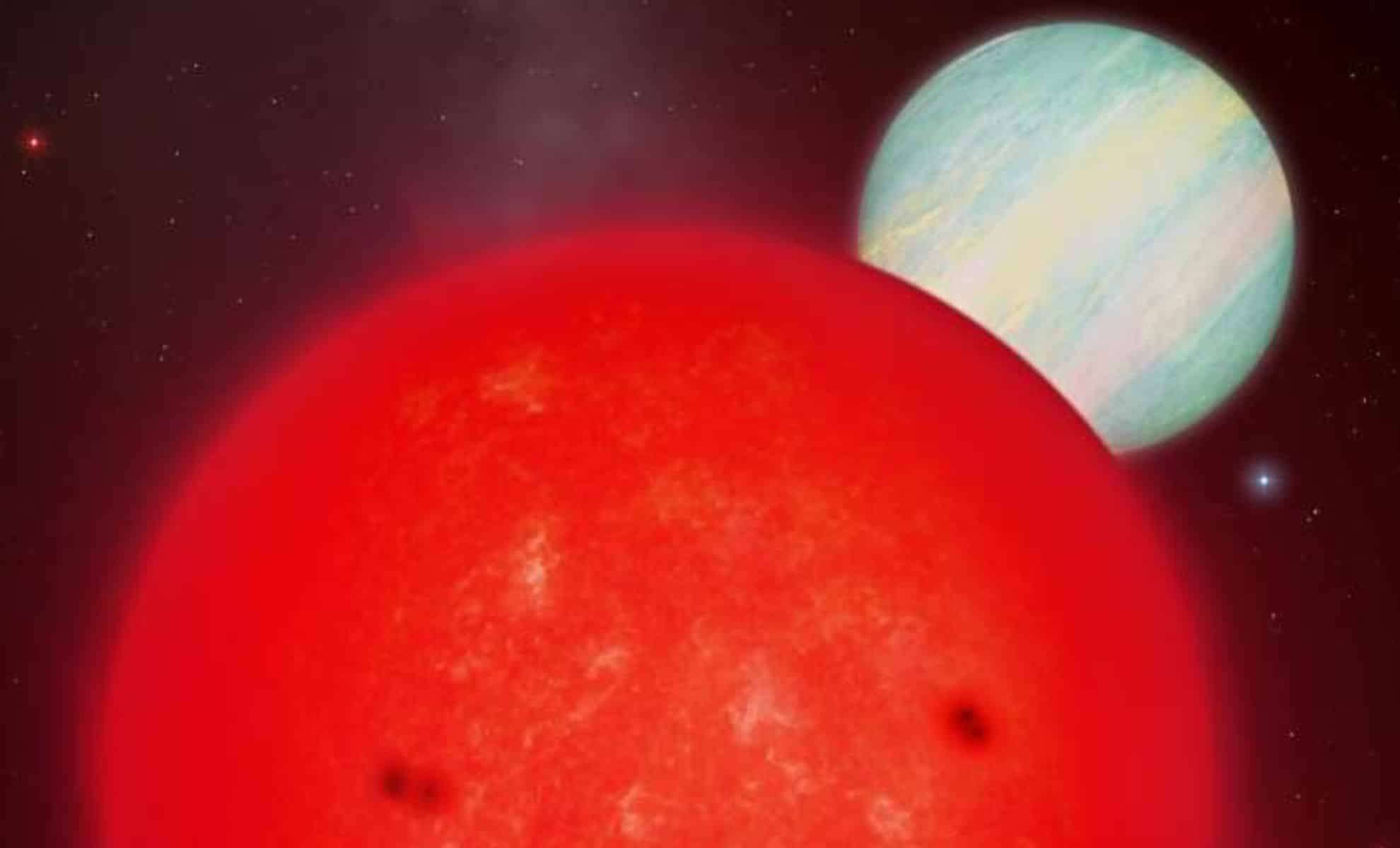
A revolutionary finding in exoplanet science is prompting researchers to rethink established ideas about planet creation. A collaborative team of astronomers from around the world, spearheaded by the University of Warwick, has identified TOI-6894b, a massive planet circling the ultra-low-mass star TOI-6894, as detailed in a study Nature Astronomy. This discovery questions the prevailing theories that gas giants cannot form around such diminutive stars.
An Unexpected Host: The Tiny Star TOI-6894
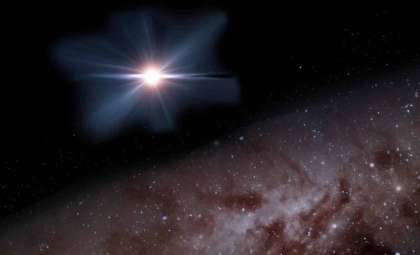
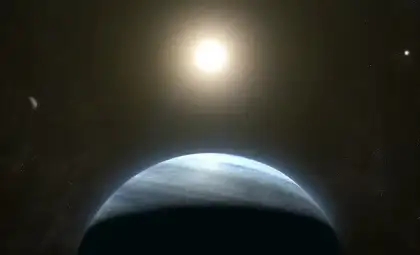
The focal point of this discovery is TOI-6894, a red dwarf star possessing just 20% of our Sun’s mass, making it markedly smaller and cooler than stars previously known to accommodate giant planets. Due to the limited material available in their protoplanetary disks, these small stars were once considered unlikely hosts for gas giants. Finding TOI-6894b, a gas giant with a low density orbiting such a star, challenges those assumptions. This planet’s radius is just a bit larger than Saturn but has only about half of Saturn’s mass. The star itself is now recognized as the smallest known that harbors a transiting giant planet, overturning prior ideas about planet formation boundaries.
Discovery Powered by TESS and ESO’s VLT
The identification of TOI-6894b resulted from a thorough examination of data collected by NASA’s TESS (Transiting Exoplanet Survey Satellite). Dr. Edward Bryant, a Prize Fellow in Astrophysics at Warwick and lead author, analyzed data from over 91,000 low-mass red dwarf stars in search of giant planets. This extensive search was followed by observations with the ESO Very Large Telescope (VLT), which confirmed the planet’s presence. Dr. Bryant shared his enthusiasm: “Discovering a planet like TOI-6894b orbiting such a low-mass star was unexpected. This will be crucial for advancing our understanding of giant planet formation extremes.”

Impacts on Planetary Formation Theories
This finding has considerable consequences for models explaining how gas giants form. The commonly accepted core accretion theory posits that gas giant planets develop when a planetary core becomes sufficiently large to draw in gas, culminating in rapid gas accumulation. Historically, this has been deemed improbable for low-mass stars due to scarce material in their disks. The formation of TOI-6894b challenges this narrative. Dr. Bryant suggests that the planet might have grown through a slower, intermediate core accretion phase without triggering rapid gas accumulation. Another possibility is that a gravitationally unstable disk caused fragmentation, leading to the planet’s birth. “Sometimes, the disk’s own gravity causes it to fragment, allowing gas and dust to collapse into a planet,” he explained.
Studying TOI-6894b’s Atmosphere
TOI-6894b offers a rare chance to investigate the atmospheres of exoplanets. Unlike many known hot gas giants, such as hot Jupiters, which endure extreme heat, TOI-6894b maintains a moderate temperature of approximately 420 Kelvin. This cooler climate makes it ideal to examine atmospheric properties. Co-author Professor Amaury Triaud from the University of Birmingham noted the planet’s atmosphere is probably rich in methane chemistry, an uncommon characteristic among exoplanets. “TOI-6894b stands out as a key target for studying methane-dominated atmospheres, serving as a unique natural lab to explore carbon, nitrogen, and oxygen chemistry beyond our solar system,” he said. Observations planned with the James Webb Space Telescope (JWST) within the upcoming year aim to analyze the planet’s atmosphere in detail and may even detect ammonia for the first time outside the solar system.
- Categories:
- News






0 comments
Sign in to Comment