
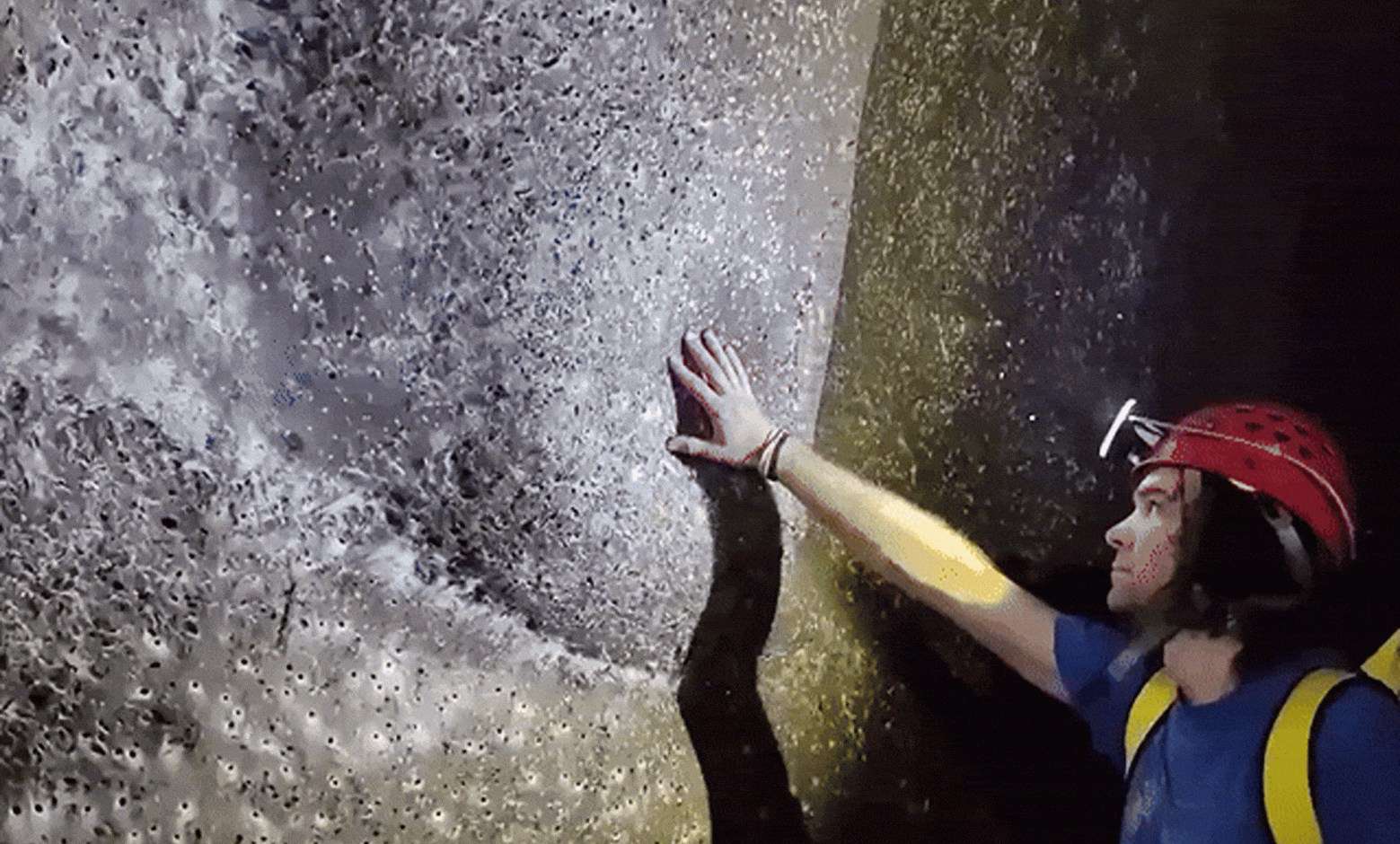
A secluded cave straddling the Greece-Albania border has unveiled what might be the largest spider colony ever recorded, featuring an extensive web structure. This groundbreaking finding by European researchers challenges existing views on spider social behavior and adaptation, particularly for species traditionally considered solitary.
The Sulfur Cave hosts a vast network of funnel-shaped webs spanning more than 100 square meters (over 1,076 square feet), woven by an astonishing population exceeding 110,000 spiders from two species: Tegenaria domestica and Prinerigone vagans. Remarkably, these species coexist in shared space without apparent conflict.
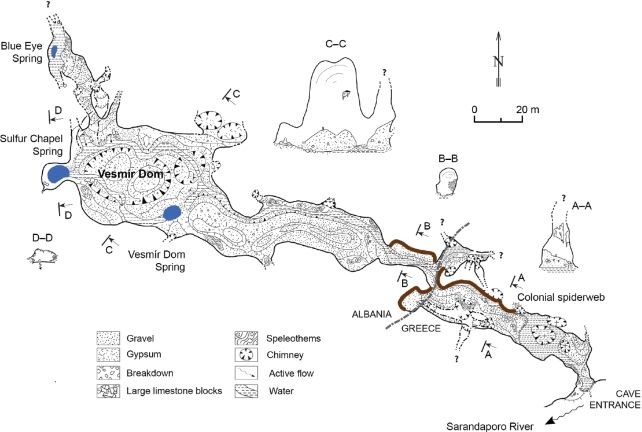
Published in the scientific journal Subterranean Biology, the study documents not only the exceptional size of the web but also unveils a unique instance of facultative colonial living between two species previously thought to live apart. The researchers hypothesize that this cooperative behavior arose as an adaptation to the cave’s sulfur-rich, lightless environment.

"We weren’t simply observing spider webs—this was architecture on an extraordinary scale," explained lead researcher István Urák from Sapientia Hungarian University of Transylvania. "It's a complex ecosystem actively shaped by the spiders."
Life Flourishing in Darkness Fueled by Sulfur
Unlike ecosystems relying on sunlight, Sulfur Cave’s food web is sustained by chemoautotrophic bacteria that metabolize hydrogen sulfide from underground geothermal springs. These bacteria form thick biofilms that form the foundation of this subterranean ecosystem.
Using stable isotope tests (δ¹³C and δ¹⁵N), scientists traced the energy flow through this system. They found that spiders primarily prey on a native midge, Tanytarsus albisutus, which feeds on the microbial biofilms — illustrating a complete ecosystem entirely independent of photosynthesis.
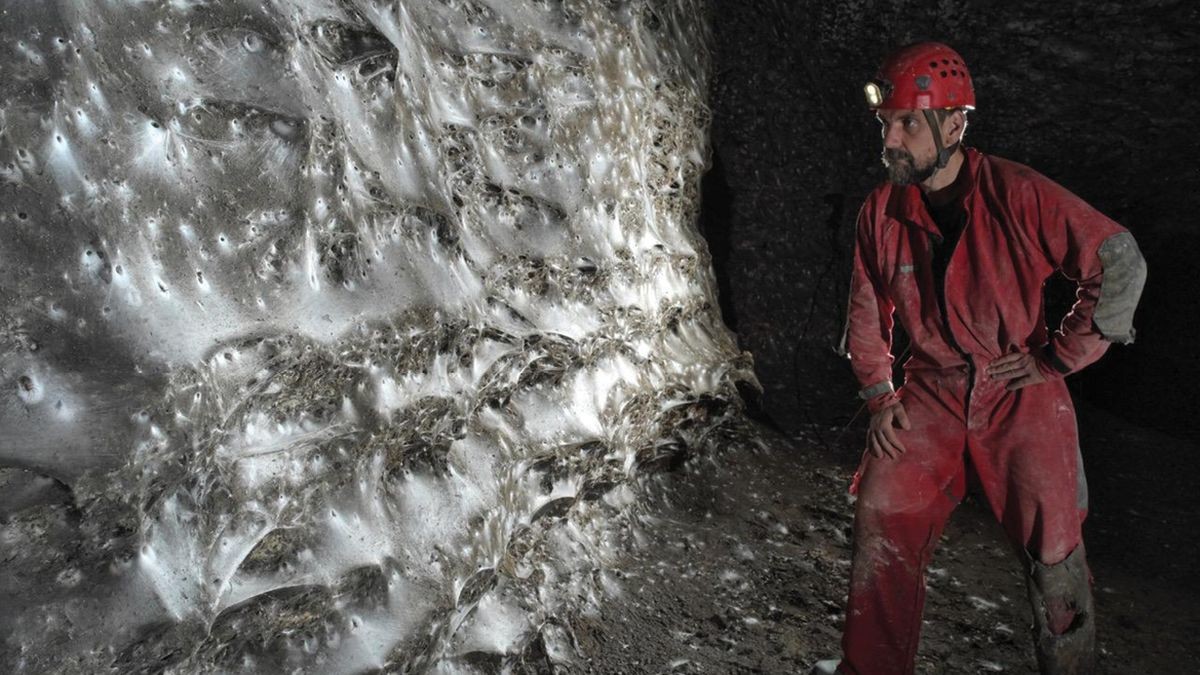
Subterranean specialist Serban Sarbu, co-author of the study, remarked, "This chemoautotrophic ecosystem resembles deep-sea vent communities, but it’s extraordinary to see surface spiders adapt to such an alien environment."
Both spider species are generally known from forests or human habitations, making their joint sanctuary in this sulfurous cave—and their peaceful coexistence—particularly surprising. Genetic analysis reveals that the cave dwellers are a unique population, showing no evidence of recent mixing with surface populations.
Surprising Social Web-Building Revealed
One of the study’s most fascinating revelations is the unexpected social behavior these spiders display. The funnel-web builder T. domestica appears to be the chief architect of the web framework, while P. vagans occupies established sections without contributing to construction activities.
Contrary to expectations of predation—since T. domestica is considerably larger—the two species seem to tolerate each other. Observations and spatial mapping suggest minimal aggressive interactions, possibly due to the cave’s constant darkness limiting visual communication cues.
"Instances of such cohabitation among spiders are extremely rare," Urák commented. "This case illustrates how intense environmental conditions can reshape innate behavioral patterns."
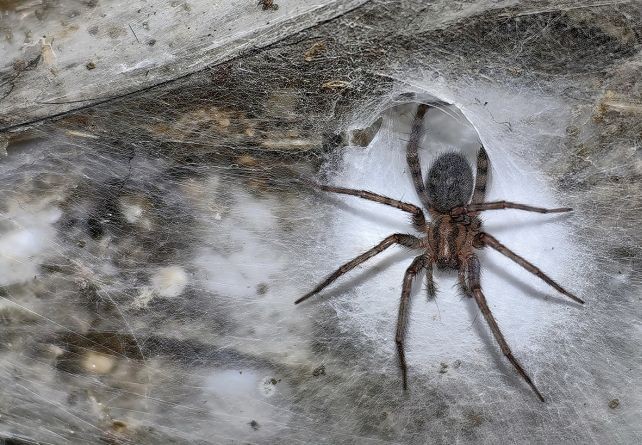
The researchers also observed seasonal changes in T. domestica egg sac sizes, peaking in early summer. Furthermore, analysis of their gut microbiomes revealed significantly reduced microbial diversity compared to spiders near the cave entrance, likely reflecting their more restricted diet.
Intricate Cave System Supports Diverse Life
The broader limestone cave network includes Atmos Cave and Turtle Cave, extending from Greece into Albania. This interconnected system channels sulfurous spring water into the Sarandaporo River basin.
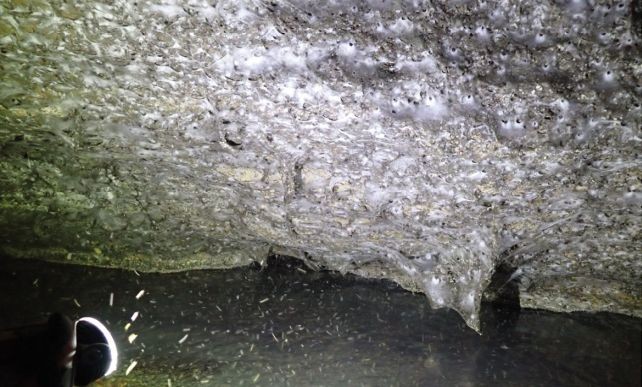
The cave walls are coated in viscous microbial layers that provide habitat for various arthropods including centipedes, pseudoscorpions, mites, and beetles. Many of these creatures show unique genetic signatures, indicating evolutionary isolation and high endemism within this chemically distinct environment.
What began with recreational cavers stumbling upon this wonder in 2022 has unfolded into a major scientific investigation aiming to fully understand this remarkable subterranean ecosystem and its evolutionary adaptations.
- Categories:
- News






0 comments
Sign in to Comment