
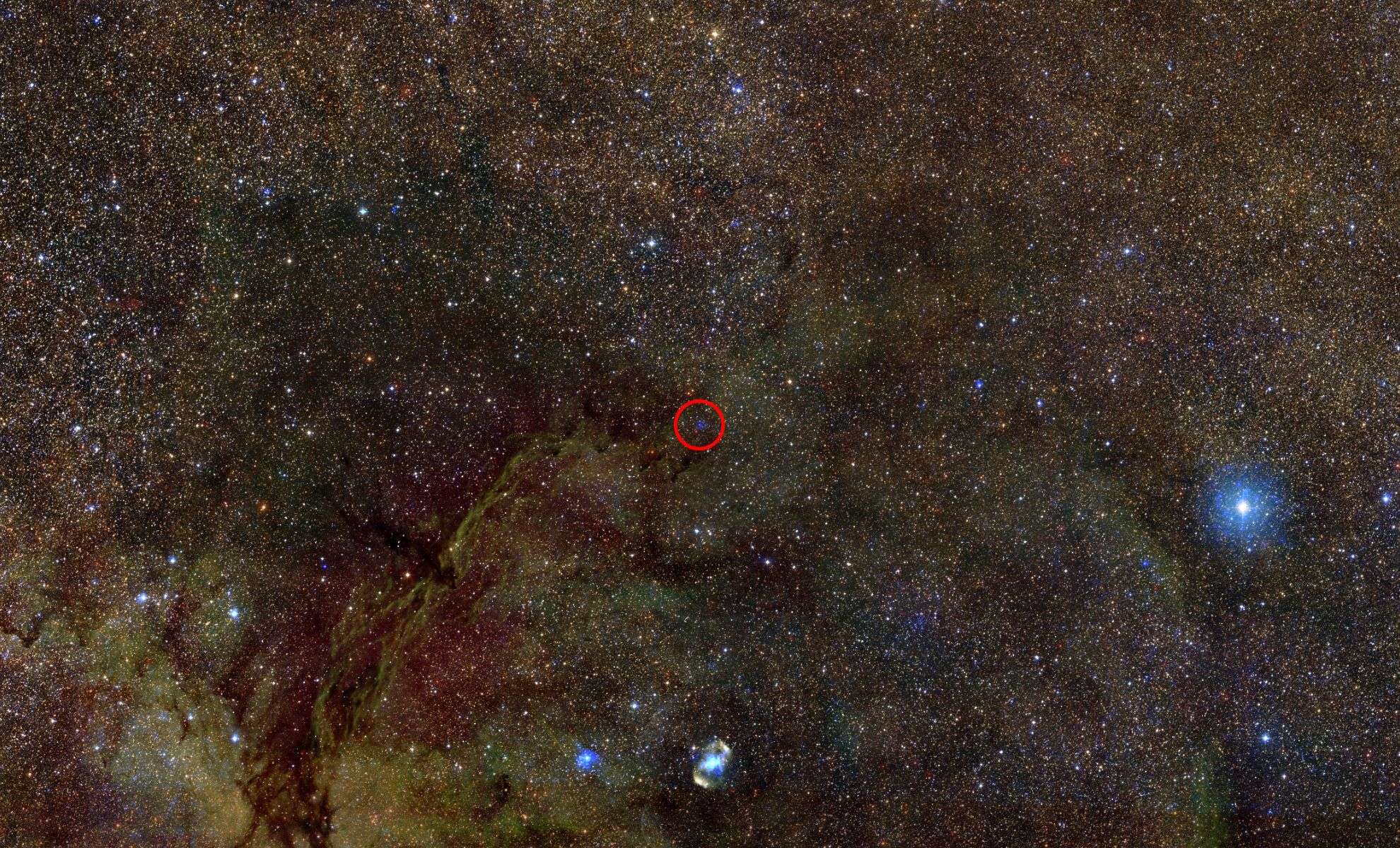
Featured in the Publications of the Astronomical Society of Japan on June 27, 2025, this international collaboration presents the inaugural direct observation of sulfur in both solid and gaseous states within the interstellar medium, utilizing data from the Japan-led XRISM (X-ray Imaging and Spectroscopy Mission) satellite.
A Revolutionary X-ray Perspective on Interstellar Sulfur
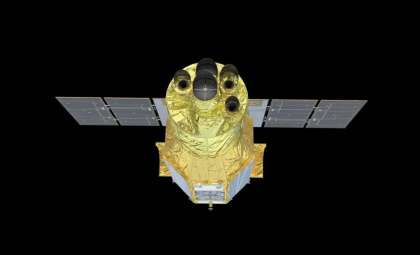
Discoveries from the XRISM satellite—developed by JAXA in partnership with NASA and ESA—demonstrate the mission’s precision in identifying and differentiating elemental forms scattered throughout the galaxy. Employing the Resolve instrument, XRISM conducted high-resolution X-ray spectroscopy on emissions from two remote binary star systems. This pioneering method enabled the direct detection of sulfur in both its gaseous and solid phases with unprecedented clarity.
The sulfur was found within the interstellar medium (ISM), the composition of gas and dust filling the spaces between stars, by examining how X-rays from luminous background stellar sources interacted with material along their path.

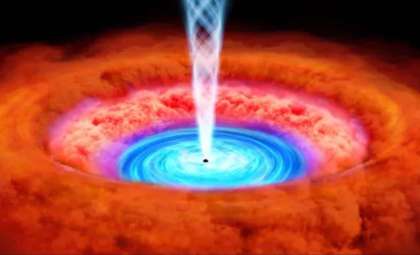
Much like a medical X-ray differentiating between soft tissue and bone by their absorption, the technique involved observing how background X-ray sources, such as GX 340+0, positioned behind targeted regions, showed absorption patterns indicative of sulfur’s presence and state.
Tracking Sulfur’s Galactic Journey
Earlier ultraviolet studies had only revealed sulfur in its gaseous form within diffuse ISM areas. Yet in denser molecular clouds, sulfur seemed absent, leading researchers to speculate it transitions into solid forms—either by adhering to dust grains or combining chemically with other elements. This new XRISM data verifies these ideas, showing sulfur’s dual existence as gas and solid, possibly integrated with iron.
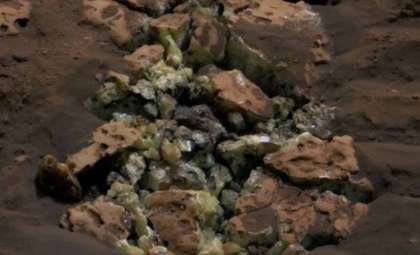
Scientists propose that detected solid sulfur may be in the form of minerals such as pyrrhotite, troilite, or pyrite, familiar to terrestrial geology and commonly found in meteorites. These iron-sulfur compounds offer crucial clues about matter condensation and movement through the galaxy, influencing star and planet formation.
Confirming Sulfur’s Presence Across the Milky Way
To corroborate their results, researchers extended observations to a second X-ray binary, 4U 1630-472, located in a different section of the Milky Way. This comparison confirmed sulfur’s distribution in both gaseous and solid states over a broader galactic region than previously documented.
This bolsters confidence in XRISM’s capabilities and highlights the prowess of the Resolve instrument for probing the chemical makeup of cosmic environments. Brian Williams, XRISM project scientist at NASA’s Goddard Space Flight Center, reflected: “XRISM’s X-ray observations are a unique probe of sulfur in a large section of the Milky Way. There’s still so much to learn about the galaxy we call home.”
The Importance of Sulfur Beyond Our Planet
Sulfur is critical not only in astrophysics but also plays vital roles in planetary science and biology. On Earth, it is fundamental to life, forming parts of amino acids, proteins, and enzymes. Understanding sulfur’s location in space advances models of planet formation, habitability, and astrochemical processes.
Mapping sulfur’s transitions between various cosmic environments may also clarify how volatile elements are delivered to emerging planets through meteorites and comets. Sulfur’s ability to change states—between gas and solid—makes it an effective indicator of chemical activity across fluctuating galactic conditions.
Looking Ahead with XRISM
Launched in 2023, XRISM is the newest key mission dedicated to X-ray astrophysics, succeeding NASA’s Chandra X-ray Observatory and ESA’s XMM-Newton. The Resolve instrument, created by NASA and JAXA, features a microcalorimeter that measures minute temperature increases caused by absorbing single X-ray photons, enabling extremely precise energy readings.
Lía Corrales from the University of Michigan leads the sulfur research, marking the start of many upcoming XRISM investigations. She notes ongoing laboratory work to simulate more compounds for better alignment with forthcoming data.
This breakthrough in sulfur detection exemplifies how advanced space technologies reveal the galaxy’s chemical intricacies. By uncovering where essential elements lie amongst the stars, scientists are gradually unraveling the cosmic cycles that drive the formation of stars, planets, and the potential ingredients for life.
- Categories:
- News





0 comments
Sign in to Comment