

Scientists have unveiled an astonishing discovery beneath the waters of Lake Michigan, revealing nearly 40 enormous underwater craters. These striking features were initially detected in 2022 during a sonar survey within the Wisconsin Shipwreck Coast National Marine Sanctuary. What appeared as mysterious circular marks on the lake floor have now been identified as vast depressions, potentially linked to a fascinating geological enigma.
Enigmatic Structures Lurking Below
During a 2022 lakebed assessment, researchers observed unexpected circular formations in sonar scans. These formations resembled deep indentations or pits, though their origins were unclear. Russ Green, a maritime archaeologist and sanctuary superintendent, highlighted the significance of the find. “Discoveries in the Great Lakes are always thrilling,” Green shared with Live Science. “These features are distinctive because they’re located in deep waters, around 500 feet below the surface, and were previously unknown.”
The discovery also caught the attention of Brendon Baillod, a local shipwreck enthusiast who came across the formations while hunting for a sunken cargo ship. Baillod noted that the majority of these depressions measure 20 to 40 feet deep and span between 500 and 1,000 feet across. Their uneven contours strongly suggest a natural origin rather than human activity.

Decoding the Origins
To delve deeper, specialists from the NOAA’s Great Lakes Environmental Research Laboratory (GLERL) conducted an advanced investigation. In August, the team deployed a remotely operated vehicle to closely examine these formations. They confirmed the presence of large, naturally formed craters around 14 miles southeast of Sheboygan, Wisconsin.
The craters, resembling near-perfect circles, extend southward toward Port Washington. The exact process behind their development remains a matter of study.
One hypothesis suggests these might be sinkholes akin to those found in Lake Huron. Sinkholes generally emerge when groundwater erodes soluble rock beneath, causing the surface to collapse. Since Lake Michigan’s bedrock predominantly consists of limestone—which dissolves easily—this theory carries considerable weight.
Sinkholes or Alternative Formations?
While some scientists lean toward the sinkhole explanation, others remain cautious. Baillod proposes that the craters might represent depressions formed through different mechanisms, such as upward water flow from beneath the sediments or trapped hydrocarbon release, unrelated to groundwater erosion.
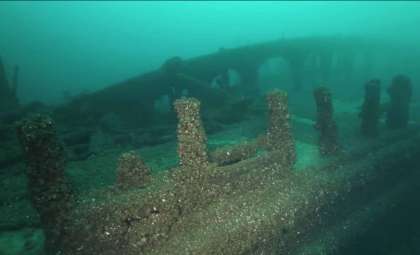
Notably, no signs of groundwater leakage have been identified, leaving the formation processes uncertain. However, GLERL researcher Ruberg is hopeful that upcoming studies will uncover evidence of groundwater dynamics. Meanwhile, footage from the remotely operated vehicle reveals that these craters provide habitat for diverse species, including freshwater shrimp, small fish, and invasive quagga mussels.
- Categories:
- News







0 comments
Sign in to Comment