
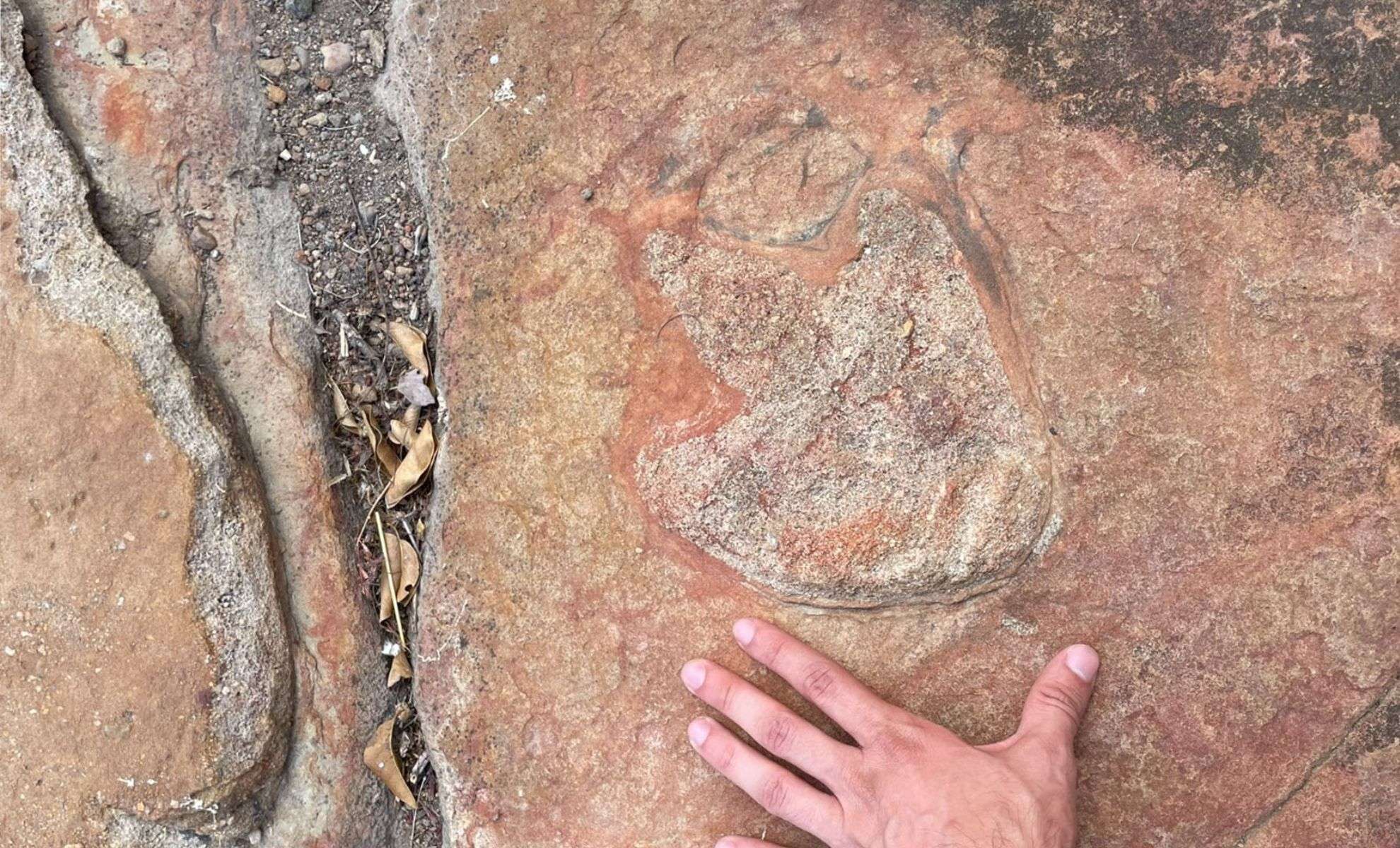
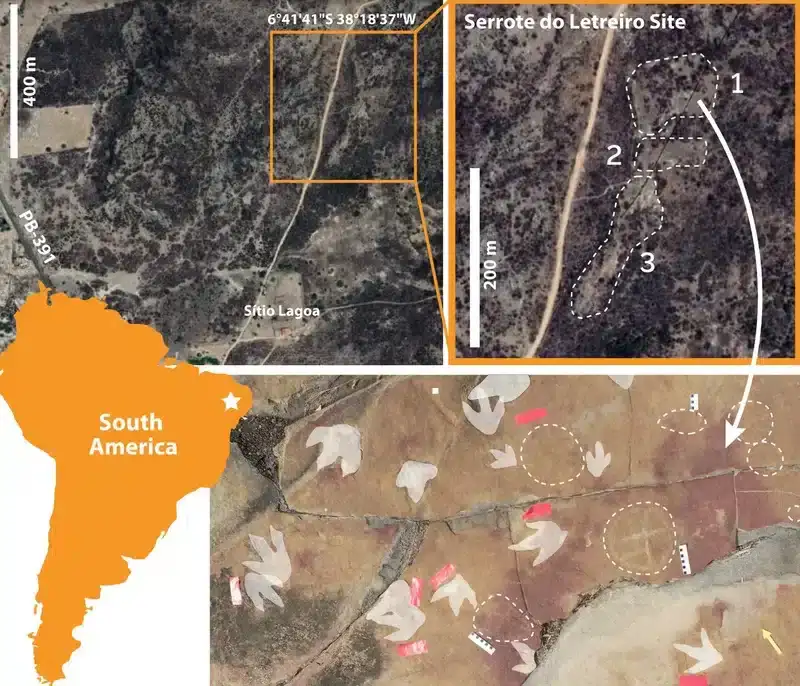
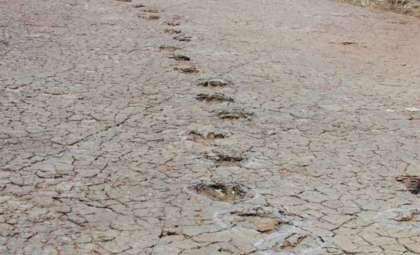
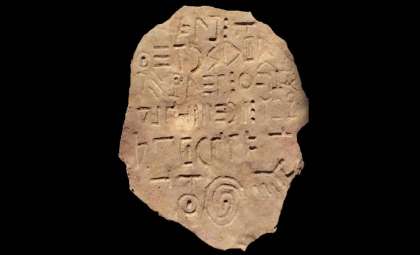
In the secluded farming area of Serrote do Letreiro, located in Paraíba in Eastern Brazil, scientists have made a fascinating discovery combining both archaeology and paleontology. Revisiting the site nearly five decades after its initial 1975 exploration, drone-assisted surveys uncovered a collection of stone carvings dated to approximately 9,000 years ago. Remarkably, these petroglyphs were found intentionally placed close to dinosaur footprints. The discovery is opening new discussions on the ways early humans might have perceived and connected with traces from a prehistoric past.
Where Ancient Art Meets Dinosaur Impressions
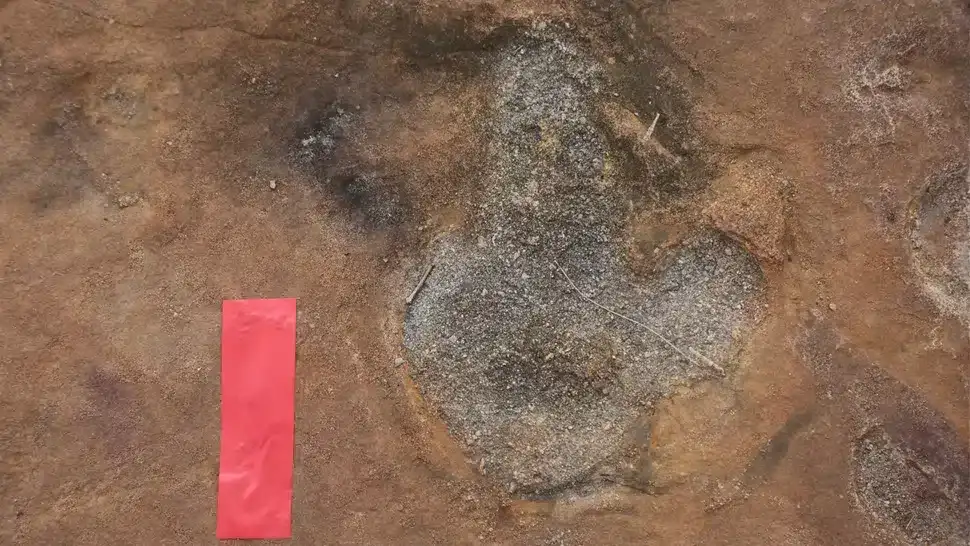
The dinosaur footprints, which date back to the Cretaceous era roughly 66 million years ago, were located just a few inches away from the detailed petroglyphs. Some engravings were positioned a mere two to four inches from the preserved fossil marks, suggesting purposeful placement.
Leonardo Troiano, an archaeologist affiliated with Brazil’s National Institute of Historic and Artistic Heritage, commented, “The creators of these petroglyphs were consciously aware of the footprints and likely chose their location to incorporate them.” This points to a deliberate interaction with the ancient prints by the people who made the carvings.

Archaeological evidence indicates that small groups of semi-nomadic hunters and gatherers occupied this location between 9,400 and 2,620 years ago. The variety in rock art styles suggests multiple artists contributed over different periods, yet all artworks seem to focus around the vicinity of the dinosaur footprints, implying a shared cultural or spiritual significance.
Stone Etchings Reflect Respect for Prehistoric Life
This finding extends beyond mere chance. The Coordinator of Cooperation and Promotion at Brazil’s National Historic and Artistic Heritage Institute noted that these rock carvings “demonstrate a profound respect for fossilized footprints among Brazil’s indigenous ancestors.” Far from being decorative, these engravings may represent a meaningful connection—possibly spiritual—to the land’s deep prehistory.
Troiano stressed the site's importance as a rare dual-heritage location, stating it “connects ancestral iconography with fossil evidence” and “highlights indigenous relationships to the fossil record.” This unique blend of archaeology and paleontology enriches our comprehension of how early human communities might have understood their environment, time, and existence.
A Collaborative Exploration Merging Contemporary Science With Ancient Narratives
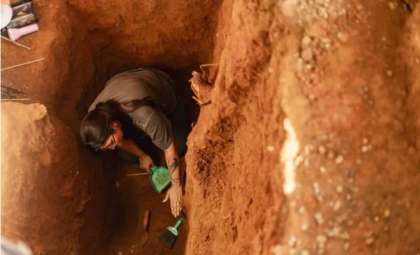
This project brings together experts from different fields, including Troiano, paleontologists Aline Marcele Ghilardi and Tito Aureliano, and archaeologist Heloisa Bitú. The researchers expressed pride in unveiling findings that enrich scientific knowledge while safeguarding an essential part of Brazil’s cultural identity.
Troiano remarked, “This site stands as a testament to humanity's enduring journey and its ongoing dialogue with the natural world and fossil heritage.” Brazil’s abundance of fossil sites makes Serrote do Letreiro a remarkable testament to our shared human history.
- Categories:
- News







0 comments
Sign in to Comment