
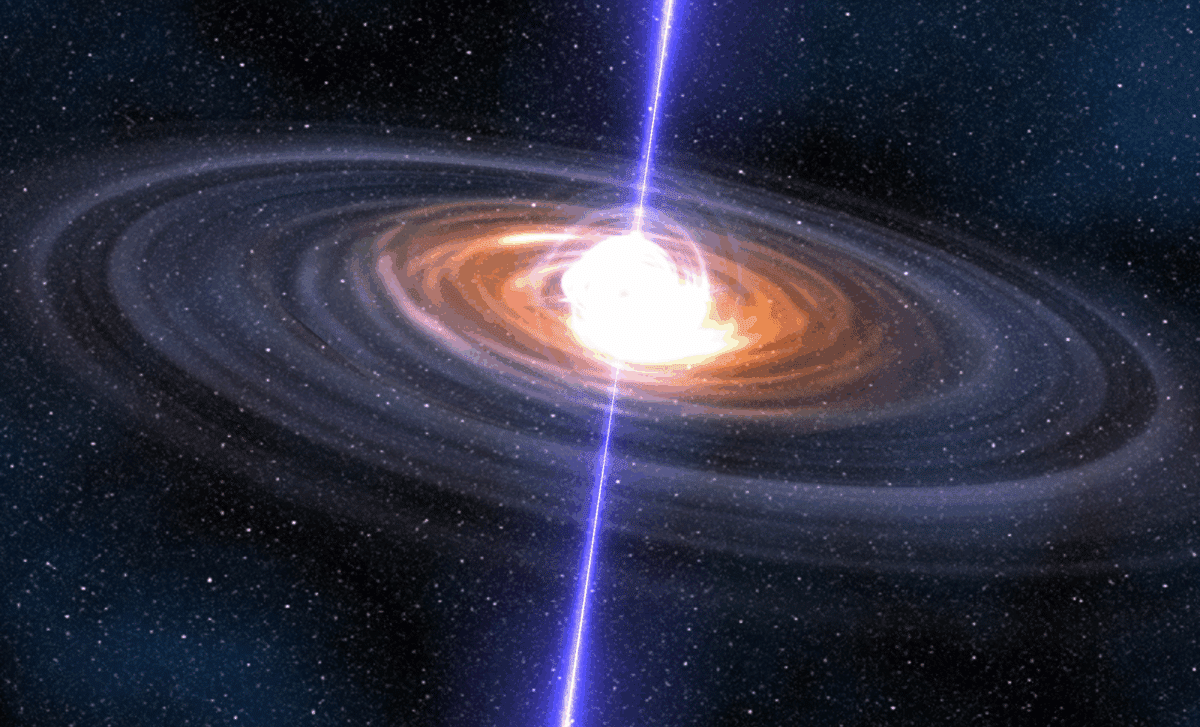
Astronomers utilizing the highly capable MeerKAT telescope have made an exciting breakthrough by discovering 30 previously unknown radio transient pulsars under the MeerTRAP initiative. These sources emit brief, intense radio wave bursts and were captured in real-time thanks to state-of-the-art detection methods. Released recently on the arXiv preprint archive, these findings enhance our knowledge of fast radio transient phenomena and pave the way for further cosmic revelations.
MeerKAT’s Impact: Advancing Radio Astronomy Frontiers
Situated in South Africa, the MeerKAT array has emerged as a leading instrument for exploring the universe’s radio signals. Its wide viewing angle and extraordinary sensitivity enable it to detect fleeting cosmic events that previously eluded observation. Such capabilities make it exceptionally suited for investigating variable radio transients occurring over short time scales.
The discovery of 30 new radio transient pulsars represents a significant leap forward, driven by the dedicated efforts of Jun Tian and collaborators from the University of Manchester. Monitoring the sky with MeerKAT, the team uncovered pulsars demonstrating distinctive properties that may unlock mysteries surrounding these enigmatic celestial objects.

“The sources reported in this paper were discovered either in the UHF (544–1,088 MHz) or L (856–1,712 MHz) bands,” the researchers explained.
This achievement stems from a thorough hunt for fast radio transients—radio signals thought to originate from rapidly rotating neutron stars possessing intense magnetic fields, including pulsars and magnetars.
Radio Transient Pulsars Explained
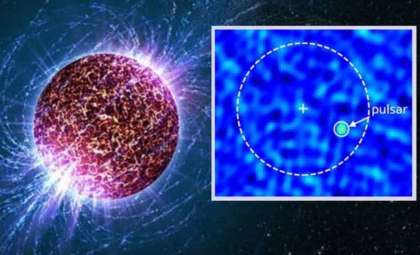
Radio transient pulsars are captivating astrophysical phenomena characterized by short-lived bursts of radio emissions produced by highly magnetized neutron stars. They belong to the fast radio transient family, which also encompasses the famous fast radio bursts (FRBs). Unlike FRBs, which come from distant galaxies, these pulsars reside within our own Milky Way, making them comparatively nearby cosmic sources.
What distinguishes these pulsars is their sporadic emission patterns, complicating their detection. Most newly identified pulsars in this survey are likely rotating radio transients (RRATs), a subclass known for infrequent pulsation, which adds to the challenge of pinpointing their signals.
The Value of Capturing Signals in Real Time
A key aspect of this research was employing immediate detection techniques to pinpoint new pulsars as their signals appeared. The team implemented a single-pulse search strategy that allowed prompt recognition and cataloging of these transient bursts, providing far greater precision than many previous efforts.
Detecting these pulsars demanded cutting-edge instrumentation and coordinated international collaboration. The extraordinary sensitivity of MeerKAT played a vital role in identifying faint emissions that would be otherwise undetectable.
Insights Gleaned from Pulsar Data
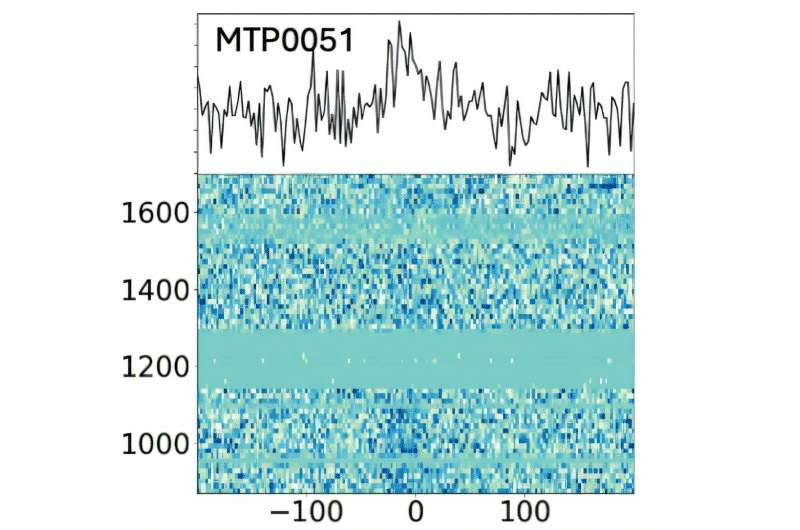
Analysis of the pulsar signals offered revealing details about these objects. For instance, the rotational periods of 14 pulsars were constrained between 0.121 and 7.62 seconds. These intervals are essential for decoding the rotation dynamics and internal physics of neutron stars.
Additionally, the team measured dispersion measures varying from 12 to 394.4 pc/cm³, indicating how interstellar material affects radio wave propagation. The fluence values of the pulses ranged from 0.1 to 2 Jy ms, peaking near 0.3–0.7 Jy ms, possibly following a lognormal distribution. These datapoints shed new light on the nature and distribution of galactic radio transients.
Prospects for MeerKAT and MeerTRAP
The researchers express strong optimism for ongoing and future discoveries through the MeerTRAP project. “Considering the ongoing transient search with MeerTRAP, we expect to discover more RRATs and pulsars, especially those with long rotation periods,” they state. They anticipate that their initial findings represent merely the first wave of new detections as observations continue.
With persistent enhancements to the MeerTRAP program and continued collaboration among global scientists, MeerKAT is positioned to expand our understanding of fast radio transients substantially. This research, detailed on the arXiv platform, offers a promising outlook for radio astronomy’s role in unraveling neutron star behavior and other exotic phenomena in the cosmos.
- Categories:
- Space








0 comments
Sign in to Comment