

Scientists have revealed surprising new details about TOI-561 b, an exoplanet whose enduring atmosphere challenges existing planetary science models. A study featured in The Astrophysical Journal Letters highlights how this intensely hot world, orbiting perilously close to its star, has preserved a substantial atmosphere across billions of years. This discovery could dramatically reshape how astronomers understand the survival and evolution of rocky planets beyond our Solar System.
TOI-561 b: An Enigma of Atmospheric Survival Near Its Host Star
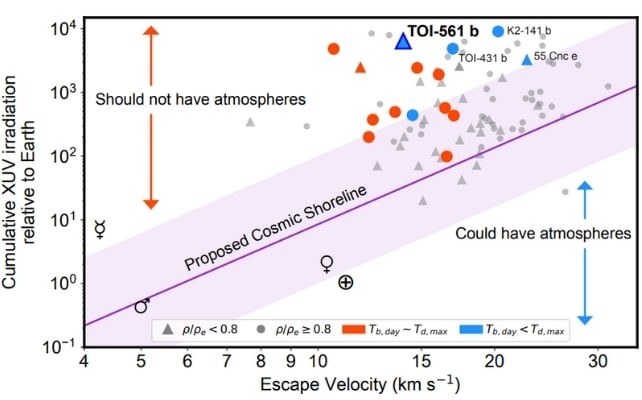
TOI-561 b lies about 1.6 million kilometers from its star, placing it in a region where extreme stellar radiation typically strips planets of their atmospheres quickly. However, this rocky world contradicts expectations by maintaining a dense atmosphere despite such harsh conditions. This persistence challenges prior assumptions about atmospheric erosion on ultra-close exoplanets.
Prevailing theories suggested that any planet so near its star would rapidly lose any gaseous envelope due to intense heating and radiation. TOI-561 b, however, remains wrapped in a thick, volatile-rich atmosphere that reveals gaps in our understanding of planetary atmospheric dynamics.

“Based on what we know about other systems, astronomers would have predicted that a planet like this is too small and hot to retain its own atmosphere for long after formation,” says Nicole Wallack, a Carnegie Science astronomer involved in the study.
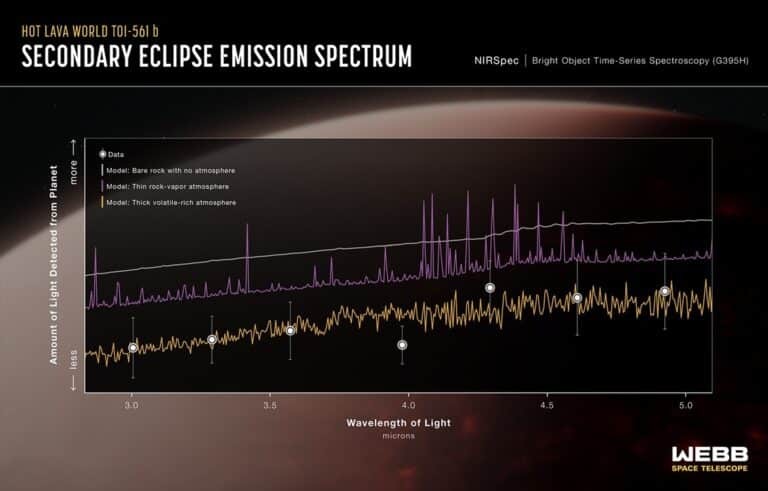
These insights were made possible by detailed observations using the James Webb Space Telescope (JWST), which provided unprecedented data on the planet’s temperature and atmospheric constituents, offering clues about how such worlds withstand extreme environments.
How a Molten Surface Contributes to Atmospheric Longevity
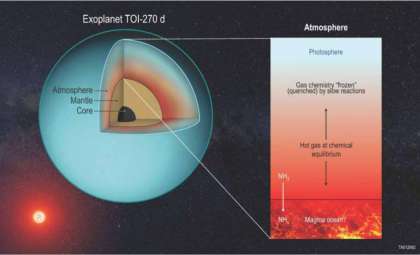
A central mystery is the presence of a vast magma ocean beneath TOI-561 b’s thick atmospheric layer. Given its proximity to intense stellar radiation, one would expect the atmosphere to have dissipated long ago. Researchers now propose that this molten layer plays a pivotal role in renewing the planet's atmosphere by releasing gases from inside.
This magma ocean appears to continuously supply volatile compounds from the planet’s interior, replenishing the atmosphere at a rate that may outpace atmospheric loss. Acting as both a source and sink for gases, the molten surface helps prevent the complete escape of atmospheric molecules into space. This dynamic replenishment likely explains the atmosphere’s persistence despite constant exposure to strong stellar radiation.
Utilizing JWST’s near-infrared measurements, scientists assessed the planet’s temperature on its sun-facing side, revealing a surface cooler than predicted if the atmosphere were absent. Instead of the expected scorching 2,700°C (4,900°F), TOI-561 b’s dayside temperature measures near 1,800°C, indicating that the atmosphere provides a significant cooling effect.
Iron’s Influence on Atmospheric Stability
The planet’s composition may offer additional clues to its atmospheric endurance. A rich iron content, especially within TOI-561 b’s core, could be instrumental in trapping volatile substances vital to maintaining the atmosphere. Iron’s chemical properties enable it to bind oxygen and other gases, helping to lock in essential volatiles like water vapor within the magma ocean or planetary interior.
The comprehensive analysis reported in The Astrophysical Journal Letters suggests that TOI-561 b’s relatively low density—approximately four times that of water—supports the idea of a volatile-rich, iron-influenced composition that has preserved its atmosphere since its formation in an early, less iron-abundant universe.
Reassessing Ultra-Hot Exoplanets Through TOI-561 b’s Example
The fact that TOI-561 b preserves a dense atmosphere defies longstanding beliefs about ultra-hot exoplanets being completely atmosphere-free due to extreme stellar proximity. This finding reveals a complexity in planetary behavior previously unappreciated in exoplanet research.
Scientists involved in the research propose that the ability of certain rocky worlds subjected to intense irradiation to constantly regenerate their atmospheric gases might be a more widespread phenomenon than previously understood.
“From the sample of rocky planets with dayside brightness temperature constraints, it appears that planets with irradiation temperatures exceeding ∼2000 K are able to replenish volatile envelopes faster than they are lost,” the researchers wrote in their paper.
This revelation paves the way for fresh investigations into how atmospheres may survive on other ultra-hot exoplanets.
A Dynamic Balance Between Surface Magma and Atmosphere
One particularly captivating hypothesis is that TOI-561 b’s magma ocean and atmosphere exist in a delicate, ongoing equilibrium. Instead of being static, the atmosphere is thought to be a fluid system, continually replenished by molten surface emissions despite harsh stellar exposure.
This interplay likely explains how TOI-561 b has avoided becoming a barren, atmosphere-free molten rock. Instead, its magma ocean works alongside the atmosphere, sustaining both its gaseous envelope and moderating surface temperatures more effectively than expected under such extreme irradiation.
- Categories:
- News










0 comments
Sign in to Comment