
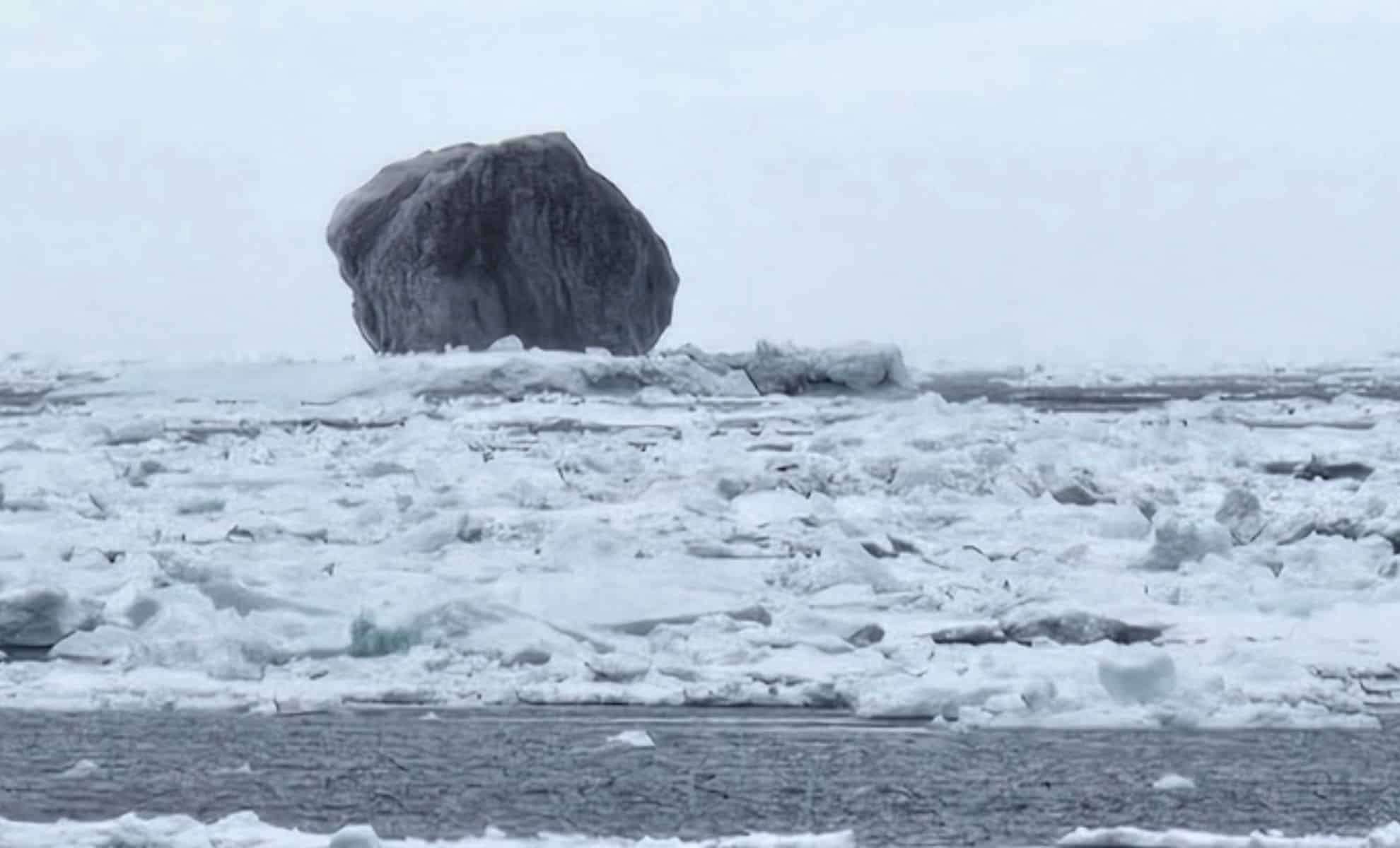
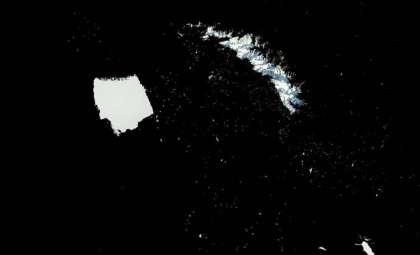
While navigating the Labrador Sea, fisherman Hallur Antoniussen aboard the trawler Saputi encountered a rare phenomenon that quickly grabbed widespread online attention. Unlike the typical white or blue icebergs, this one was an astonishing deep black shade, resembling charred residue. Surprised by this extraordinary find, Antoniussen documented and posted the sighting to social media.
Why Are Icebergs Typically White or Blue?
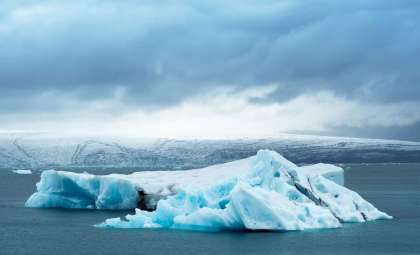
Icebergs usually display white or pale blue tones due to the way light interacts with the ice. Tiny air bubbles trapped inside scatter light, giving the ice a bright white appearance. As these ice masses age and compress, they lose some of their internal air, allowing light to pass through more deeply, which creates the characteristic blue shade. This gradual color transition depends largely on the iceberg’s history and the pressure conditions it has undergone.
How Can an Iceberg Appear Completely Black?
Science Alert explains that this black iceberg falls outside the usual color spectrum. One probable cause is the incorporation of dirt or other dark substances within the ice. Icebergs can gather sediment and debris as they drift, especially if they have rolled onto darker sea floors or landmasses. Such accumulation has been documented before with dark-colored icebergs carrying soil, rocks, or other particles embedded in their structure.

Glaciologist Lev Tarasov of Memorial University suggests another possibility: the iceberg might have originated from an ancient glacier calving event. As glaciers move, they erode bedrock and pick up debris, which can become intertwined with the ice, potentially explaining the black tint observed.
Estimating the Age of This Unique Ice Mass
According to Tarasov, this unusual iceberg might be anywhere between 1,000 to 100,000 years old. The material trapped inside has probably been there for millennia, allowing it to spread uniformly throughout the ice. Over such immense timescales, embedded debris becomes an integral part of the iceberg’s appearance.
This block could be a fragment from a much larger glacial body that detached and drifted into the ocean over time. Gradually, these pieces lose their original form, morphing into the isolated, peculiar shapes we observe in the sea.
Could Volcanic or Extraterrestrial Material Play a Role?
While glacial sediment is a logical explanation, other captivating possibilities exist. A significant volcanic eruption could have deposited soot onto the ice, profoundly darkening its surface. This is similar to how volcanic ash integrates with landscapes on Earth, potentially altering the ice’s coloration.
Another, more speculative hypothesis involves meteorite debris becoming trapped within the ice through impact events. While this idea is intriguing, it remains unconfirmed but adds an extra layer to the puzzle regarding the iceberg’s dark hue.
Despite these compelling theories, researchers have not finalized a conclusive explanation for the iceberg’s distinctive color. Continued monitoring and research on diverse ice formations may eventually provide clearer insight into this extraordinary phenomenon.
- Categories:
- News






0 comments
Sign in to Comment