
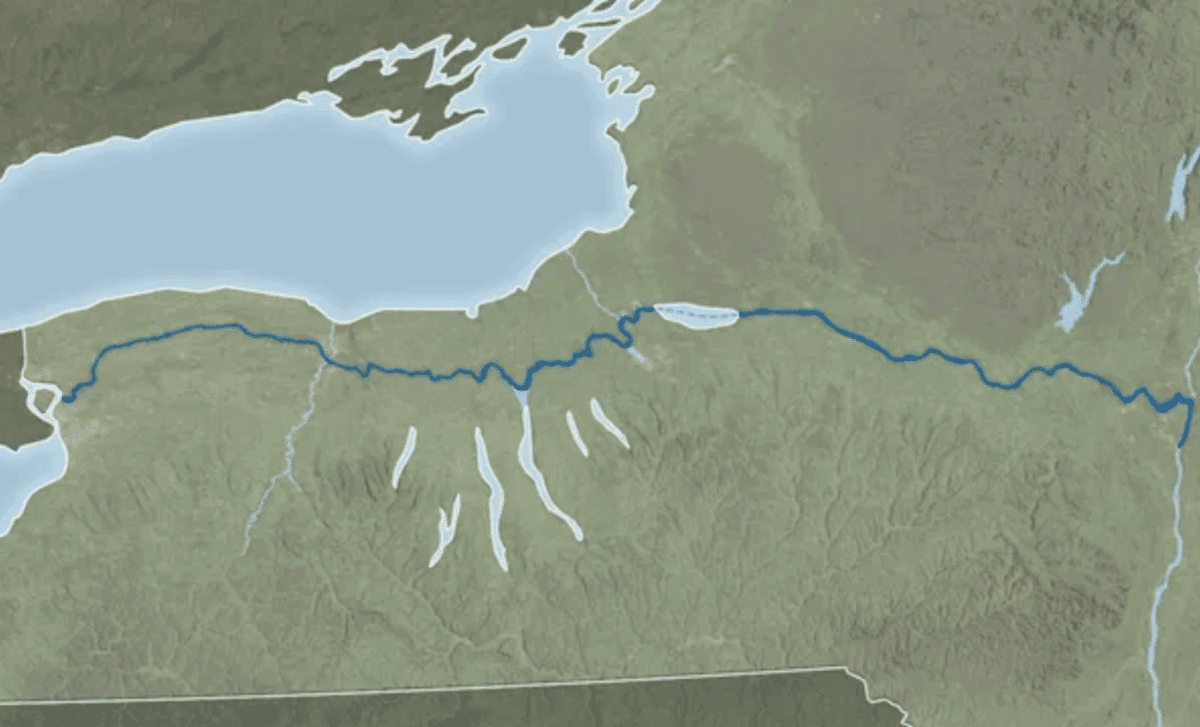
Marking its bicentennial in 2025, the Erie Canal, finalized in 1825, stands as a monumental achievement in early American engineering. This vital waterway revolutionized transportation by linking the Atlantic Ocean with the Great Lakes. To honor this historic occasion, NASA’s Earth Observatory presents a spectacular satellite view showcasing the canal’s extensive path through New York State, merging cutting-edge satellite technology with a rich historical heritage.
Bird’s-Eye View of a Historic Waterway
The significance of the Erie Canal lies in its vast scale and the engineering challenges it presented. Spanning New York State, the canal connects the Hudson River and Lake Erie, requiring a complex system of locks and aqueducts to traverse the varied terrain. From orbit, NASA’s satellite imagery captures a vivid and detailed portrayal of the canal’s winding course, blending data from MODIS satellites to create this compelling visual documentation.
This detailed image not only traces the canal’s physical layout but also highlights the environmental transformations shaped by human engineering. The satellite perspective offers a renewed appreciation for this landmark accomplishment and its enduring influence, paying tribute to the resourcefulness and dedication of the early engineers behind the project.

Engineering Ingenuity that Shaped the Canal
Constructing the Erie Canal posed formidable obstacles, notably negotiating the Niagara Escarpment’s steep incline by integrating 83 locks to manage the elevation differences. Many of these locks remain operational and stand as enduring symbols of engineering prowess. Complementing these locks were aqueducts engineered to propel the canal over natural waterways, ensuring uninterrupted navigation for vessels.
With limited formal engineering expertise at the time, the project became an informal “Erie School of Engineering,” where innovation emerged through hands-on experimentation. Remarkably, the canal was completed within eight years—a testament to relentless determination and creativity that paved the way for subsequent national infrastructure developments.
Driving Economic Growth and Connectivity
The Erie Canal profoundly changed the economic landscape of New York State and the broader United States. Prior to its existence, transporting goods between the Midwest and East Coast was slow and costly. The canal dramatically lowered shipping expenses, enabling efficient movement of commodities like grain, coal, and timber. Towns along its path, such as Rochester, Buffalo, and Syracuse, evolved into vibrant commercial centers.
By unlocking direct access between the Midwest and Atlantic markets, the canal accelerated industrial expansion and economic integration across regions, playing a crucial role in America’s emergence as a trading powerhouse. Without the canal, the pace of urban industrial growth and cross-country commerce would have significantly lagged.
Shaping Urban and Industrial Landscapes
The Erie Canal was instrumental in the rapid development of cities including Buffalo, Rochester, and Syracuse. The waterway’s efficient transport routes supported these urban centers as they grew into important industrial hubs by facilitating the flow of essential raw materials and manufactured products.
Along the canal, key industries such as steel production in Pittsburgh and flour milling in Rochester flourished. Serving as the backbone of a dynamic industrial network, the canal influenced the economic geography of the Northeast and helped establish America’s industrial dominance throughout the 19th and early 20th centuries.
Enduring Symbol of Innovation and Progress
As the Erie Canal reaches its 200-year milestone, its legacy transcends engineering marvel and economic impact. It embodies the pioneering innovation and forward-looking spirit that defined early America. The canal is a powerful reminder of human ingenuity and the possibilities unlocked when vision meets perseverance.
Today, the Erie Canal continues to function as a transportation route and draws visitors worldwide, standing as an enduring emblem of American innovation. Its influence endures in modern infrastructure projects, representing a heritage of determination that continues to inspire.
- Categories:
- News












0 comments
Sign in to Comment