
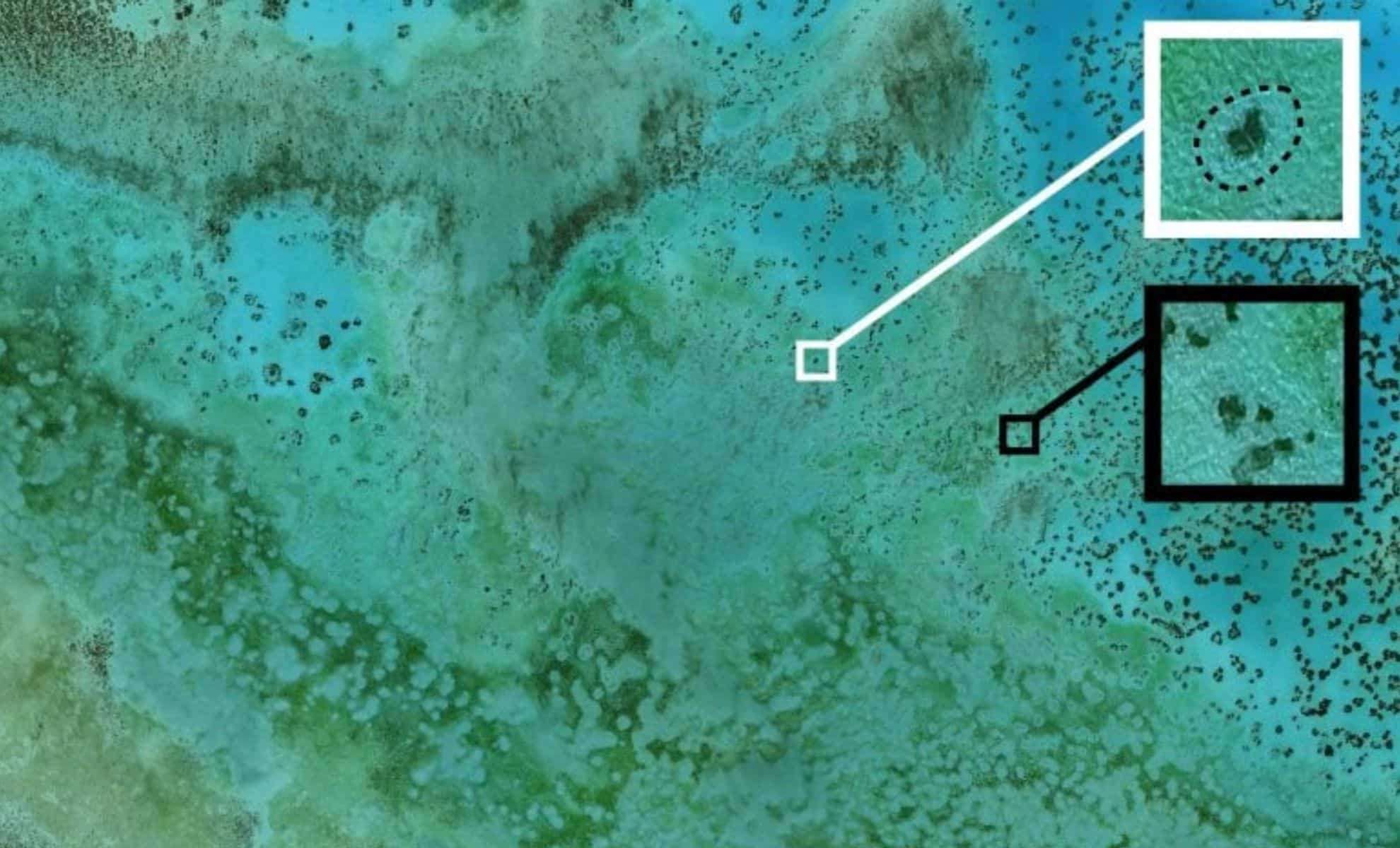
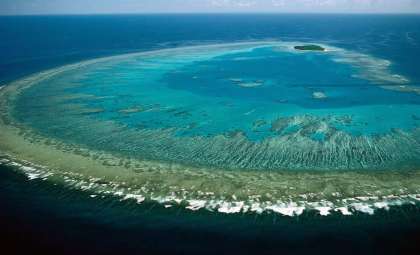
Recent research published in The American Naturalist provides new insights into the enigmatic “grazing halos”—distinct, vegetation-free circles that encircle coral reefs and are visible from space. These intriguing features have baffled marine scientists for years, appearing consistently around isolated coral patches worldwide. While earlier hypotheses connected these formations to predator-prey dynamics, the new study offers a spatial analysis that challenges previous views and enhances our understanding of coral reef ecology.
How Coral Arrangement Influences Halo Formation
The study highlights that the shape and prominence of grazing halos are intimately connected to how coral clusters are arranged spatially. Leveraging satellite observations and mathematical models focused on Heron Island within the Great Barrier Reef, the research demonstrates that the spatial layout of coral affects halo development and their interactions. When coral shelters are concentrated in tight groups, herbivorous fish have limited safe zones for feeding, restricting their grazing areas. According to lead researcher Theresa Ong, environmental studies assistant professor at Dartmouth, “When coral cover is densely clustered, prey species have fewer refuges, resulting in smaller edible zones. If shelter is spread more uniformly, halos expand, overlap, and lose their distinct shapes.” This finding ties reef architecture to halo visibility, offering a novel approach for analyzing reef environments.
Predation Fear Shapes Grazing Patterns on Coral Reefs
The research applies the ecological concept called the “landscape of fear,” describing how prey animals modify behavior based on predator risks. Previously established in land ecosystems, this principle now extends to marine habitats. Herbivores such as parrotfish and rabbitfish tend to graze near coral shelters to avoid predators like reef sharks. “Halos appearing and disappearing over time fit nicely with the landscape of fear theory,” Ong explains. “It suggests that changes in halo width are driven more by herbivore risk avoidance than direct predator numbers or reef condition.” These dynamic patterns thus reflect fear's role in shaping herbivore feeding rather than a simple indicator of ecosystem stress.

Dynamic versus Permanent Halos: Interpreting Reef Health Signals
Through two mathematical frameworks—one static and one time-based—the team found that halo temporal behavior depends on coral spatial patterns. On reefs with dispersed coral patches, herbivore grazing can lead to periodic overgrazing, causing halos to cyclically emerge and vanish as plant and fish populations shift. Meanwhile, reefs with compact coral clusters tend to display more stable, long-lasting halos. This suggests that monitoring halo fluctuations over time offers richer ecological insights than focusing solely on halo size. As Ong points out, fluctuating halos don’t always signal reef degradation or overfishing, but abrupt transitions between halo types may reveal critical changes in predator-prey relationships.
Using Satellite Data for Scalable Coral Reef Monitoring
The ability to observe these halos from orbit presents a valuable, non-invasive tool for assessing coral reef condition. Considering the challenges of direct underwater research across extensive reef systems like the Great Barrier Reef, remote sensing offers a practical alternative for measuring ecosystem changes. “Given the threats from climate change and overfishing that imperil many endemic reef species, understanding halo patterns better could enhance conservation efforts,” says Ong. “Tracking these features over time may indicate predator population health and overall reef resilience.” As oceans warm and habitats degrade globally, this approach provides timely, scalable ecological surveillance. While halos don’t capture every detail, they represent a promising step toward effective and responsive reef management strategies.
- Categories:
- News




0 comments
Sign in to Comment