
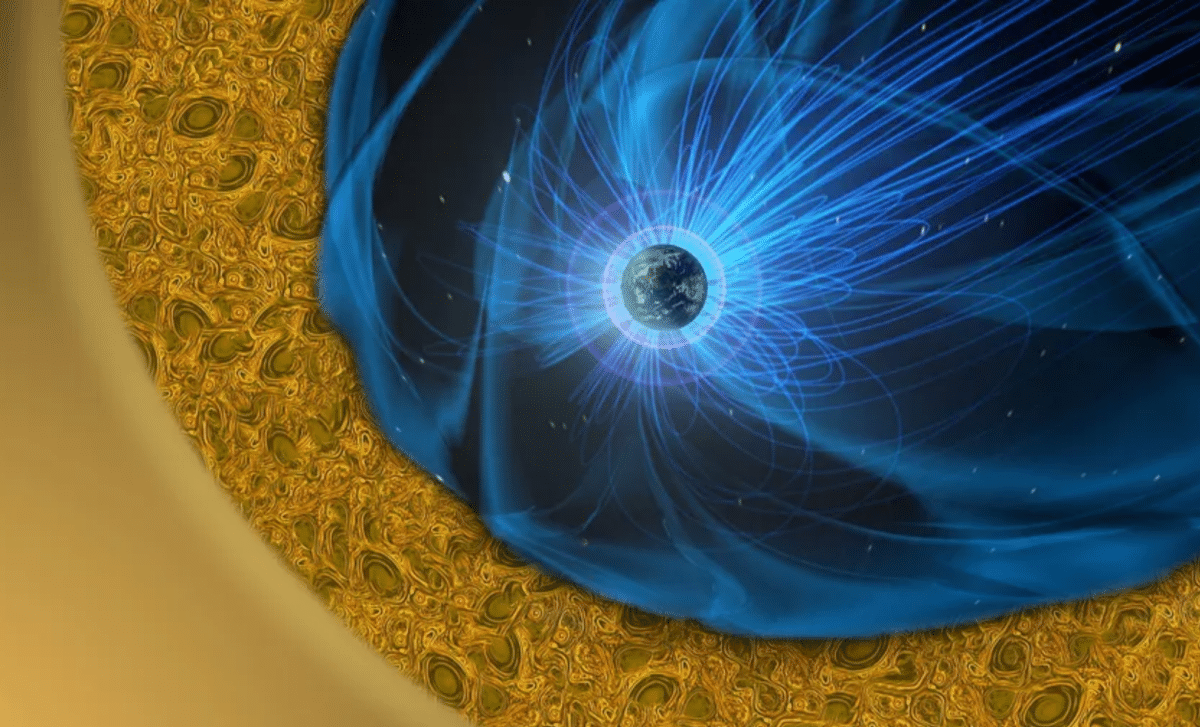
NASA’s Magnetospheric Multiscale (MMS) mission has revealed a novel and dynamic process occurring in Earth’s magnetosheath—a turbulent boundary region between our planet’s magnetic shield and the solar wind’s bow shock. Researchers have discovered a plasma current acting like a natural dynamo that generates magnetic fields. Detailed in Nature Communications, this breakthrough offers fresh perspectives on the complex interactions within Earth’s near-space environment, which has important consequences for satellite technology, electrical grids, and global communication networks.
Understanding the Magnetosheath's Role
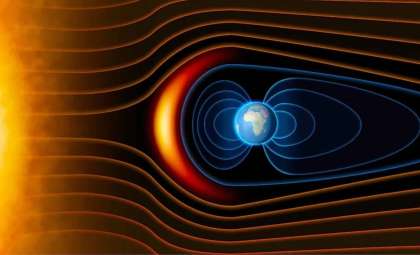
The magnetosheath, a key yet understudied space region, lies between Earth’s magnetosphere and the incoming solar wind. While the magnetosphere defends the planet from harmful radiation, the magnetosheath is where solar wind particles collide with and distort Earth’s magnetic field. Previously, the complexities of this region remained largely unexplored, but NASA’s MMS mission has now provided precise measurements unveiling its dynamic behavior.
The mission’s observations uncovered turbulent plasma motions within the magnetosheath that produce dynamo-like effects, meaning they actively create magnetic fields. Although scientists theorized such phenomena, this is the first time they have been observed directly with this degree of detail. These insights reveal how plasma dynamics affect space weather conditions surrounding Earth and enhance our scientific understanding of magnetic field generation beyond traditional models.

How Plasma Generates Magnetic Fields
Plasma—a highly energized state of matter containing charged particles—moves in intricate ways inside the magnetosheath, interacting with magnetic forces to create new magnetic fields. Dr. Zoltan Vörös, lead researcher at the Austrian Space Research Institute, explains,
“We discovered regions where magnetic fields are amplified by plasma flows, and others where the fields weaken and fold back.”
Confirming long-predicted theoretical models, this observed dynamo mechanism sheds light on magnetic field fluctuations that can influence space weather events. These findings are especially relevant during periods of intense solar activity when the magnetosheath’s turbulence peaks.
Advancing Space Weather Predictions and Safeguarding Technology
Space weather remains a critical concern because its variations impact satellite functionality, radio communication, and power infrastructure. Solar storms can disrupt these systems, causing widespread effects on modern technology. The new understanding of the magnetosheath’s active plasma dynamics strengthens the ability to forecast these disturbances with greater accuracy.
“These features are consistent with long-standing theoretical predictions and numerical simulations, but have never before been observed so clearly in space,” said Dr. Vörös.
Better predictions enabled by this research could lead to improved warnings of intense solar events, thus allowing protective measures to shield critical infrastructure. Published in Nature Communications, the study leverages data from four spacecraft flying in a unique tetrahedral formation, delivering the most detailed 3D analysis of the magnetosheath to date. This innovative approach provides unprecedented insights into plasma movements and magnetic field generation near Earth.
- Categories:
- Nasa








0 comments
Sign in to Comment