
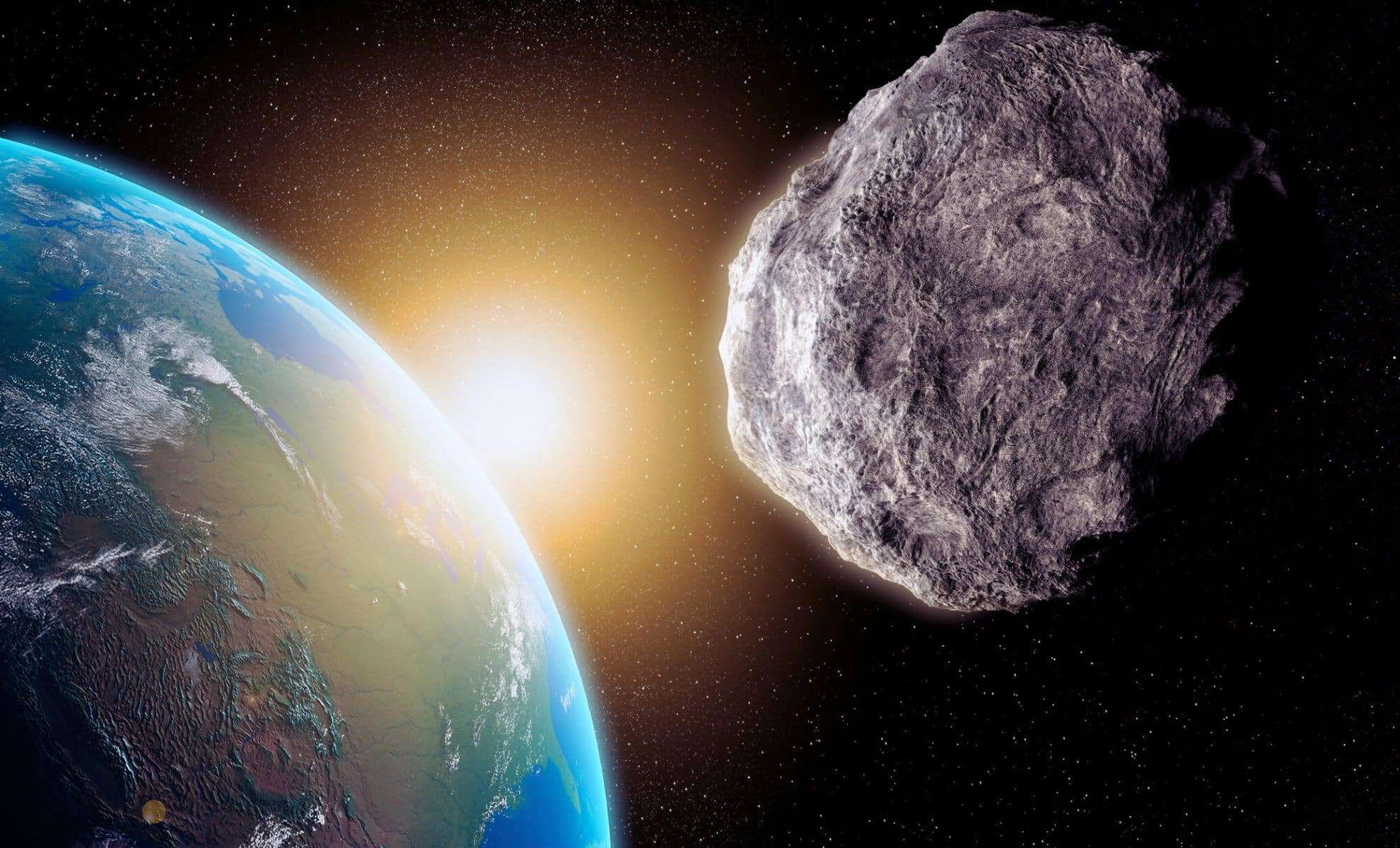
NASA is keeping a close watch on a compact asteroid roughly the size of a house that will sail past Earth on August 16 at a velocity near 17,717 miles per hour. Known as 2025 PR1, this asteroid spans approximately 55 feet and is projected to have its closest flyby at a distance of about 609,000 miles from our planet, based on information from NASA’s Jet Propulsion Laboratory (JPL). Although this gap exceeds twice the distance to the Moon, the asteroid’s passage is part of an active period of near-Earth object activity, underscoring the vital role of continuous asteroid surveillance.
Multiple Near-Earth Asteroids Approaching This Week
Following the close encounter with 2025 PR1, several more near-Earth objects are scheduled to come nearby. On August 17, a larger asteroid named 2025 PM, about the size of a small airplane, will approach at approximately 654,000 miles. By August 20, two additional objects are expected: 1997 QK1, a massive asteroid around 990 feet wide, will pass within 1,870,000 miles, and 2025 OV4, a smaller 160-foot rock, will come as close as 1,800,000 miles. These instances highlight the frequent visits Earth receives from space rocks of varying sizes. Smaller asteroids near 30 feet across tend to enter Earth's atmosphere about once every ten years, often creating bright fireballs and loud sonic effects without causing major damage.
Looking Back: Historical Impact Alerts
Attention has recently focused on larger near-Earth asteroids that could pose greater hazards. In February, an asteroid designated 2024 YR4, between 174 to 220 feet wide, briefly held a 3.1 percent chance of striking Earth in 2032—NASA's highest recorded impact probability for an object of that magnitude. Latest observations indicate it will more likely impact the Moon instead, with the odds of lunar collision increasing slightly from 3.8 percent to 4.3 percent. Although a lunar hit remains improbable, ongoing tracking is vital as 2024 YR4 will return near Earth in 2028 for further orbit measurements.

Examining Larger Threats: Bennu and Other Asteroids
Scientists are also focusing on the long-term danger posed by substantial near-Earth asteroids. The asteroid Bennu, stretching 1,640 feet across, carries a one-in-2,700 likelihood of impacting Earth in September 2182. Though the chance is low, the potential damage from such an event is enormous. An impact would unleash devastating shockwaves causing earthquakes, wildfires, and intense heat radiation. It would create a gigantic crater and propel hundreds of millions of tons of dust into the atmosphere, disrupting global climate. Surface temperatures might drop by about 7 degrees Fahrenheit, rainfall could decline by 15 percent, the ozone layer may be depleted by 32 percent, and photosynthesis in vegetation might fall by 20 to 30 percent, causing widespread ecological effects.
Why Consistent Asteroid Tracking Is Crucial
NASA’s Center for Near-Earth Object Studies (CNEOS) and international observatories play an essential role in monitoring asteroid orbits and improving impact forecasts. Their work enables scientists to evaluate collision risks, plan defensive strategies, and protect the public. Keeping track of smaller near-Earth objects like 2025 PR1 and other upcoming approaches helps researchers understand the behavior, frequency, and speed of these space rocks while enhancing preparedness for future planetary defense challenges.
- Categories:
- News









0 comments
Sign in to Comment